

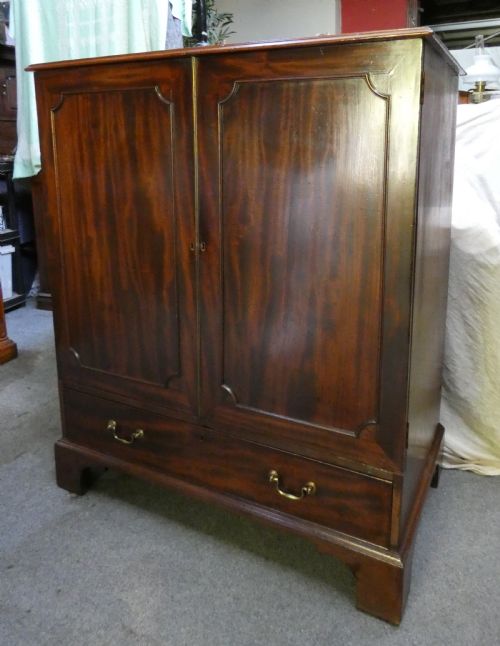
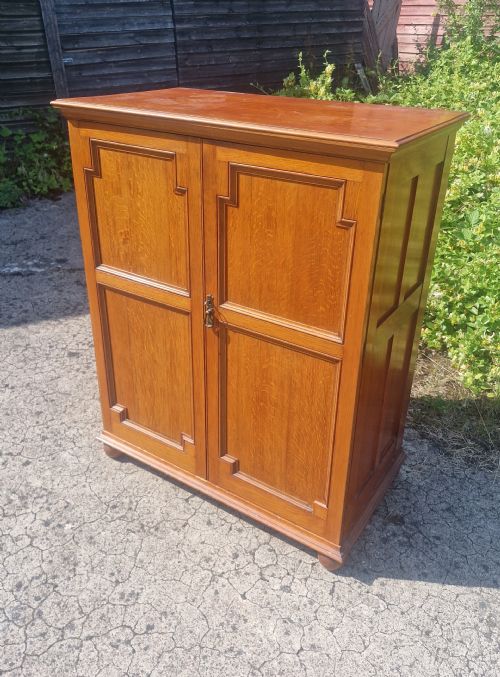


Compact Clothes Armoire
These compact clothes armoire pieces offer practical storage in smaller spaces, blending traditional craftsmanship with refined proportions.
Compact Clothes Armoire
A compact clothes armoire search reveals smaller wardrobes, hall cupboards, dwarf press cupboards, and childs wardrobes designed for tighter spaces. The versions most commonly encountered on this page span the Victorian, Edwardian, Georgian, and 1920 periods.
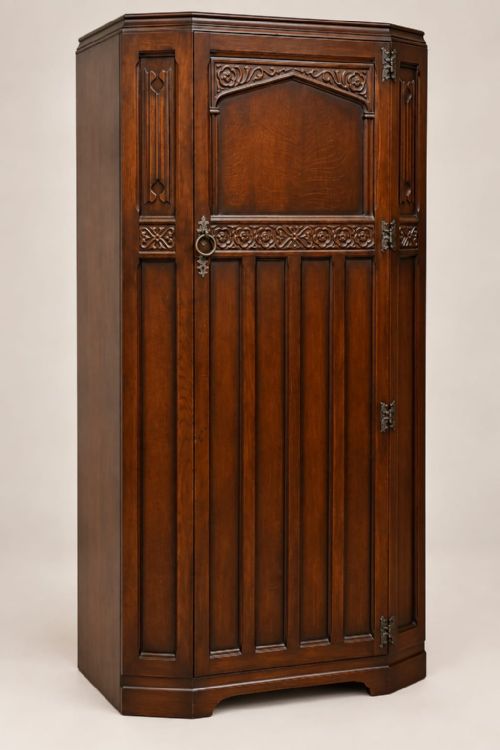
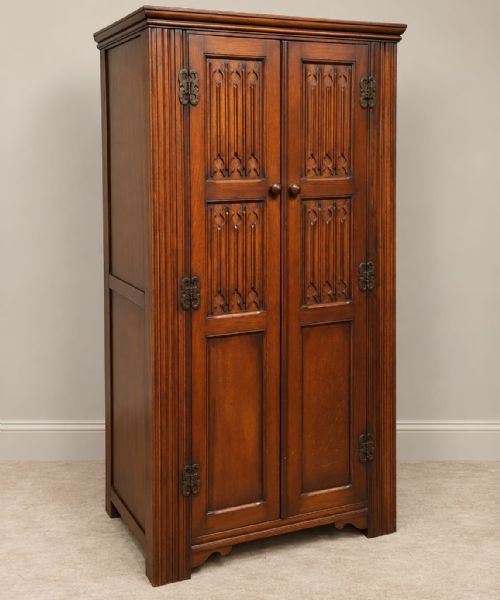
These pieces function primarily as single door or small double wardrobes, sometimes featuring fitted interiors. Styles range from plain Victorian and Edwardian iterations to Arts & Crafts, Art Deco, Gothic Revival, and Georgian designs.
Makers utilised various forms to maximise storage without overwhelming a room. Buyers frequently encounter oak, mahogany, and walnut structures fulfilling this purpose.
Materials and construction methods
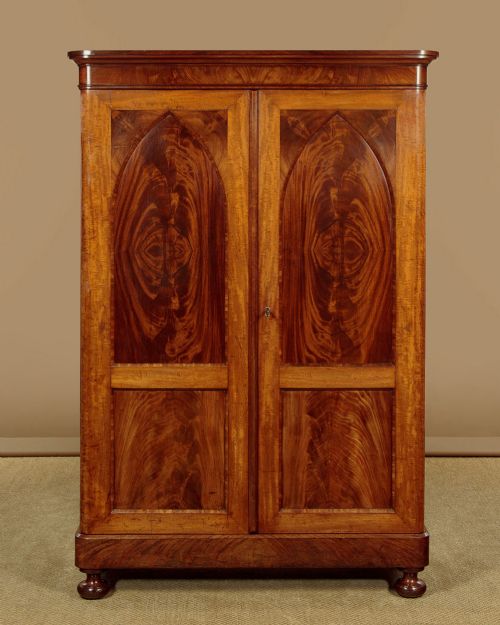
Makers constructed these items predominantly using solid timbers like oak, mahogany, and walnut, alongside mahogany veneer. Brass and metal hardware, including hinges and hanging fittings, support the structural integrity of the doors.
Glass panels occasionally appear in door designs, while iron components reinforce internal mechanisms. The construction relies on traditional joinery techniques suited to the Victorian, Edwardian, and Georgian eras represented in the evidence.
Compact Clothes Armoire Retail Price Guide 2026
Typical asking prices for compact clothes armoire among the pieces listed under this phrase on Sellingantiques today, from the lower quarter to the upper quarter. They describe what is for sale here now, not the wider market.
The listings span multiple decades, incorporating Victorian, Edwardian, Georgian, and 1930s periods through oak, mahogany, walnut, and metal elements.
Distinguishing quality across examples
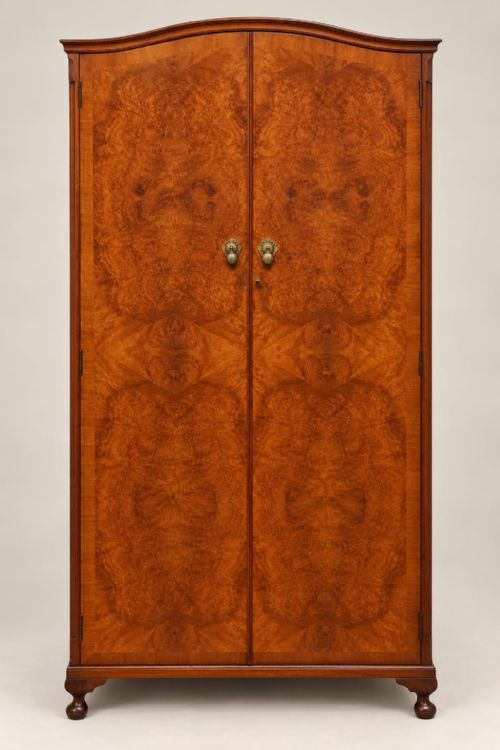
Quality variation emerges through the choice of timber figure, such as the distinct grain of burr walnut or figured mahogany compared to plain oak. The sophistication of period styling, from restrained Georgian proportions to decorative Arts & Crafts and Art Deco elements, also separates standard items from finer examples.
Internal fitted arrangements and the refinement of brass and metal hardware indicate superior execution. The integrity of veneer application and the harmony of proportion across smaller scales further define the better pieces.
The Compact Clothes Armoire Glossary
- Wardrobe
- A tall piece of furniture used for hanging clothes. These listings include single door and small double variants.
- Press cupboard
- A traditional piece used for storing linens or garments, often taking a dwarf form in Georgian examples.
- Hall robe
- A compact wardrobe designed originally for entrance halls to hold outerwear. They utilise minimal floor space.
- Veneer
- A thin layer of superior wood applied to a base timber surface. Burr walnut veneer frequently appears on Art Deco pieces.
- Arts & Crafts
- A design movement valuing honest construction and handcrafted qualities. It is seen here in oak wardrobe examples.
Compact Clothes Armoire: Frequently Asked Questions
Where were these placed originally?
These smaller wardrobes and hall robes were designed for dressing rooms, smaller bedrooms, or entrance hallways where full-sized furniture would not fit.
They provided essential garment hanging and storage without dominating the available floor area in period homes.
How do I date a piece?
Dating relies on observing stylistic markers, such as the geometric lines of Art Deco or the decorative motifs of Arts & Crafts and Gothic Revival.
Construction materials like solid mahogany, oak, or burr walnut also help align the piece with Victorian, Edwardian, or Georgian manufacturing norms.
What is a press cupboard?
A press cupboard is a traditional storage item, appearing in dwarf proportions within Georgian pieces. It typically combines shelving and hanging space for garments and linens.
These items offer a lower profile than standard wardrobes while maintaining substantial internal capacity.
Are these suitable for modern rooms?
Their reduced scale makes them practical for contemporary bedrooms with limited space. Single door formats and hall cupboards fit easily into alcoves or narrower walls.
They accommodate modern hangers while retaining the character of Victorian, Edwardian, or 1920s cabinetmaking.