

Compact Bookshelf
A compact bookshelf solves the perennial problem of limited floor space while keeping a personal library close at hand.
Compact Bookshelf
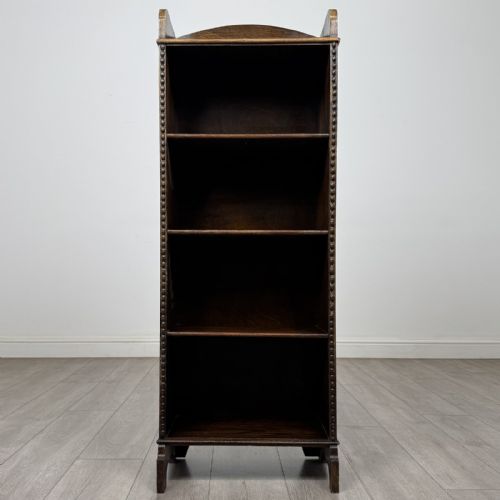
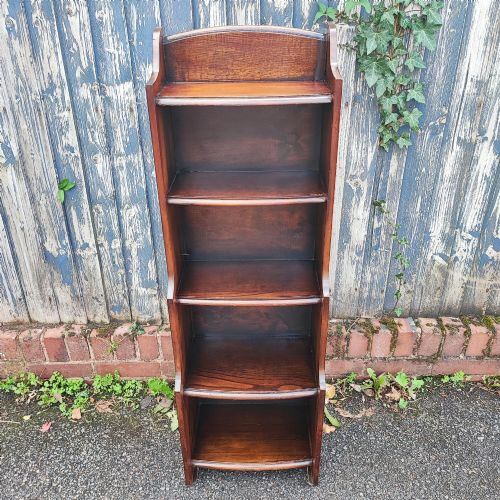
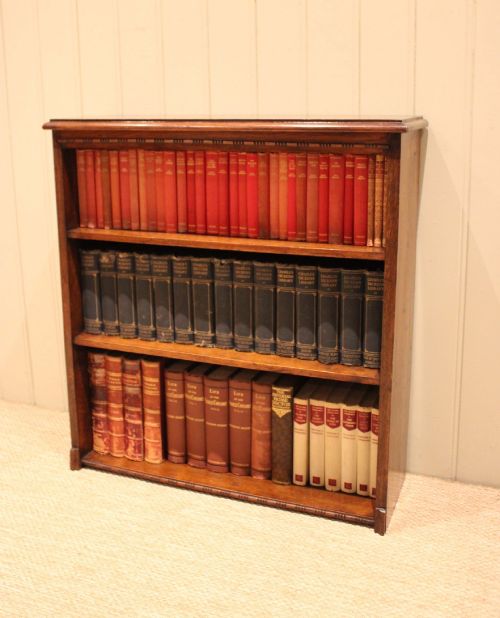
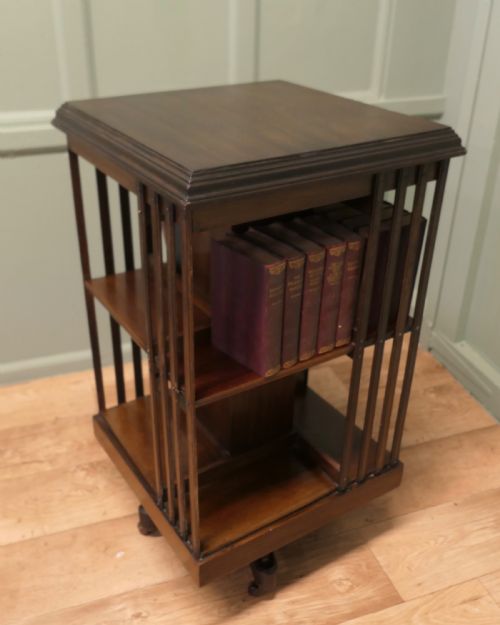
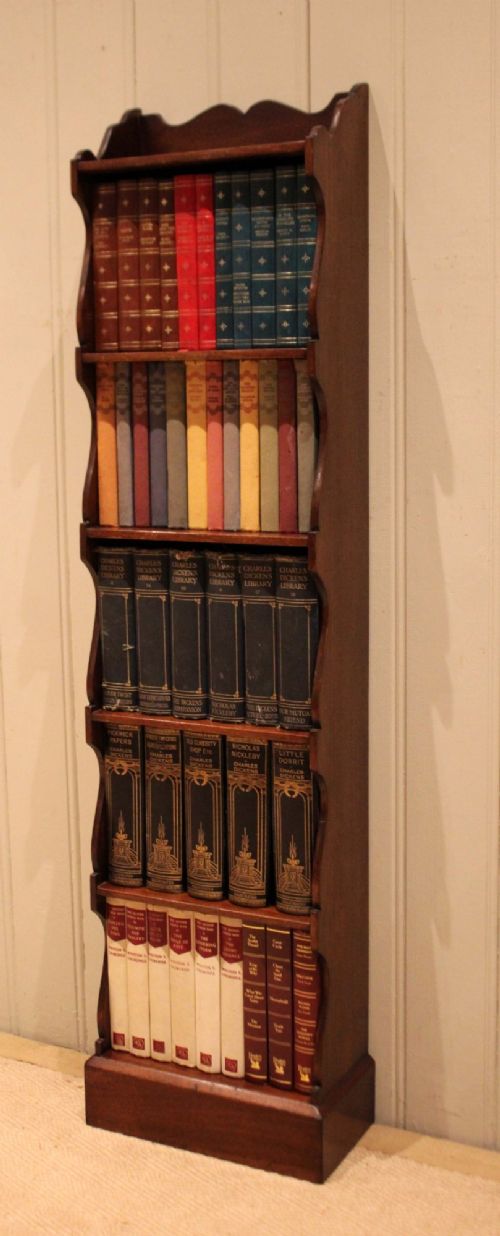
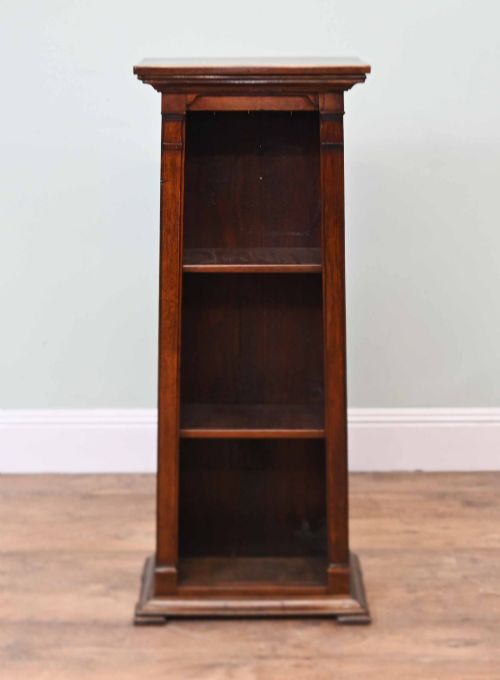
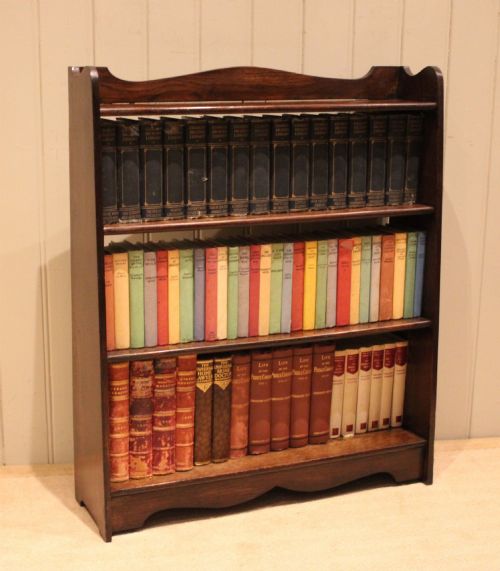
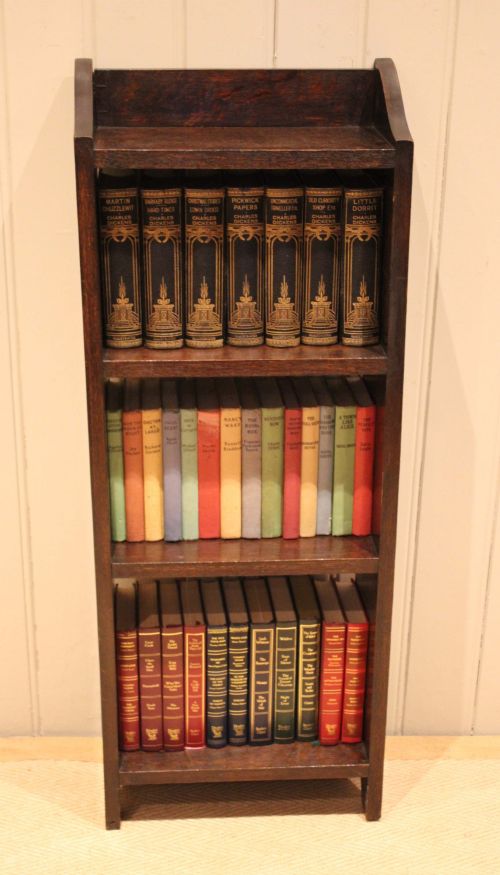
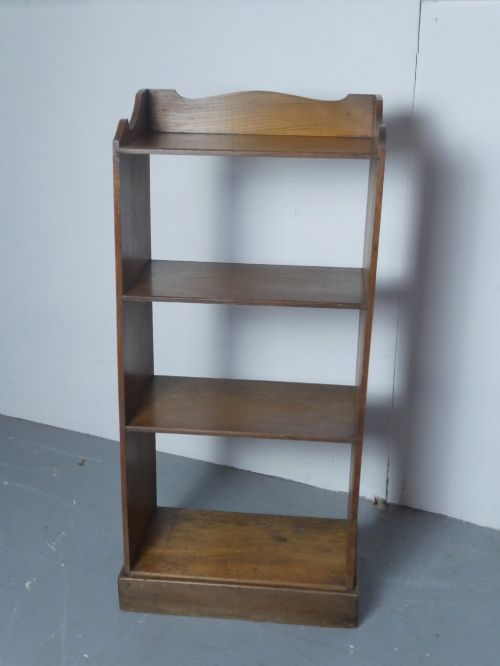
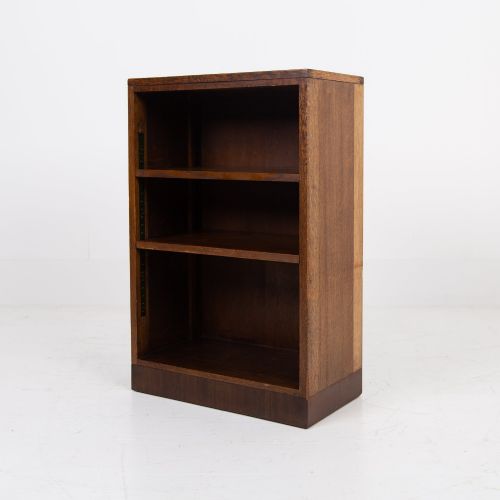
A compact bookshelf provides accessible open storage for smaller collections without overwhelming a room. These pieces range from narrow Victorian and Edwardian oak designs to revolving table models and low mahogany open bookcases.
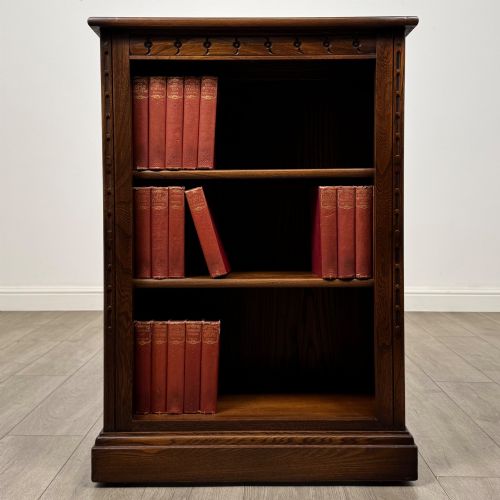
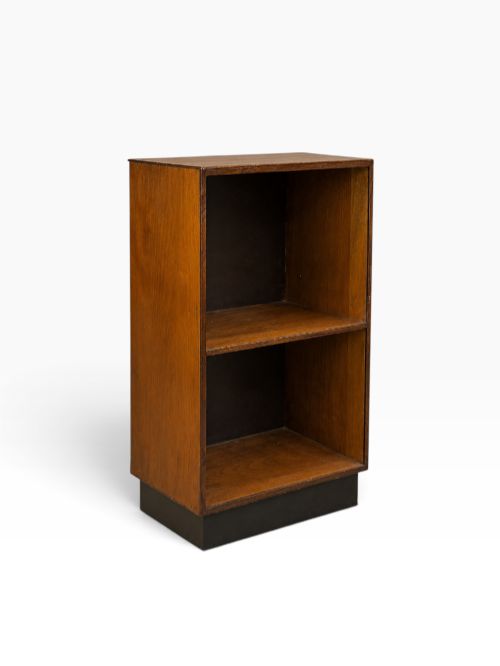
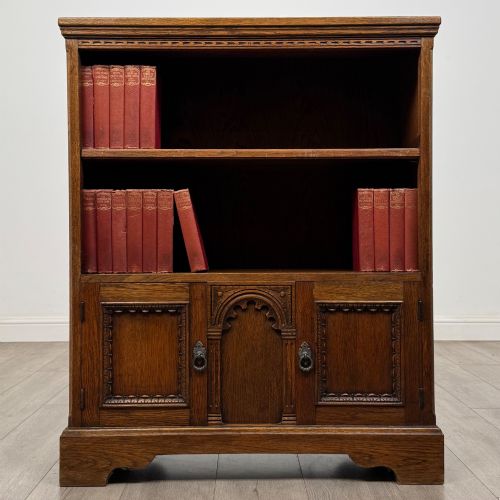
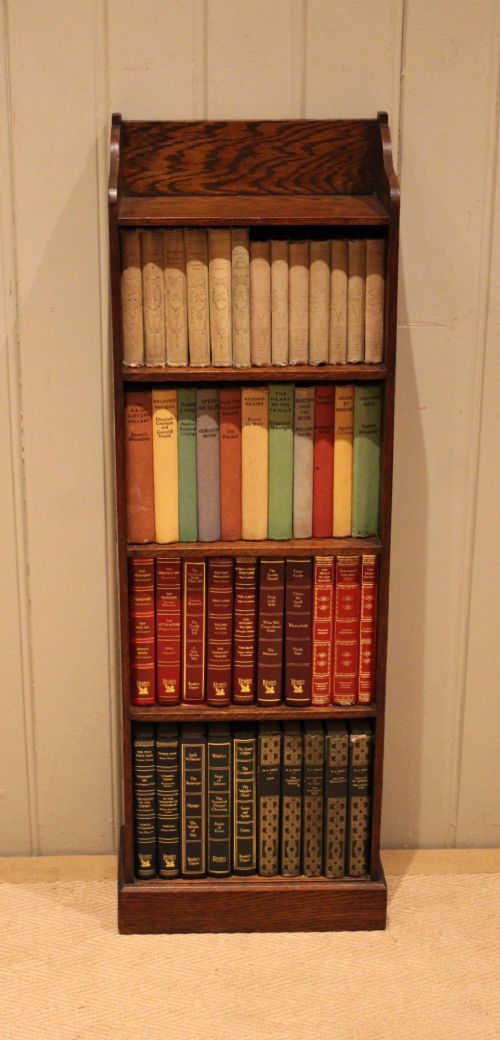
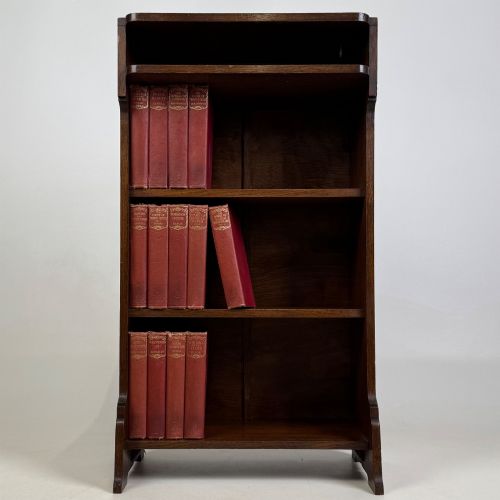
The version most commonly found here is the small oak open bookcase, often dating from the Edwardian period or the early decades of the twentieth century. Such pieces suit tight spaces, corners, or hallways where full-height shelving proves impractical.
Makers adapted traditional forms into diminutive proportions, producing dwarf bookcases, angled units, and revolving tabletop versions in mahogany, ash, and partridge wood. Each format serves the practical need to house volumes within a restricted footprint.
Materials and construction
Cabinetmakers relied heavily on oak and mahogany for these smaller volumes, occasionally employing ash, brass fittings, and cast iron mechanisms for revolving tiers. Timber selection determined both the weight capacity and the visual character of the shelving unit.
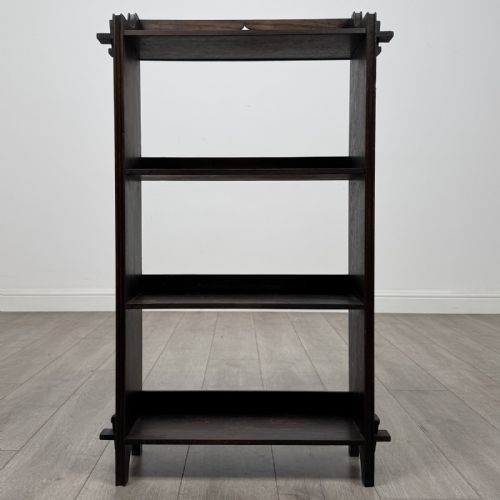
Construction methods varied from simple pegged joinery on Arts and Crafts pieces to intricate rotating pivots on revolving bookcases. Carved edges, raised galleries, lower drawers, and leather tops added functional detail without increasing the overall scale.
Compact Bookshelf Retail Price Guide 2026
Typical asking prices for compact bookshelf among the pieces listed under this phrase on Sellingantiques today, from the lower quarter to the upper quarter. They describe what is for sale here now, not the wider market.
Listings feature oak and mahogany predominantly, alongside alternative timbers including ash, brass, cast iron, and leather.
Quality and proportion
Proportion dictates visual success in smaller furniture, meaning a piece must balance height, depth, and shelf spacing harmoniously. Superior items display careful joint work and thoughtful integration of drawers or rotating mechanisms rather than rushed assembly.
Ercol
The Compact Bookshelf Glossary
- Raised gallery
- A low decorative border running along the top edge of a bookcase, designed to keep small items from sliding off.
- Revolving bookcase
- A freestanding unit mounted on a concealed pivot, allowing multiple sides of books to be accessed by spinning the tiers.
- Quarter-sawn oak
- Timber cut radially from the growth rings, producing a distinct speckled grain pattern prized for stability in smaller furniture.
- Dwarf bookcase
- A low standing shelving unit, traditionally kept beneath window height to preserve light and wall space.
- Partridge wood
- A dense tropical timber exhibiting a mottled speckled grain resembling partridge feathers, used occasionally for decorative occasional pieces.
Compact Bookshelf: Frequently Asked Questions
Where should I place a compact bookshelf?
These smaller shelving units fit comfortably in tight alcoves, narrow hallways, or beside armchairs where a full-size bookcase would dominate the floor plan. Their modest proportions also make them suitable for tabletops or office desks.
Because many examples feature finished backs or rotating mechanisms, placing them where they can be viewed from multiple angles allows their construction details to be appreciated fully.
How do I care for antique timber shelves?
Routine maintenance requires only a soft cloth to remove dust, avoiding silicone-based polishes that build up over time and attract dirt. Keeping timber away from direct heat sources prevents the wood from drying out and splitting.
Applying a traditional beeswax occasionally nourishes the polished surface and maintains the natural lustre of the oak or mahogany.
Can revolving bookcases hold heavy books?
Revolving models are engineered primarily for lighter volumes, octavos, and everyday reading rather than heavy folio sets. The internal pivot mechanism functions best when weight is distributed evenly across the tiers.
Checking the stability of the rotating base ensures the unit turns smoothly without straining the central spindle.
What defines the Arts and Crafts style in these bookcases?
Arts and Crafts pieces emphasise visible construction methods, honest materials, and minimal ornament, often displaying exposed joinery and quarter-sawn oak. Makers during this movement rejected mass-produced factory decoration in favour of hand-finished integrity.
Such items possess a sturdy, straightforward aesthetic that contrasts with the more elaborate carved edges found on Victorian or Jacobean Revival pieces.