



Compact Bedroom Armoire
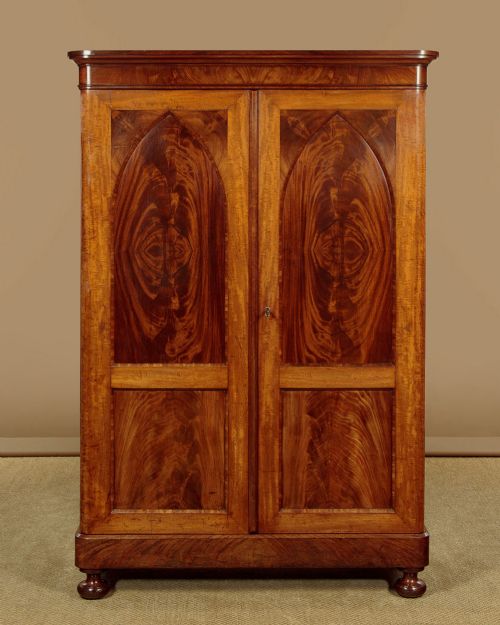
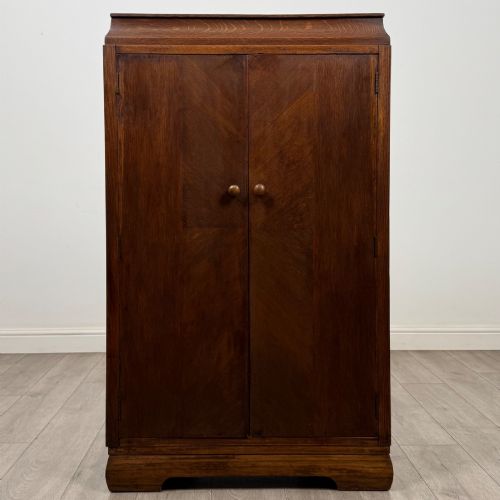
These compact bedroom armoire pieces are smaller timber wardrobes designed for modest spaces, combining practical hanging storage with period character.
Compact Bedroom Armoire
A compact bedroom armoire offers functional clothes storage within a reduced footprint, suiting rooms where full-scale furniture overwhelms the floor plan. The selection encompasses single door wardrobes and small fitted designs that maximise interior space without sacrificing presence.
Most examples originate from the Victorian, Edwardian, and Art Deco periods, spanning oak, mahogany, and walnut timbers. Buyers commonly encounter single door formats alongside fitted interiors incorporating hanging rails and occasionally small compartments.
The architectural character ranges from plain Arts & Crafts oak to figured burr walnut and flame mahogany veneer. These pieces serve as practical bedroom furniture while introducing distinct period craftsmanship into modern interiors.
Materials and construction methods
Cabinet makers utilised solid hardwoods including oak, walnut, and mahogany, frequently applying burr walnut or flame mahogany veneers to principal surfaces for visual depth. Brass hardware such as hinges and escutcheons secured doors and internal fittings.
Construction relied on traditional joinery techniques to build durable single door carcasses and fitted interiors. Glass mirrors occasionally featured on door panels, while internal shelving and hanging rails provided utility.
Compact Bedroom Armoire Retail Price Guide 2026
Typical asking prices for compact bedroom armoire among the pieces listed under this phrase on Sellingantiques today, from the lower quarter to the upper quarter. They describe what is for sale here now, not the wider market.
Some Edwardian halls clearly required very tidy coats, judging by the narrow proportions of these surviving robe designs.
Assessing quality in period small wardrobes
Quality rests on the selection of timber figures, from plain oak to highly figured burr walnut and flame mahogany veneers. The crispness of carved details and the integration of fitted interior compartments distinguish finer workshops from standard production.
The integrity of the door hinges, brass furniture, and overall structural rigidity indicate the level of care invested during manufacture. Original surfaces and patination elevate an example above pieces with heavy restoration.
Crown Furniture
The Compact Bedroom Armoire Glossary
- Burr walnut
- A figured wood veneer taken from the growth burls of walnut trees. It creates intricate, swirling patterns across the wardrobe doors.
- Flame mahogany veneer
- A sliced timber finish showing a distinctive flame-like grain pattern. Cabinet makers applied this to create dramatic visual movement on primary surfaces.
- Fitted interior
- An internal arrangement containing designated hanging space, shelves, or small compartments. This maximises storage efficiency within a reduced wardrobe footprint.
- Arts & Crafts
- A design movement prioritising traditional craftsmanship and simple forms. Pieces from this style often display honest oak construction and minimal ornamentation.
Compact Bedroom Armoire: Frequently Asked Questions
Where should I place a compact bedroom armoire?
These smaller wardrobes suit bedrooms, guest rooms, or hallways where floor space is limited. Their reduced proportions allow them to fit into alcoves or narrower walls.
Ensure there is adequate clearance for the single door to open fully, particularly if the interior includes fitted drawers or pull-out rails.
How do I maintain mahogany and walnut surfaces?
Dust regularly with a soft, dry cloth and apply a quality beeswax periodically to nourish the timber. Avoid placing the wardrobe in direct sunlight or near heat sources to prevent the wood from drying out.
Keep humidity levels stable in the room to protect both solid timbers and applied veneers from splitting or lifting.
What periods do these small wardrobes cover?
The pieces span from the mid-Victorian era through the Edwardian period and into the Art Deco style of the 1930s. Each era brought distinct aesthetic choices, from dark mahogany to figured walnut and plain oak.
Construction details and hardware styles generally reflect the specific decade of manufacture.
Can these wardrobes hold modern clothing hangers?
Many older wardrobes feature shallower interior depths than modern mass-market furniture, meaning standard wide hangers might not allow the door to close properly. Check the internal depth before purchasing.
Alternative narrower hangers or front-facing hanging rails solve this issue while maintaining the original interior layout.