



Commercial Counter Drawers
Commercial counter drawers are hardworking shop fittings built from pine, oak, and mahogany to organise retail stock.
Commercial Counter Drawers
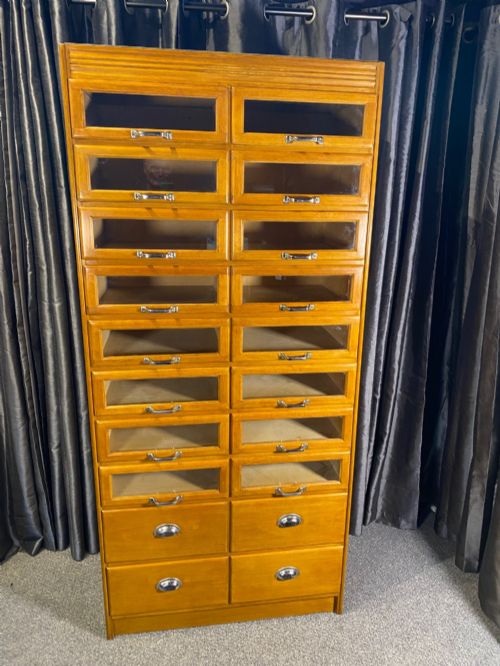
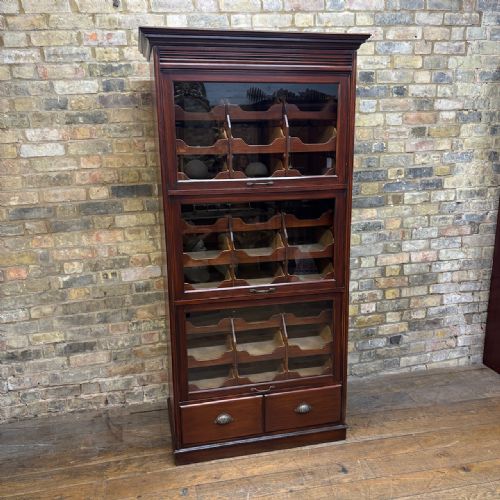
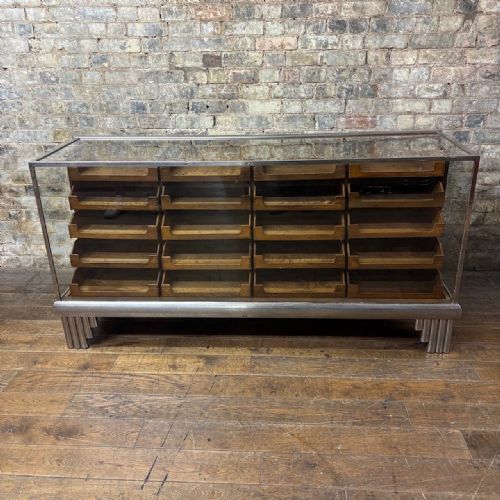
Commercial counter drawers form the backbone of historic retail spaces, originating across the Victorian, Edwardian, and early twentieth-century periods. These units appear primarily as banks of drawers, drapers chests, haberdashery counters, and shop fittings.
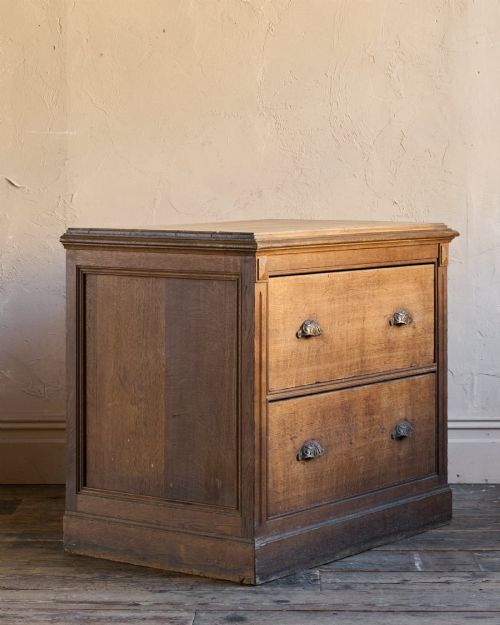
The most common versions on this page are pine and oak pieces built for heavy daily use in trade. They span various regional origins, including English, French, and Hungarian workshops.
Buyers encounter these functional pieces adapted into domestic kitchens, pantries, and living spaces for substantial storage. Their robust construction and numerous pulls make them practical for modern organising.
How they were made
Makers constructed these sturdy shop fittings using dense timber frames of pine, oak, and mahogany to withstand constant mercantile use. Drawer construction relied on tight joinery designed to bear heavy loads of fabric, hardware, or provisions.
Hardware additions of brass, iron, and chrome provided functional pulls and label holders essential for shopkeeping efficiency. Many examples retain their original painted wood surfaces, while others show exposed hardwood grain.
Commercial Counter Drawers Retail Price Guide 2026
Typical asking prices for commercial counter drawers among the pieces listed under this phrase on Sellingantiques today, from the lower quarter to the upper quarter. They describe what is for sale here now, not the wider market.
Listings feature commercial counter drawers spanning from the Victorian era through the 1930s, constructed in pine, oak, mahogany, and metal.
What varies in quality
Quality rests in the integrity of the timber framing and the original condition of the drawer runs. Pieces constructed from solid oak or mahogany with intact brass and iron hardware sit higher in the range than later pine iterations.
The survival of original painted surfaces or manufacturer markings distinguishes standard utility pieces from more refined commercial shop fittings.
Dudley & Co·G H Gledhill Halifax·Trussant & Cie
The Commercial Counter Drawers Glossary
- Haberdashery counter
- A shop fixture featuring numerous shallow drawers designed for storing ribbons, threads, and small drapery goods. These units often incorporate glass panels or brass label holders.
- Bank of drawers
- A large assembly of multiple storage drawers arranged in vertical and horizontal tiers. Such units were built into the fabric of nineteenth-century retail environments.
- Shop fitting
- Custom furniture and fixtures designed specifically for commercial retail premises. These items prioritised durability and organised display over delicate domestic aesthetics.
- Drapers chest
- A specialist piece of furniture used by cloth merchants to sort and present textiles. The proportion typically favours width and numerous shallow compartments.
Commercial Counter Drawers: Frequently Asked Questions
What are commercial counter drawers?
Commercial counter drawers are sturdy storage units built for nineteenth and early twentieth-century retail shops. They feature multiple compartments designed to hold merchant stock.
Today, these practical items serve as substantial storage furniture in residential kitchens and living areas.
How were they used in shops?
Shopkeepers utilised these multi-drawer units to organise and display dry goods, haberdashery, and small wares behind or beneath counters. Label holders and shallow depths kept inventory visible and accessible.
Their robust timber construction ensured they survived decades of heavy daily mercantile trade.
How do I style them at home?
These large storage banks anchor a room well when placed against a dining room or kitchen wall. Their many pulls add strong visual texture to an interior.
Pair them with simple surroundings to let the utilitarian timber work stand out.
How do I tell Victorian from Edwardian pieces?
Victorian examples frequently display heavier pine or mahogany builds with traditional hand-cut joinery and dark finishes. Painted surfaces are also common on nineteenth-century shop pieces.
Edwardian and later iterations often introduce lighter oak timbers and sometimes incorporate chrome or brass hardware alongside factory-made components.