






Colourful Oil Painting
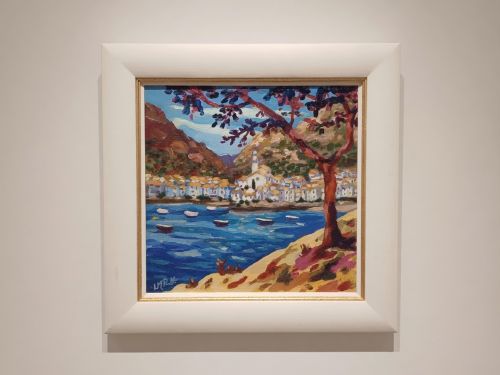
A colourful oil painting brings immediate life to a wall, offering rich pigments and textured brushwork captured across various twentieth-century movements.
Colourful Oil Painting
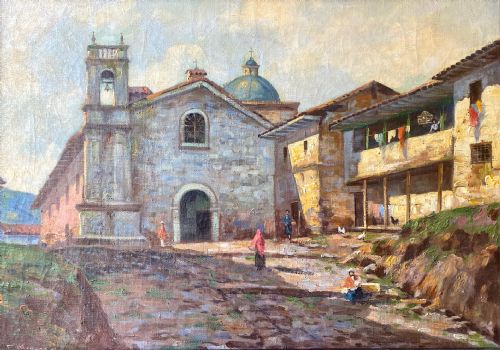
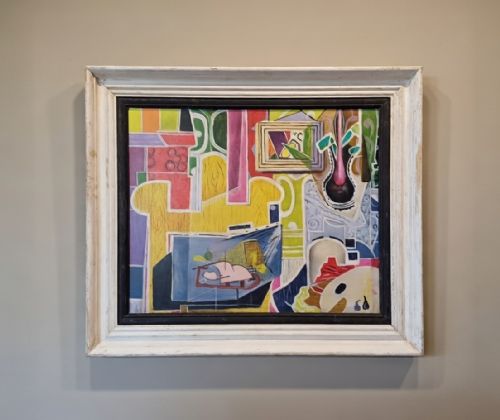
A colourful oil painting encompasses framed canvases and boards ranging from late nineteenth-century portraits to mid-century abstract, surrealist, and impressionist works. These pieces originate from British, French, and Latin American hands, capturing scenes from garden tea houses to bustling plazas.
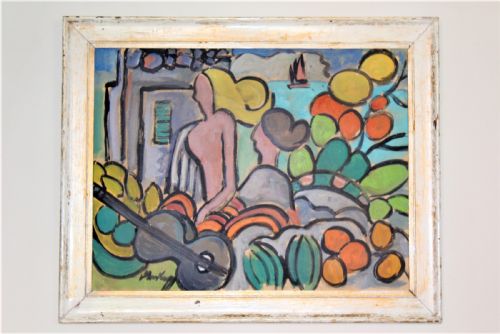
Buyers frequently encounter mid-century examples on this page, particularly works dated through the 1940s, 1950s, and 1960s. These later pieces showcase bold palettes, ranging from vibrant op art geometric compositions to naive street scenes.
The subjects span figurative studies, female nudes, still lifes, and musician landscapes, often framed in wood or gilt settings. Each colourful oil painting reflects the distinct aesthetic movements of its decade, from post-impressionism to avant-garde new figuration.
Materials and methods
Artists utilise oil paint applied to either stretched canvas or solid board supports, building up thick layers of pigment. This medium allows for deep saturation and varied surface textures, from smooth geometric lines to heavy brushstrokes.
Many works are housed in wooden or gilt frames that complement the vivid compositions. The integration of canvas and oil produces durable surfaces that retain their chromatic intensity across the decades.
The inventory includes examples from British, French, and Latin American origins.
Judging quality in these works
Quality rests in the handling of pigment and the strength of the composition, where confident brushwork creates depth and movement. Stronger pieces display a deliberate command of colour relationships rather than a mere accumulation of bright hues.
The structural integrity of the canvas and board, alongside the preservation of the original paint layer, distinguishes superior examples. Works that retain their surface vibrancy and secure framing demonstrate better overall preservation.
Lucy Pratt·Henri Vincent Anglade·Florence Hess·Peter Jackson·Federico Andreotti·Markey Robinson
The Colourful Oil Painting Glossary
- Oil paint
- A slow-drying paint made by mixing pigments with oils such as linseed. This medium allows artists to blend colours smoothly and build rich surface textures.
- Canvas
- A heavy woven fabric stretched across a wooden frame to serve as a painting support. It provides a flexible and durable surface for oil applications.
- Post-Impressionism
- An art movement extending beyond impressionism that focused on symbolic content and vivid colours. Painters used bold hues to express emotional responses rather than strict optical realism.
- Surrealism
- A cultural movement that sought to release the creative potential of the unconscious mind. Works in this style often feature dreamlike scenes and unexpected juxtapositions of objects.
- Gilt
- A thin layer of gold leaf applied to wood or other materials to form a decorative frame surface. This finish adds a reflective border around the painted canvas.
Colourful Oil Painting: Frequently Asked Questions
How should I hang an oil painting?
Hang the piece away from direct sunlight and fluctuating heat sources to protect the canvas and oil pigments over time. Ensure the wall fixings match the weight of the wooden or gilt frame.
Keep the centre of the canvas at eye level for optimal viewing. Secure the frame firmly to prevent any accidental shifting on the wall.
What periods do these paintings represent?
The selection spans from late nineteenth-century portraits to mid-twentieth-century abstracts and surrealist compositions. Most pieces cluster around the 1940s, 1950s, and 1960s.
Each decade brings distinct stylistic shifts, ranging from French post-impressionism to vibrant op art. Dating is often confirmed through signatures, gallery inscriptions, or stylistic evidence on the canvas.
Are these paintings supplied with frames?
Many listings include original or period-appropriate wooden and gilt frames that complement the artwork. The framing style typically reflects the decade in which the painting was produced.
Check the individual listing details to confirm whether a specific frame is included with the canvas. Some buyers choose to reframe pieces to suit modern interior settings.