





Coloured Glass Panels
These coloured glass panels are vibrant architectural salvaged windows designed to catch and transform the light in a room.
Coloured Glass Panels
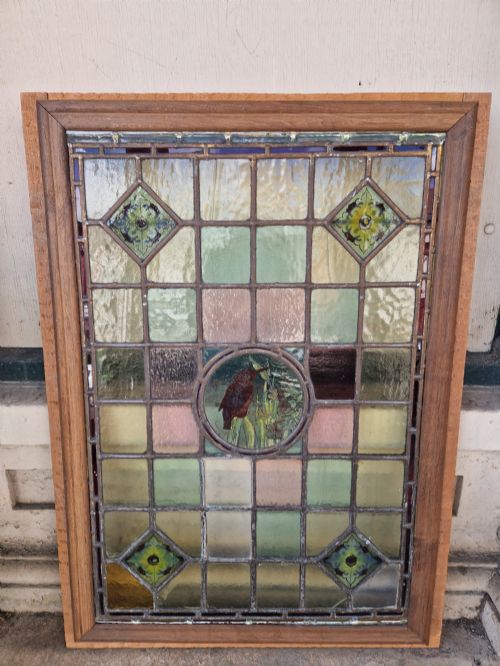
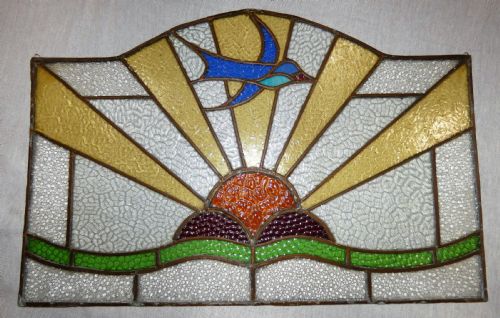
Coloured glass panels span from the Victorian and Edwardian eras up to the nineteen-thirties, taking the form of stained glass windows, architectural salvage, and arched church windows. You will frequently encounter leaded glass windows featuring hand-painted scenes of the countryside, rural farmhouses, birds, and floral motifs.
The selection ranges across distinct historical movements including Gothic Revival, Art Nouveau, Arts and Crafts, and nineteen-thirties Dutch Folk Art. Alongside substantial architectural windows, the records include occasional domestic vessels such as Victorian aqua green wine glasses.
How they were made
Pieces are constructed from glass held together by lead cames, frequently integrated with hand-painted details depicting landscapes, flora, and figures. Wooden elements such as pine timber frames occasionally support the panels for architectural installation.
Makers utilised techniques like amber bullseyes and multi-section construction, evident in large Art Nouveau window configurations divided into distinct parts.
Coloured Glass Panels Retail Price Guide 2026
Typical asking prices for coloured glass panels among the pieces listed under this phrase on Sellingantiques today, from the lower quarter to the upper quarter. They describe what is for sale here now, not the wider market.
The inventory records pieces spanning from eighteen-fifty through the Edwardian period and nineteen-thirties, predominantly utilising glass, lead, and pine timber.
What varies in quality
The distinction lies in the intricacy of the hand-painted pictorial elements, moving from simple floral motifs to complex figurative scenes featuring castles, lakes, or historical narratives. Detail and execution in the painted countryside or avian designs dictate the visual depth of the work.
Stylistic cohesion and period characteristics drive the distinction, such as the architectural ambition found in Gothic Revival church windows versus domestic Edwardian panels.
The Coloured Glass Panels Glossary
- Lead
- A soft, malleable metal cast into channels called cames to hold individual pieces of glass in place within a window.
- Bullseye
- A circular roundel of glass formed by the spinning technique, often showing a central pontil mark and rich colour concentration.
- Architectural Salvage
- Building components rescued from older structures for reuse, preserving period craftsmanship.
- Came
- A slender strip of lead with an H-shaped or U-shaped profile used to join panes of glass together.
- Gothic Revival
- An architectural and decorative style drawing inspiration from medieval forms, prevalent in mid-nineteenth-century ecclesiastical design.
Coloured Glass Panels: Frequently Asked Questions
How do I hang a stained glass panel?
These panels require secure chain supports fixed to structural window frames or wall studs to bear the substantial weight of the lead and glass.
Ensure the hanging fixings attach directly to the outer timber frame rather than relying on the lead cames alone.
Can I install these windows outside?
Most antique panels were built for interior partitions or secondary internal glazing layers rather than external exposure to harsh weather.
Placing them inside protects the delicate hand-painted surfaces and lead structures from modern wind loads and driving rain.
How do I date a leaded glass window?
Dating relies on stylistic clues, such as the flowing organic lines of Art Nouveau or the heavy geometric tracery of Gothic Revival.
Subject matter like nineteen-thirties Dutch folk scenes or Victorian floral compositions also anchors the piece to a specific era.
How do I clean antique coloured glass?
Use a soft, dry cloth or a slightly damp sponge with plain water to remove dust gently from the glass surface.
Avoid commercial chemical cleaners that might damage hand-painted details or corrode the aged lead cames.