

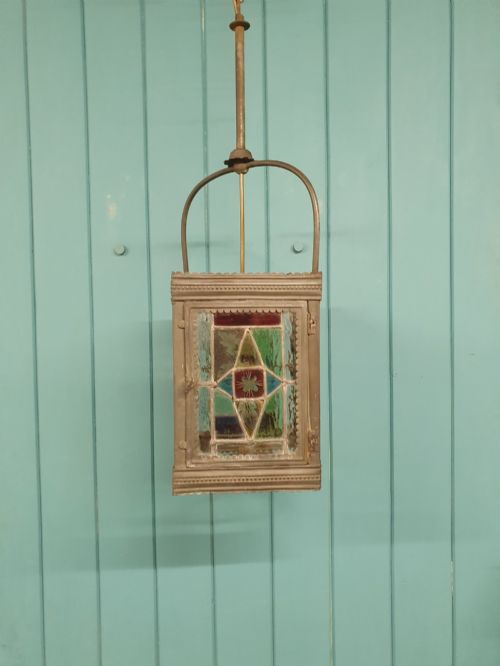


Coloured Glass Lamp
A coloured glass lamp brings warmth and saturated hue to a room, catching the daylight before casting a rich glow at night.
Coloured Glass Lamp
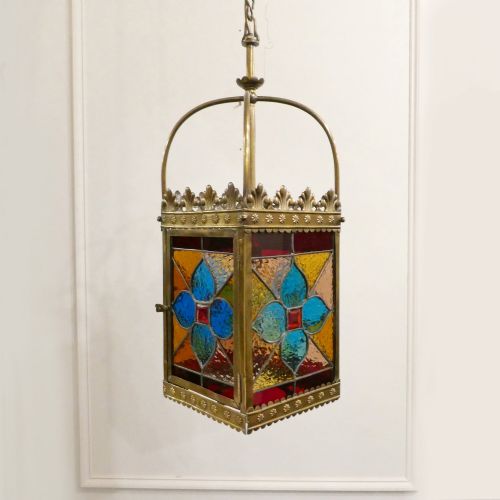
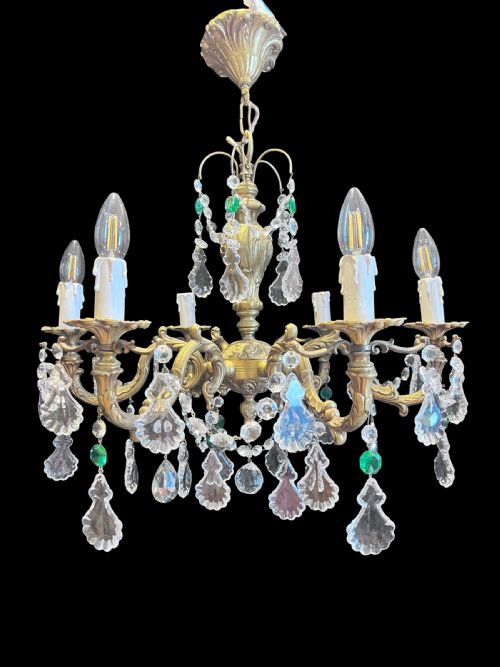
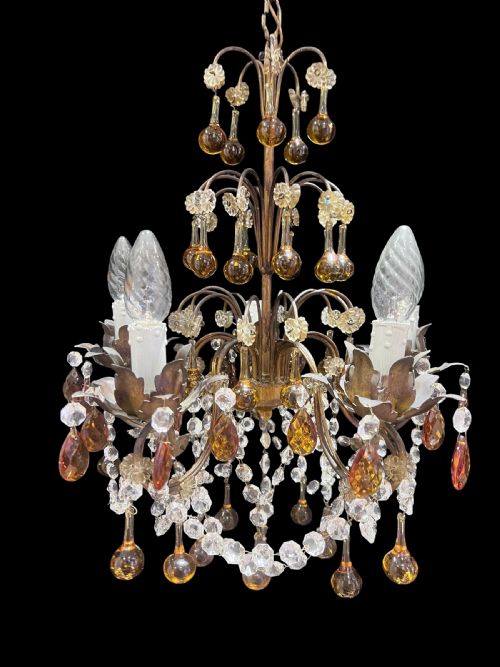
When you search for a coloured glass lamp, you enter a field of hanging and ceiling lights dominated by Victorian and early twentieth century production. These pieces span elaborate five and six light chandeliers adorned with tinted crystals alongside simpler hall lanterns and hanging domestic shades.
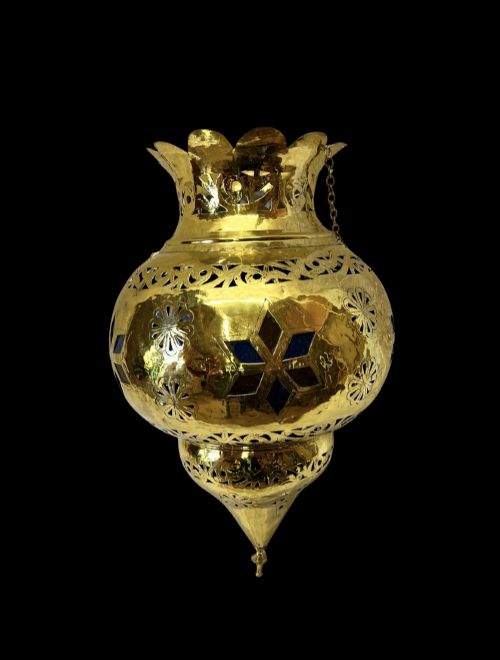
You are most likely to encounter designs drawing upon distinct period aesthetics, ranging from French Chateau and Italian antique forms to Moorish Revival and Arts and Crafts styles. The materials supporting these glass elements include brass, gilt metal, wrought iron, and lead, forming robust frameworks for suspended illumination.
Origins vary across Continental Europe and North Africa, yielding everything from ornate Florentine crystal arrangements to opaque glass grapes and floral motifs. Each surviving example demonstrates how earlier generations brought vibrant colour into domestic interiors through hanging and ceiling lighting.
Materials and construction methods
These lamps rely on combinations of glass and metal, where structured frames of brass, lead, or wrought iron secure panes of stained glass or chains of coloured crystals. Artisans utilised opaque glass to form shaped elements such as grapes and flowers, integrating them directly into the body of the ceiling lighting.
Metalwork components receive careful shaping and mounting to bear the weight of glass shades and crystal drops safely. Leaded construction methods hold individual glass segments together in traditional hall lanterns, while bronze and gilt metal frameworks provide durable support for ornate chandeliers.
Coloured Glass Lamp Retail Price Guide 2026
Typical asking prices for coloured glass lamp among the pieces listed under this phrase on Sellingantiques today, from the lower quarter to the upper quarter. They describe what is for sale here now, not the wider market.
One continental chandelier hides its illumination behind moulded opaque glass grapes and flowers, bringing an unexpected harvest indoors.
Factors that distinguish quality
Quality reveals itself in the depth of the glass colour and the precision of the metal framework holding the piece together. Superior examples display harmonious integration between the tinted crystals or shades and the supporting brass, iron, or bronze structure.
The sophistication of the stylistic execution separates standard production from finer decorative work. Pieces featuring detailed opaque glass mouldings or intricate leaded designs demonstrate a higher level of artisanal skill during manufacture.
The Coloured Glass Lamp Glossary
- Chandelier
- A branched ceiling light designed to hold multiple illumination points. These fixtures often incorporate crystal drops or coloured glass elements to disperse light.
- Hall Lantern
- An enclosed hanging light typically positioned in an entryway or passage. They frequently utilise leaded or coloured glass panels set within metal frames.
- Opaque Glass
- Non-transparent glass that obscures light while diffusing rich colour. It is often moulded into decorative forms such as fruit and floral shapes.
- Crystal
- High-clarity glass cut or formed into light-reflecting shapes. Coloured variants add vibrant hues to chandeliers and hanging lamps.
- Stained Glass
- Coloured glass pieces joined together by lead cames to form decorative patterns. This technique appears frequently in traditional hanging lanterns.
Coloured Glass Lamp: Frequently Asked Questions
What rooms suit a hanging coloured glass lamp?
These fixtures work well in spaces with sufficient ceiling height where a pendant light or chandelier can hang safely and draw the eye. Hallways, dining areas, and living rooms benefit particularly from the pools of tinted light they cast.
Because many examples originate from the Victorian era and the early twentieth century, they pair naturally with traditional or eclectic interior schemes. Their coloured shades introduce a focal point even when unlit during daylight hours.
How do I identify the period of a lamp?
Dating relies on observing the combination of materials, construction techniques, and stylistic markers present in the metal and glass. Victorian and nineteenth century pieces often feature heavy brass frames and specific shade profiles, whereas early twentieth century examples lean towards continental styling or Arts and Crafts simplicity.
Examining how the glass is held - whether through lead cames, iron framing, or pinned crystal strands - provides further clues to the decade of manufacture. Comparing the decorative motifs, such as opaque floral elements or cast bronze details, helps narrow down the era.
Are these lamps electrified for modern use?
Many surviving hanging lights and chandeliers have been adapted for electricity over time to suit contemporary homes. Some pieces retain wiring from earlier mid-century updates while others require professional inspection before installation.
When living with these antiques, it is sensible to have a qualified electrician check the internal wiring and ceiling fixings to ensure safety. The delicate nature of old glass and metal frames means careful handling during installation is essential.