



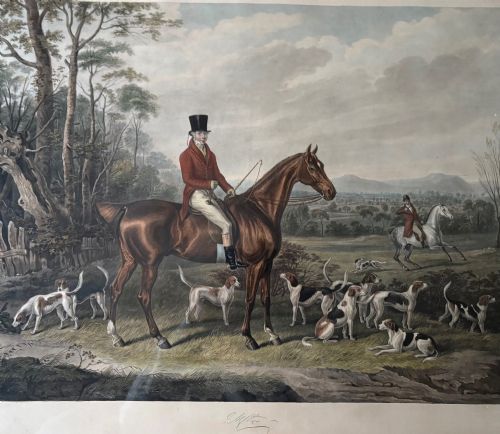

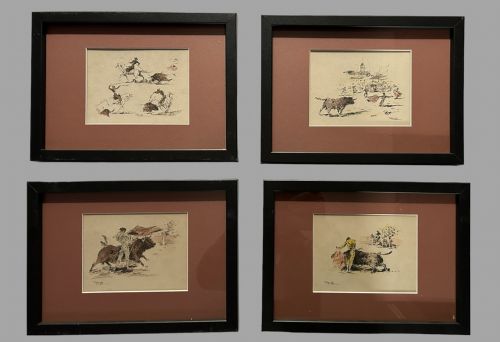

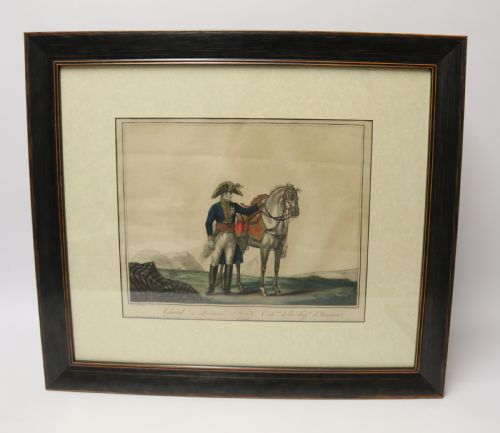
Coloured Etching Print
A coloured etching print brings centuries of graphic artistry into your home, offering delicate line work enriched by hand-applied pigments.
Coloured Etching Print
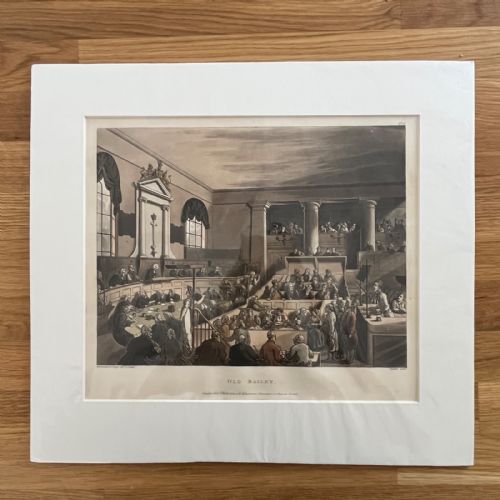
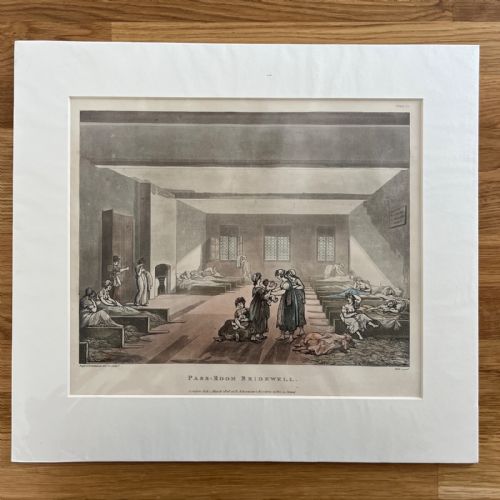
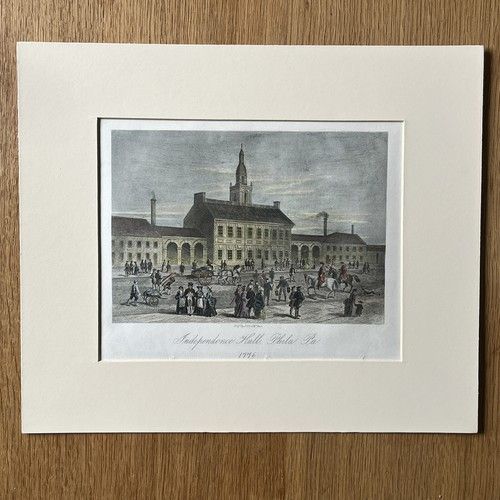
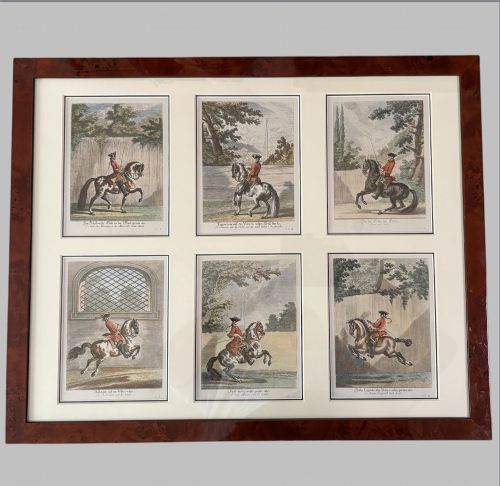
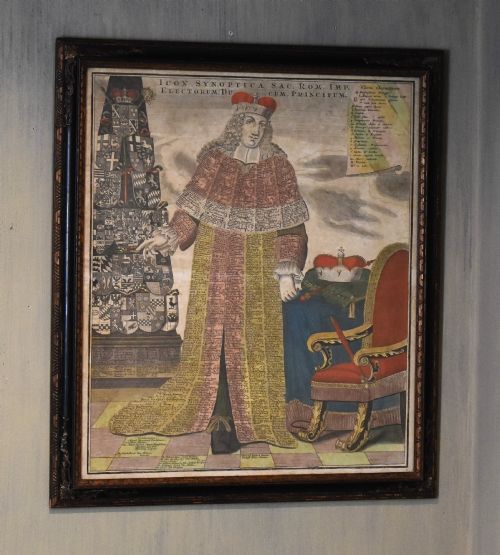
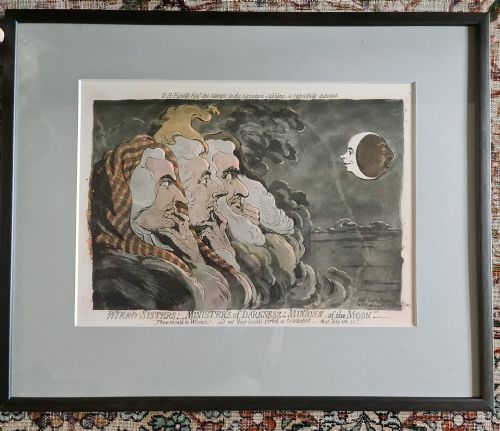
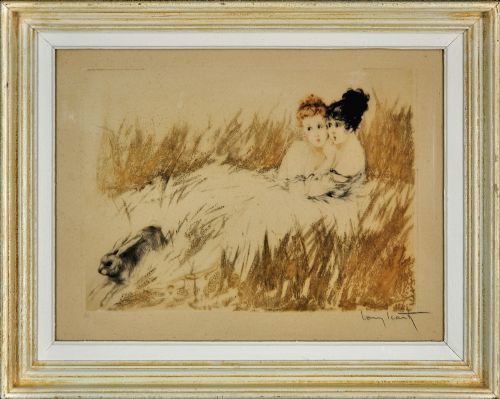
When you search for a coloured etching print, you encounter centuries of graphic works ranging from Georgian equestrian scenes to 1920s figurative compositions. These pieces primarily function as wall art, preserved behind glass within wooden or gilt frames.
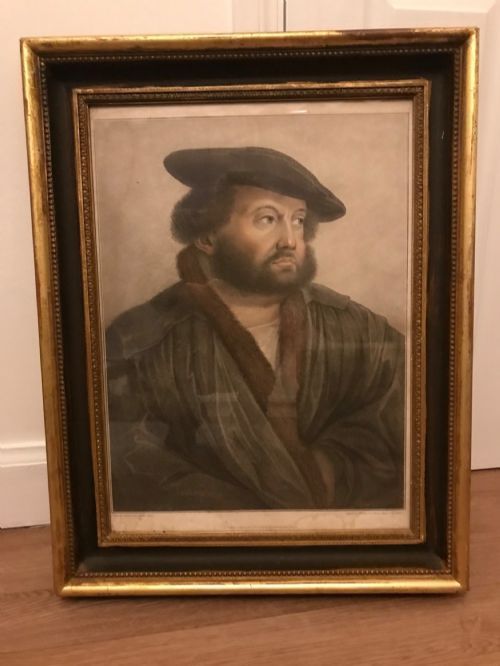
The selections span 18th century stipple engravings and aquatints, Regency sporting plates, and 1930s bullfighting scenes. Hand tinting and watercolour washes frequently enhance the underlying ink lines to bring vibrancy to the paper support.
How they were made
Makers etched lines into metal plates with acid before transferring the design onto paper using ink. Artisans then applied watercolour washes or hand tinting directly onto the printed sheet.
Framing materials commonly involve wood, gilt wood, and burr wood veneer, often incorporating glass to protect the delicate paper surface.
Coloured Etching Print Retail Price Guide 2026
Typical asking prices for coloured etching print among the pieces listed under this phrase on Sellingantiques today, from the lower quarter to the upper quarter. They describe what is for sale here now, not the wider market.
Listings feature paper works utilising ink, watercolour, and gold leaf within wood, gilt wood, and burr wood veneer frames.
What varies in quality
The crispness of the original plate impression dictates the clarity of the underlying lines, while the precision of the hand tinting determines the visual depth of the pigment. Skill in applying watercolour washes separates hasty workshop output from finer artistic execution.
Conservation and framing materials also influence the piece, with period frames of gilt wood or burr wood veneer adding distinction compared to later replacements.
Francesco Bartolozzi·Louis Icart·George Edwards·Joseph Constantine Stadler
The Coloured Etching Print Glossary
- Etching
- A printmaking process where acid bites lines into a metal plate to hold ink. The resulting plate prints fine, detailed linear designs onto paper.
- Aquatint
- A printmaking method that produces tonal areas resembling watercolour washes. It often combines with traditional line etching to create nuanced shaded backgrounds.
- Stipple engraving
- A technique using dots rather than continuous lines to form an image. This method creates soft flesh tones and gentle shadows common in 18th-century portraiture.
- Hand tinting
- The manual application of watercolour or other pigments to a finished monochrome print. This process adds colour to specific areas of the printed design.
Coloured Etching Print: Frequently Asked Questions
How do I care for my framed prints?
Keep paper works out of direct sunlight to prevent the hand-applied watercolours from fading over time.
Ensure the glass remains intact and check that the wooden or gilt frames support the weight of the piece securely.
Are these works entirely hand coloured?
The foundational lines are transferred from an inked metal plate using a printing press. Artisans then applied pigments by hand to each individual sheet after printing.
This combination of mechanical printing and manual painting gives each piece its unique character.
What periods do these pieces cover?
The available selection spans the 18th and 19th centuries, including Georgian, Regency, and Victorian eras. Later pieces extend into the 1920s and 1930s.
Stylistic shifts range from Neoclassical architectural scenes to sporting art and Art Deco compositions.
How are the prints framed?
Most examples appear behind glass within wooden frames, occasionally featuring gilt wood or burr wood veneer.
Original or period framing enhances the historical context of the paper artwork.