




Colonial Style Chest
These colonial style chests bring rich woods and brass mounts into a room, offering practical storage with global history.
Colonial Style Chest
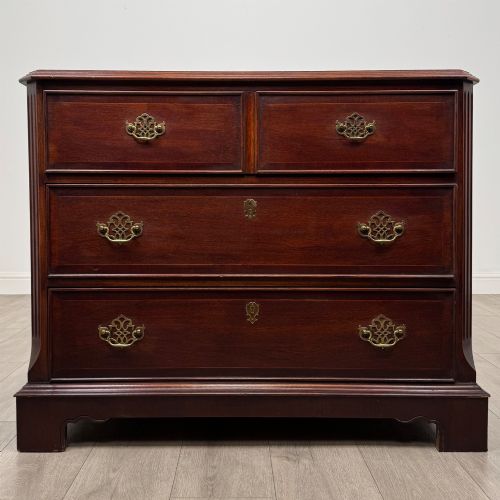
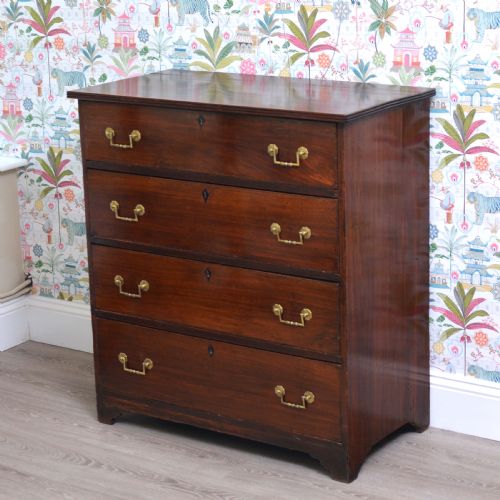
A colonial style chest serves as a versatile storage piece that draws on global design traditions from the seventeenth century through to the nineteen-thirties. You encounter various forms here, ranging from campaign trunks and blanket boxes to chests of drawers and strongboxes.
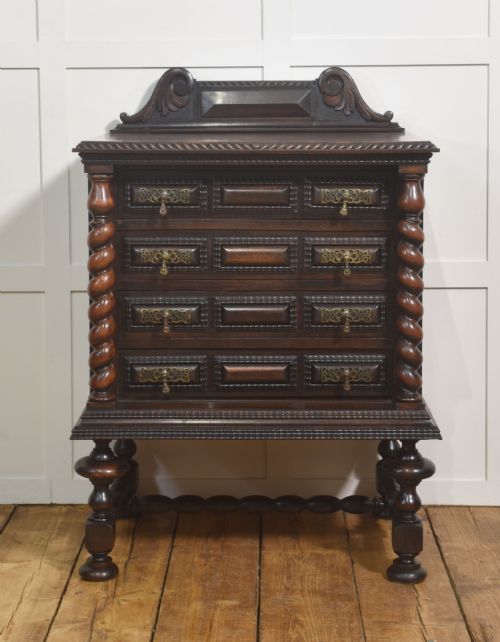
The selection includes pieces shaped by Anglo-Indian, Portuguese Colonial, Iberian Baroque, and American Federal influences. Many items date from the nineteenth century, reflecting the travel and trade of the era through robust construction.
Materials span from fragrant camphor wood and dense teak to rich mahogany, padauk, and rosewood. Brass mounts and iron bindings appear frequently to reinforce corners and edges for transit.
How they were made
Cabinetmakers utilised durable exotic timbers like teak, mahogany, camphor wood, and padauk to withstand varying climates. These woods were often polished to highlight natural grain patterns and rich colour.
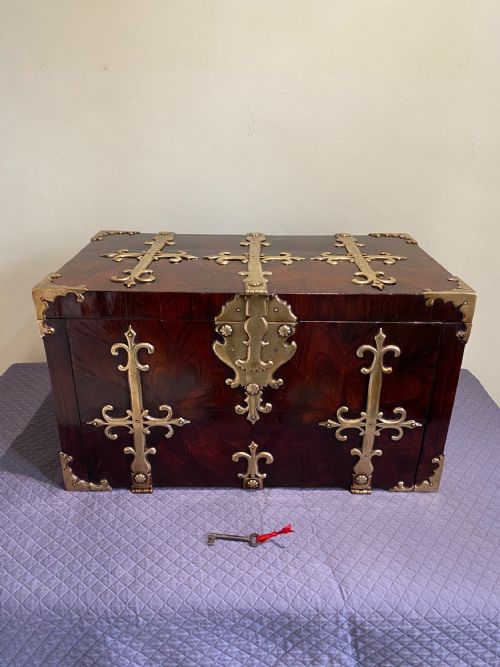
Metalwork played a structural role, with brass corners, straps, and flush-fitting handles hammered or screwed into place to protect the edges. Iron bindings also feature on travelling pieces designed for heavy use.
Carving appears on specific regional items, such as Anglo-Indian chests adorned with detailed plant or geometric motifs. Joinery techniques accommodated the movement of dense timbers over long journeys.
Camphor wood chests bring a distinct, enduring fragrance to a room that has outlasted decades of sea voyages and travels.
What varies in quality
Quality rests in the selection of timber and the precision of the metalwork. Dense hardwoods like rosewood and kingwood sit at a different level of craftsmanship compared to more straightforward utility boxes.
The integration of brass mounts, locks, and handles dictates the finesse of a travelling chest. Flush handles fitted neatly into recessed timber show careful hand-fitting.
Carved detail varies from sharp, deep relief work on regional pieces to simpler surface decoration. The integrity of the original construction and untouched surface patination separate fine examples from altered ones.
The Colonial Style Chest Glossary
- Camphor wood
- A fragrant timber often used for lining chests because its natural aroma repels insects. It appears frequently in nineteenth-century campaign pieces.
- Campaign trunk
- A portable chest built in sections with recessed brass handles and reinforced corners for military or travel use. These chests were designed to pack efficiently.
- Padauk
- A heavy, durable tropical hardwood with a reddish hue that darkens with age. It provides a stable surface for carved storage boxes.
- Crossbanded
- A technique where thin strips of veneer are laid across the grain of the primary wood to form a decorative border. It often frames drawer fronts on federal furniture.
- Strongbox
- A secure metal-bound chest or cofre forte used for storing valuables and documents. Iron bindings and robust locks secure the contents.
Colonial Style Chest: Frequently Asked Questions
How do I care for exotic wood furniture?
Keep exotic wood chests away from direct heat sources and sudden temperature shifts to prevent the timber from splitting. Dust regularly with a dry cloth and avoid harsh chemical polishes.
Applying a traditional beeswax occasionally helps nourish hardwoods like mahogany and rosewood. Ensure brass mounts are cleaned gently without abrasive cleaners touching the surrounding wood.
Where were these chests used?
These chests served administrators, military officers, and merchants travelling or residing in distant posts. They stored clothing, documents, and valuables during long sea voyages and land journeys.
Many pieces were made in workshops in India or Portugal before being transported back to British or European homes. Their robust construction allowed them to survive demanding climates and frequent transit.
How can I tell a campaign chest from a standard chest?
Campaign chests feature recessed brass handles and corner brackets designed to prevent snagging during transport. They are often built in two separate sections for easier loading on ships or animals.
Standard chests of drawers remain fixed as single units and rely on traditional projecting pulls. The presence of carrying handles on the sides is another strong indicator of travelling furniture.