



Colonial Style Chairs
Colonial style chairs are substantial seating forms shaped by global trade and movement across empires, offering both deep comfort and striking craftsmanship.
Colonial Style Chairs
When you search for colonial style chairs, you encounter seating that reflects global design exchanges across the eighteenth and nineteenth centuries. These pieces encompass everything from robust dining seating to elaborate daybeds and armchairs produced under diverse international influences.
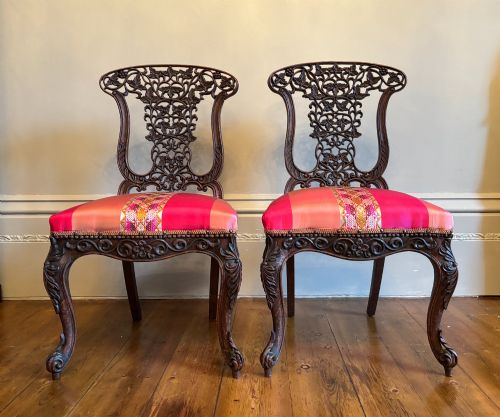
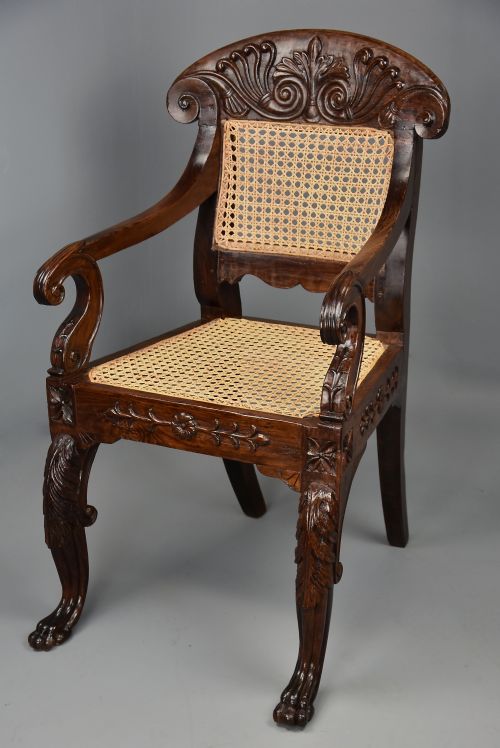
The versions most frequently met on this page include Anglo-Indian forms and nineteenth-century campaign pieces. They bridge European furniture conventions with regional cabinet-making traditions, resulting in distinctive seating solutions from various historical centres.
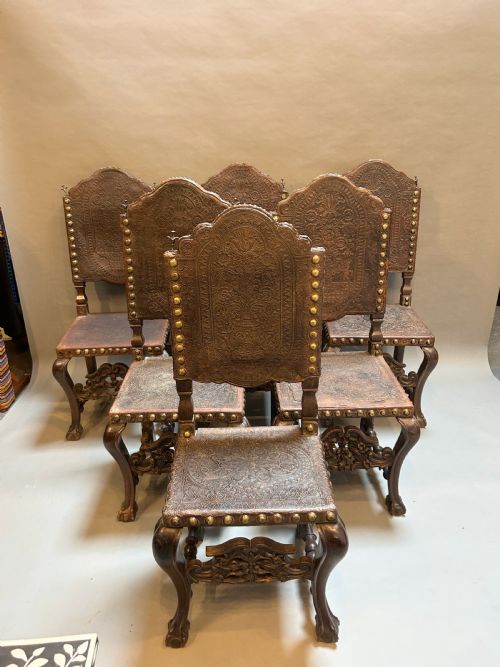
The selection ranges from Spanish revival dining sets and Dutch rococo settees to Burmese hardwood throne chairs and Portuguese oak examples. Each category displays specific regional construction methods and period stylistic markers.
Materials and construction
Makers utilised dense timbers native to regions influenced by European trade, relying heavily on padouk, teak, mahogany, walnut, and hardwood. These heavy woods provided the structural integrity needed for seating designed to withstand humid climates.
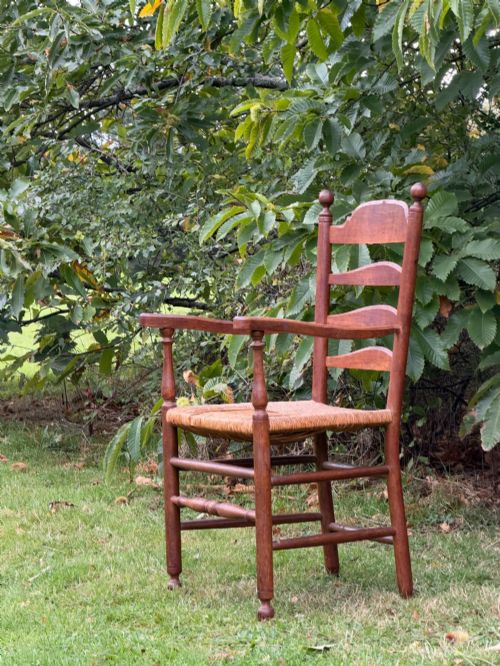
Construction frequently incorporated woven cane, rush seating, and fitted leather to ensure comfort in warm environments. Metal elements such as brass appear alongside carved details that merge local craftsmanship with European Regency, Baroque, or Rococo influences.
Colonial Style Chairs Retail Price Guide 2026
Typical asking prices for colonial style chairs among the pieces listed under this phrase on Sellingantiques today, from the lower quarter to the upper quarter. They describe what is for sale here now, not the wider market.
Materials represented across the inventory include cane, teak, brass, leather, mahogany, walnut, hardwood, and padouk.
Assessing quality
Quality rests upon the crispness of the carved ornamentation and the integrity of the timber framing. Pieces that retain their original woven cane seats or fitted leather upholstery demonstrate superior preservation.
The refinement of the joinery and the fidelity of stylistic execution distinguish finer examples from standard production. Coherence between European design templates and regional woodworking traditions dictates the standing of each piece.
The Colonial Style Chairs Glossary
- Anglo-Indian
- Furniture made in India by local craftsmen, usually for British residents or export, combining European forms with native carving techniques. This style produces distinctive seating with intricate floral or geometric motifs.
- Padouk
- A heavy, durable tropical hardwood prized for its rich reddish-brown colour and stability. Cabinet-makers favoured this material for high-status furniture destined for colonial outposts.
- Savonarola chair
- A folding chair of Italian Renaissance origin constructed from multiple curved wooden slats forming an X-shape. The design found renewed expression in various nineteenth-century global iterations.
- Campaign style
- Portable furniture engineered for easy disassembly and transport by military officers on the move. These items often incorporate brass hardware for reinforcement during transit.
Colonial Style Chairs: Frequently Asked Questions
What defines colonial style chairs?
These chairs combine European furniture forms with materials and carving traditions from regions touched by colonial trade. They span several centuries and include diverse types from Anglo-Indian armchairs to Spanish revival dining sets.
They reflect the cross-cultural exchange of design ideas between makers working in distant outposts and European stylistic movements.
How were these chairs used historically?
Many of these pieces served practical daily functions in tropical or administrative postings, offering cool seating through cane or rush panels. Others formed part of formal reception rooms in grand colonial residences.
Daybeds and chaise longues provided rest during the hottest parts of the day, while elbow chairs and settees furnished official spaces.
How do I care for hardwood and cane furniture?
Keep these pieces away from direct heat sources and sudden humidity changes to prevent the dense timbers from splitting. Natural cane seating requires gentle dusting and occasional light moisture to maintain its flexibility.
Avoid heavy commercial polishes that can build up on intricate carvings and dull the natural grain of padouk or teak.
How do I distinguish regional styles?
Look closely at the carved motifs and timber choices, as Anglo-Indian pieces often display deep floral relief work in padouk or teak. Dutch and Portuguese influences appear through specific furniture silhouettes like rococo curves or turned oak framing.
Examining the construction methods underneath helps connect the piece to its specific period and origin.