

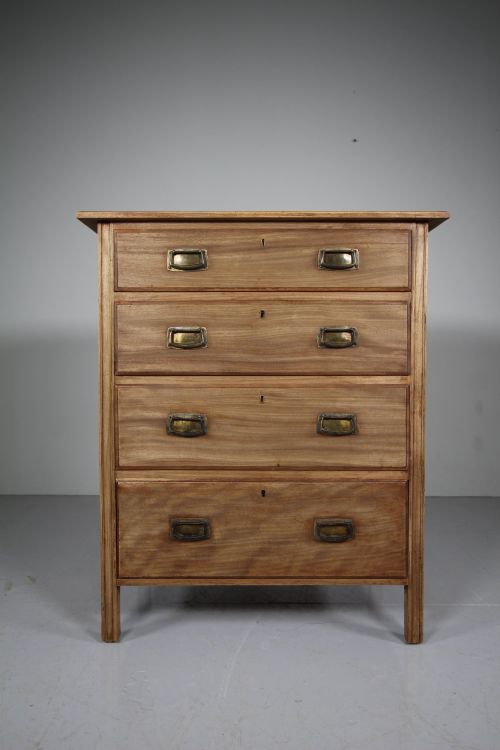
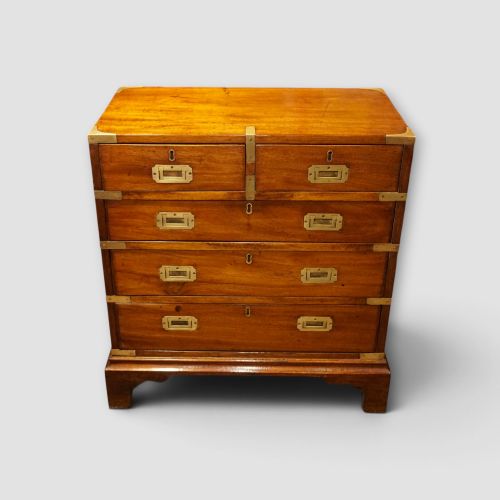
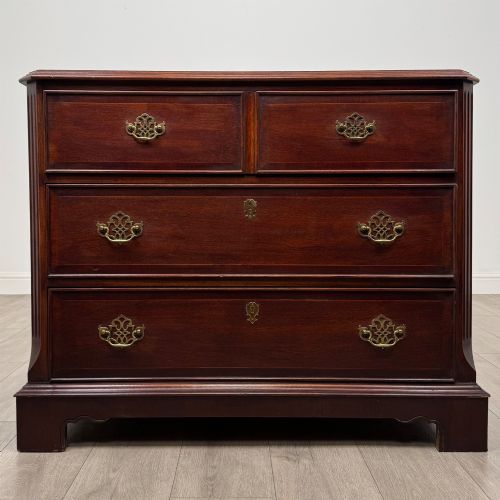
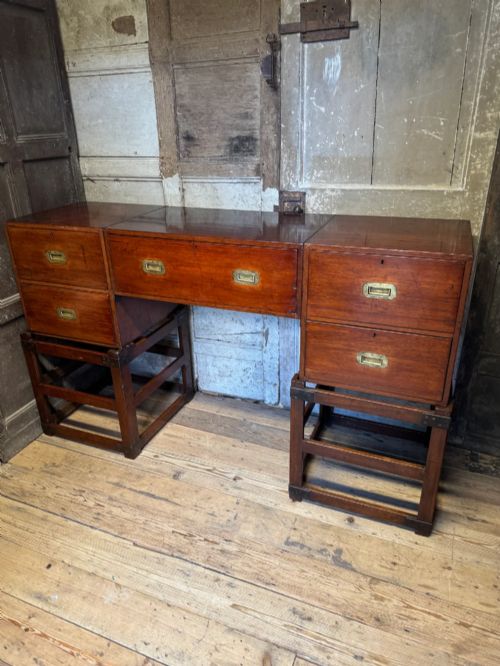




Colonial Mahogany Chest
A colonial mahogany chest offers travellers and traders sturdy storage, built from dense timber to withstand distant journeys across the seas.
Colonial Mahogany Chest
A colonial mahogany chest serves as practical storage forged in distant outposts and colonies, designed for transport or stately domestic use. These pieces bridge utilitarian military needs and refined overseas craftsmanship.
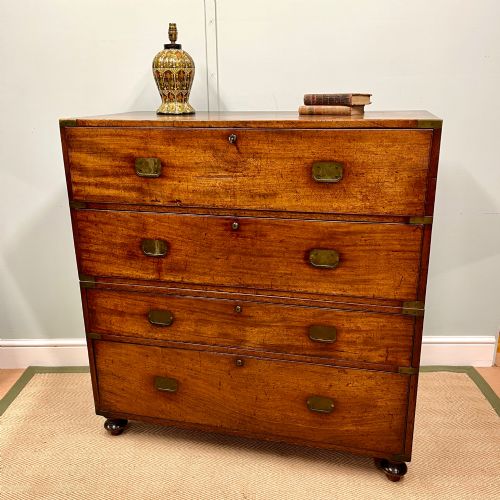
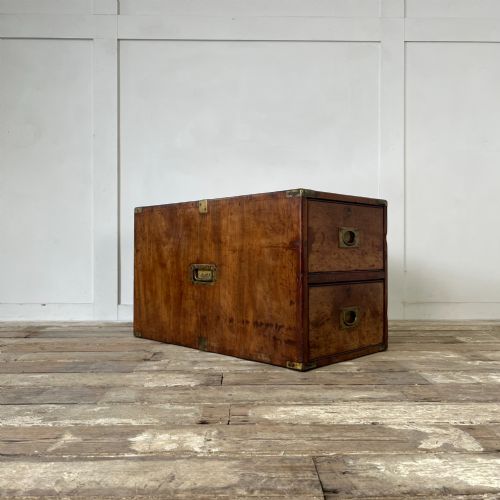
The versions most commonly met on this page span the nineteenth century, taking the form of campaign chests of drawers, secretaire desks, and sectional travel trunks. They reflect the practical requirements of officers and administrators on the move.
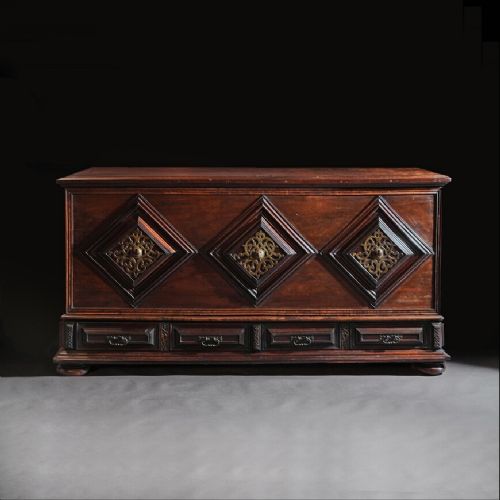
Makers utilised dense timbers alongside secondary woods, structuring them to endure shifts in climate without warping. Buyers encounter styles ranging from Anglo-Indian and Victorian campaign models to Portuguese colonial and American Federal designs.
What varies in quality
The calibre of a colonial mahogany chest rests upon the selection of timber and the precision of its brass mounts. Superior pieces display finely fitted internal secretaire drawers and well-preserved original hardware.
Construction integrity separates standard utility items from finer examples, particularly in how cleanly the sectional modules lock together. The depth of carving and the crispness of the timber grain dictate the standing of each piece.
Colonial Mahogany Chest Retail Price Guide 2026
Typical asking prices for colonial mahogany chest among the pieces listed under this phrase on Sellingantiques today, from the lower quarter to the upper quarter. They describe what is for sale here now, not the wider market.
Listings feature pieces spanning from the seventeenth century through to the Edwardian period, incorporating mahogany, teak, padauk, and brass.
The Colonial Mahogany Chest Glossary
- Campaign chest
- A modular chest of drawers built in two or more stacking sections, designed for easy transport by military officers. These pieces feature recessed brass handles and corner brackets to prevent snagging during travel.
- Secretaire chest
- A chest of drawers featuring a fitted top drawer that pulls down to reveal a writing surface and small pigeonholes. This combines desk functionality with standard drawer storage.
- Crossbanded
- A technique where a border of veneer is applied to the edges of a surface with the grain running perpendicular to the centre. It creates a decorative framing effect on drawer fronts and tabletops.
- Padauk
- A dense, durable tropical hardwood with a reddish hue utilised in colonial furniture making. It provides exceptional resistance to wear and environmental changes.
- Tallboy
- A tall chest of drawers consisting of one chest stacked on top of another deeper base chest. This form maximises vertical storage space in domestic interiors.
Colonial Mahogany Chest: Frequently Asked Questions
What is a campaign chest?
A campaign chest is a portable set of drawers designed for military officers on active service. They divide into separate stacking sections with recessed handles for transit.
These pieces prioritise sturdy construction and practical adaptability over static domestic elegance, allowing officers to pack and move their belongings efficiently.
How were these chests used?
Owners utilised them to transport clothing, documents, and personal valuables during long sea voyages and land expeditions. The robust timber and metal reinforcements protected contents from moisture and rough handling.
In settled quarters, they doubled as writing desks and primary storage furniture within colonial homes and military tents.
How do I live with a campaign chest?
You can integrate these chests into modern rooms as side tables, hallway storage, or bedroom focal points. Their modular nature allows for flexible placement and straightforward relocation.
Keep them away from direct heat sources to protect the polished timber and maintain the stability of the brass hardware.
How do I tell periods apart?
Earlier eighteenth-century pieces often display elaborate carving or highboy forms, while nineteenth-century campaign versions focus on modular brass-bound utility. Edwardian examples introduce later revival details.
Examining the types of secondary wood, joinery methods, and the style of brass mounts helps distinguish between the Georgian eras and later Victorian adaptations.