



Colonial Indian Bench
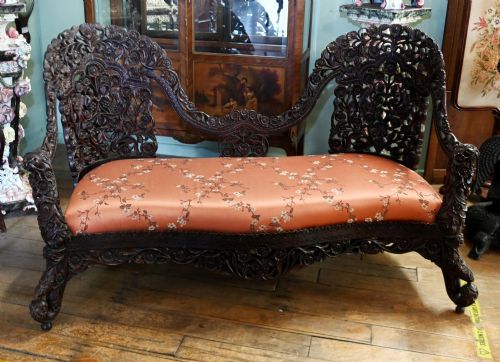
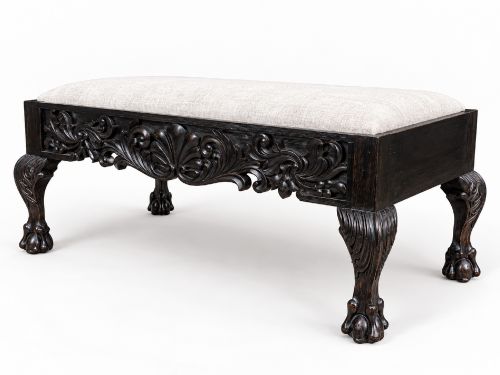
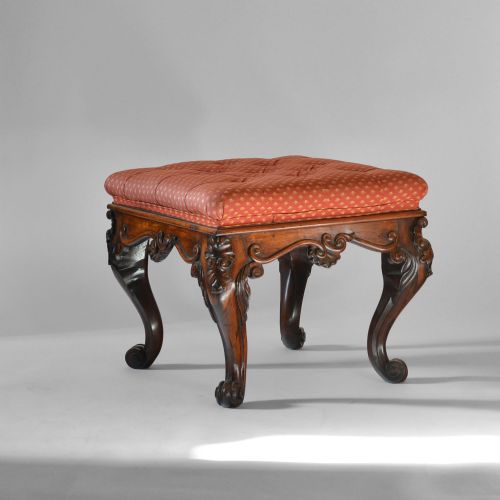
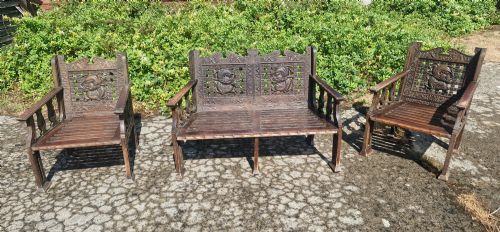
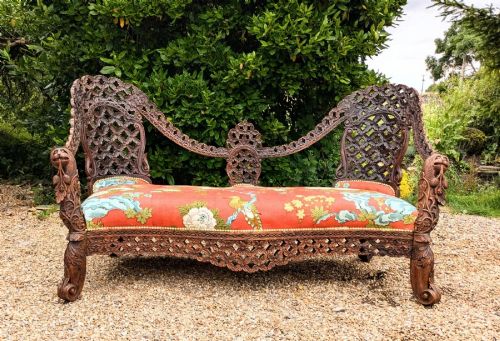
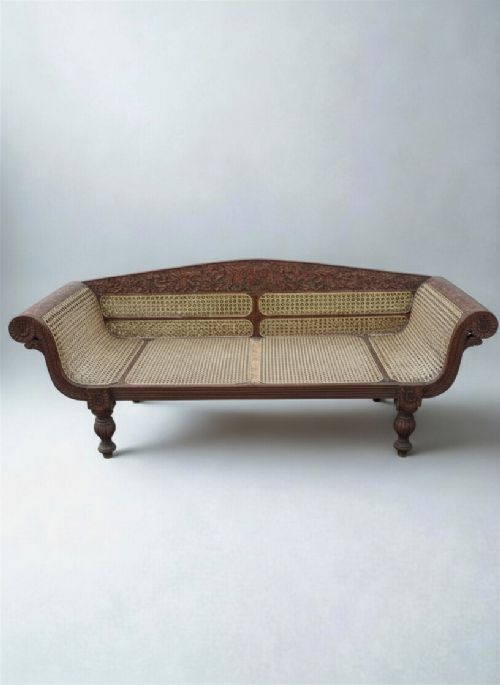
These colonial indian bench examples bring sturdy teak and rich rosewood into a hall, combining British seating forms with intricate eastern carving.
Colonial Indian Bench
A colonial indian bench sits at the intersection of British domestic forms and regional craftsmanship, appearing in variants like daybeds, hall benches, and window seats. The pieces on this page span the nineteenth century and the early twentieth century, showing influences from Victorian, Regency, and campaign styles.
Forms range from scroll-back benches to box settles with brass decoration and large veranda seating. Many incorporate caned panels or carved elements such as elephants, reflecting the distinct output of workshops in regions like Ceylon and Bombay.
How they were made
Carpenters utilised dense hardwoods such as teak, rosewood, and mahogany to build the structural frames of these seats. These timbers resist warping in humid climates while providing a sturdy base for deep carving.
Colonial Indian Bench Retail Price Guide 2026
Typical asking prices for colonial indian bench among the pieces listed under this phrase on Sellingantiques today, from the lower quarter to the upper quarter. They describe what is for sale here now, not the wider market.
The listings show materials ranging from sturdy teak and rich rosewood to bone inlay, brass, and woven cane across nineteenth-century and early twentieth-century dates.
What varies in quality
The depth and clarity of the carving dictate the visual standard of a piece, with crisp, hand-chiselled details separating superior work from simpler production. Wood selection also matters, particularly the richness of the grain in rosewood and the uniform density of the teak.
Structural integrity relies on the tightness of the joinery and the original condition of the cane or hardwood frames. Pieces that retain their original brass mounts and unblemished wood surfaces command greater appreciation.
The Colonial Indian Bench Glossary
- Cane
- Woven material made from the outer skin of rattan palms, commonly utilised for breathable seat panels. It offers a light yet resilient surface for tropical furniture.
- Campaign style
- Portable furniture designed for British military officers on the move, featuring removable legs or folding frames. These items balance practicality with sturdy construction.
- Box settle
- A wooden bench featuring a high back and a storage compartment beneath the hinged seat. It kept draughts away while holding household goods.
- Porcupine sofa
- A nineteenth-century seating form associated with specific regional turning techniques. The intricate spindle work resembles porcupine quills.
- Veranda bench
- Long seating designed for cool, shaded outdoor corridors in colonial houses. These benches utilise durable timbers like teak to withstand fluctuating temperatures.
Colonial Indian Bench: Frequently Asked Questions
Where did these benches sit in colonial homes?
These pieces found places on deep verandas, in entrance halls, and inside reception rooms where airflow mattered. They served as day seating during the heat of the day.
Owners often positioned them near windows or along wide corridors to catch cooling breezes. Their sturdy build suited both indoor living areas and semi-sheltered outdoor spaces.
How do I care for caned seat panels?
Caned panels require gentle cleaning with a damp cloth to remove dust from the woven interstices. Avoid soaking the material to prevent the natural fibres from becoming brittle.
Keeping the room at a moderate humidity level helps maintain the elasticity of the cane. Occasional light conditioning keeps the rattan flexible over decades of use.
Are these seats comfortable for daily use?
Many of these benches feature deep proportions and supportive cane or upholstered surfaces designed for lounging. Adding loose cushions can increase comfort for prolonged sitting.
Their firm wooden frames provide solid posture support compared to modern soft upholstery. Daybeds and settees offer ample space for lying down or relaxing.
What indicates a nineteenth-century origin?
Nineteenth-century pieces typically display hand-turned components, traditional joinery methods like mortise and tenon, and dense tropical hardwoods. Tool marks left by hand chisels often remain visible on the underside.
Stylistic cues such as Regency scroll arms or Victorian proportions also point to this era. The patination on the rosewood and teak develops a deep lustre over generations.