






Colonial Furniture Box
These colonial furniture box pieces are practical travel chests and portable desks built for officers and merchants across distant empires.
Colonial Furniture Box
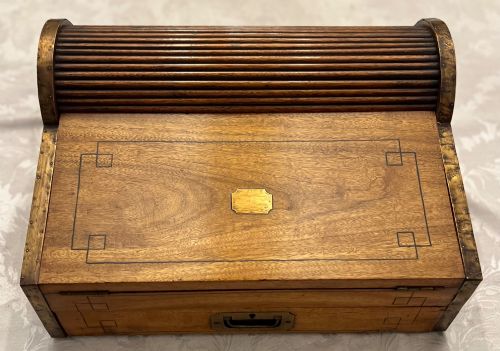
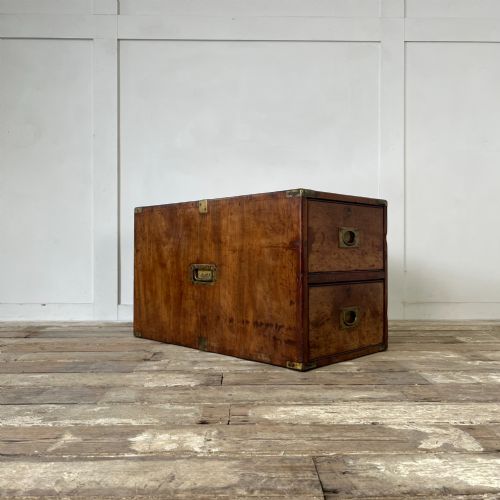
A colonial furniture box serves as a portable storage vessel, taking forms such as writing boxes, campaign chests, and desktop storage units. These pieces emerge from periods spanning the eighteenth and nineteenth centuries, reflecting trade and military movement across global routes.
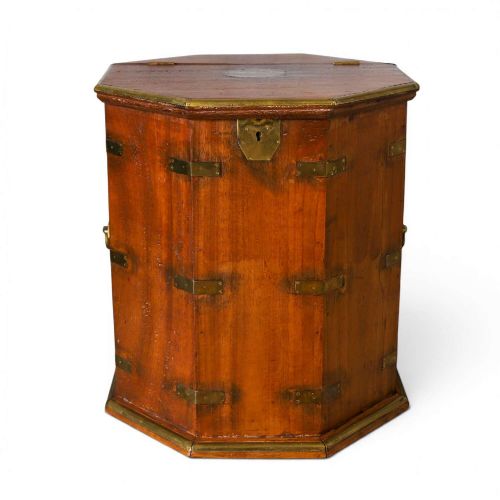
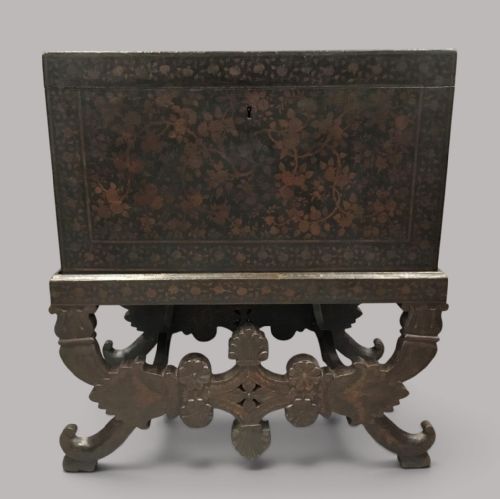
The objects on this page lean heavily toward Anglo-Indian and campaign styles, alongside Dutch colonial and Spanish baroque examples. Buyers most frequently meet camphor wood and teak chests fitted with brass corners and handles for transit.
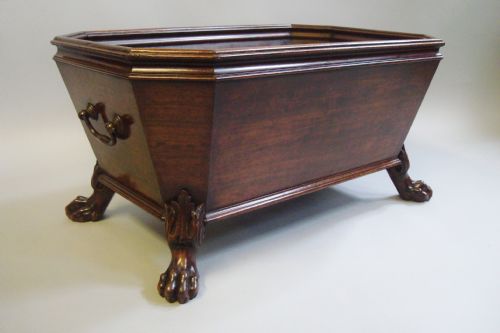
Beyond standard trunks, the selection includes collector chests, cellarettes, and writing boxes designed for desktop use. Each form combines sturdy construction with compartments intended to protect valuables on long journeys.
How they were made
Cabinetmakers utilised dense timbers such as teak, camphor wood, padouk, and walnut to withstand humid climates and rough transport. These woods were often banded with brass and fastened with wrought iron to reinforce corners and edges against heavy impacts.
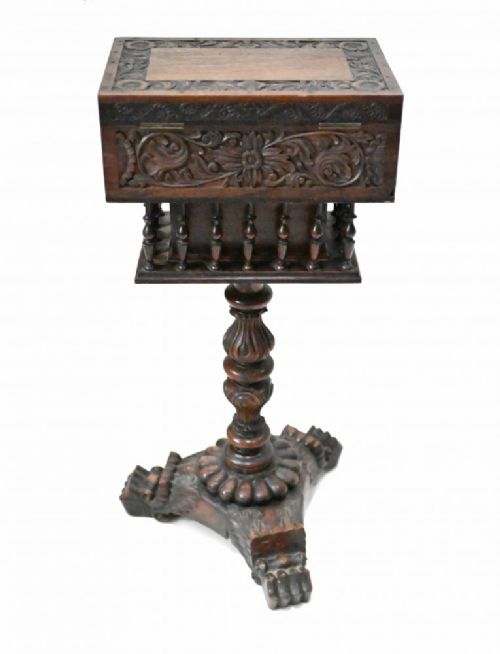
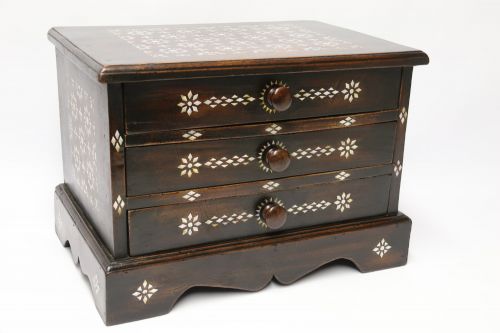
Construction techniques prioritised modular strength, dividing larger chests into sections or fitting interiors with secret drawers and writing slopes. Inlaid bone and detailed carving frequently adorn the exterior surfaces of Anglo-Indian pieces.
Colonial Furniture Box Retail Price Guide 2026
Typical asking prices for colonial furniture box among the pieces listed under this phrase on Sellingantiques today, from the lower quarter to the upper quarter. They describe what is for sale here now, not the wider market.
What varies in quality
Quality rests in the integrity of the timber framing and the precision of the brass hardware fittings. Superior pieces display seamless dovetail joints and original mounts that remain firmly anchored to the wood.
The fineness of interior detailing separates standard utility boxes from exceptional examples. Original locks, intact secret compartments, and refined bone or ivory inlay indicate higher workshop standards.
The Colonial Furniture Box Glossary
- Campaign chest
- A modular chest built in sections with recessed brass handles for military officers on the move. These pieces separate into stacked units to ease transport on campaigns.
- Camphor wood
- An aromatic timber prized for furniture destined for tropical climates. Its natural scent repels insects and protects the contents stored within.
- Brass bound
- A method of reinforcing box edges and corners with metal strips and brackets. This technique protects the timber from heavy knocks during transit.
- Writing box
- A portable slope-topped desk containing compartments for ink, pens, and paper. When opened, the hinged lid forms a sloping surface for correspondence.
- Cellarette
- A fitted box or chest used to hold bottles of wine or spirits. They often feature internal divisions to keep glass vessels secure during travel.
Colonial Furniture Box: Frequently Asked Questions
How were these boxes used?
These boxes functioned as mobile desks, storage chests, and drinks cabinets for travellers navigating remote regions. Their compartmentalised interiors kept documents, valuables, and personal items organised during long sea voyages and overland journeys.
Many designs feature folding writing slopes, secret drawers, and robust carrying handles suited to frequent relocation.
How do I care for camphor wood?
Camphor wood requires stable indoor humidity levels to prevent the timber from drying out or splitting over time. Avoid placing these chests near direct heat sources or in areas subject to rapid temperature shifts.
Occasional light dusting with a soft cloth preserves the polished surface without the need for heavy chemical polishes.
How can I tell the period?
Dating relies on examining construction methods, timber choices, and the style of brass hardware fitted to the piece. Eighteenth-century examples often display simpler, heavier framing, while nineteenth-century campaign pieces favour modular brass-bound designs.
Regional characteristics, such as Anglo-Indian carving or Dutch colonial proportions, further indicate the era of manufacture.