


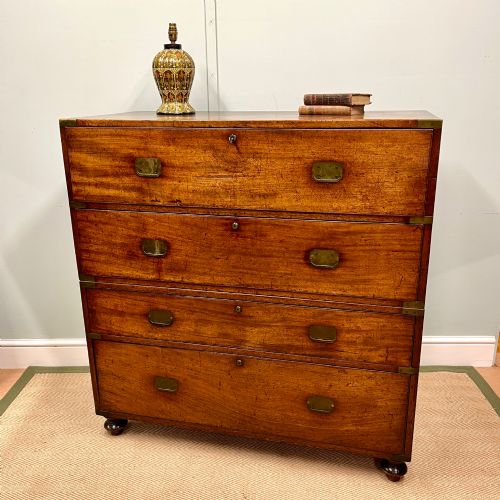


Colonial Chest of Drawers
A colonial chest of drawers brings robust campaign design and travelled timber into a room, offering practical storage with distinct historical utility.
Colonial Chest of Drawers
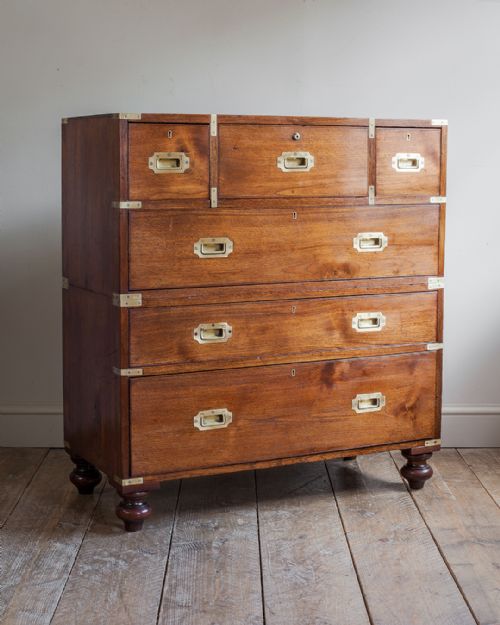
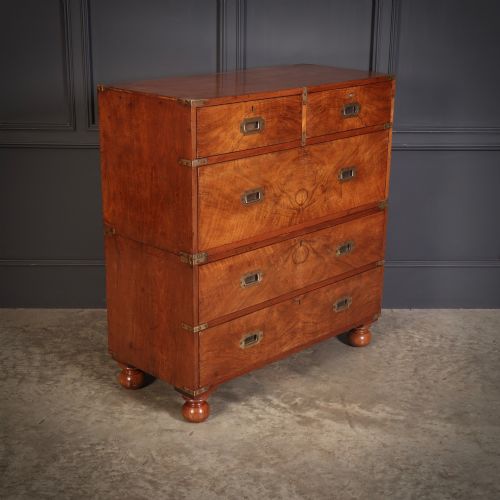
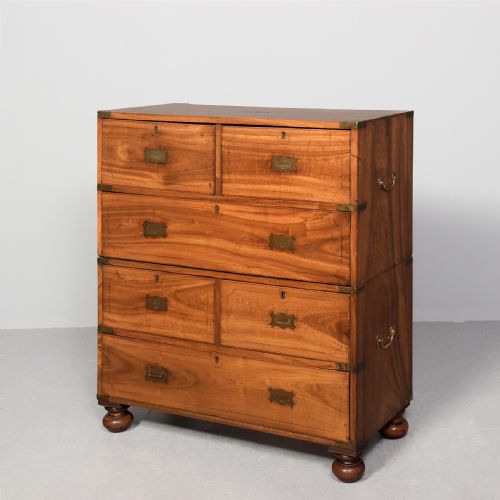
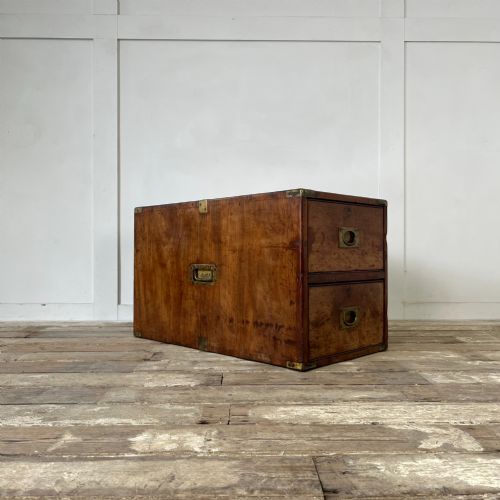
A colonial chest of drawers encompasses practical storage pieces made for travel and distant outposts during the eighteenth and nineteenth centuries. Buyers most frequently encounter two-part military campaign chests built from dense tropical hardwoods, designed to split apart for transport.
The selections span distinct regional variants including Anglo-Indian, Dutch colonial and Chinese export pieces. These range from heavy camphor wood and teak storage boxes to secretaire bureaux fitted with writing drawers and fold-down desks.
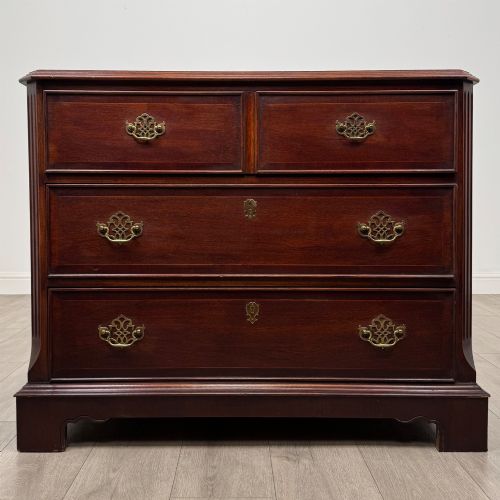
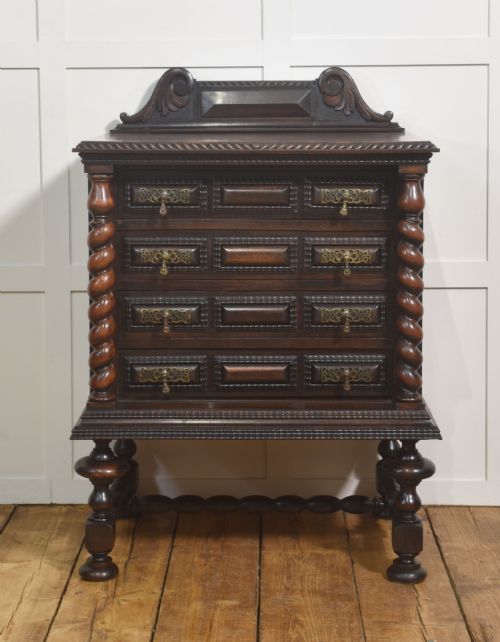
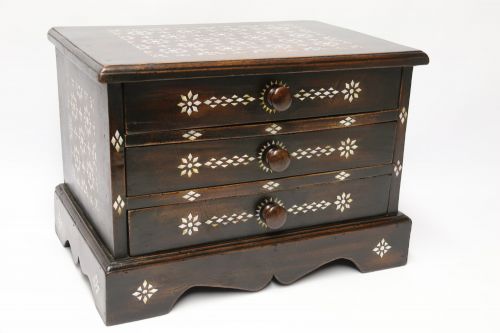
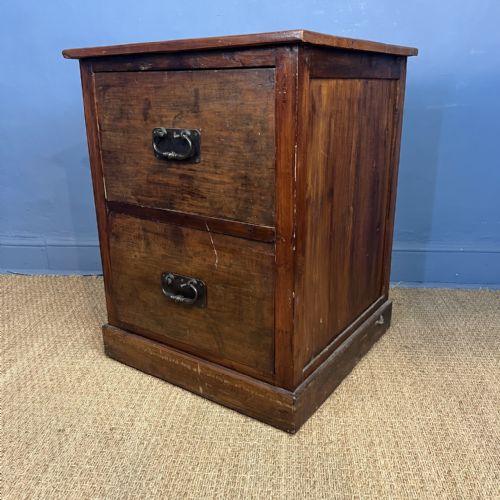
Many examples date from the Victorian era, alongside eighteenth-century works and early twentieth-century interpretations. Beyond standard drawer configurations, the category includes collector chests, filing cabinets, tallboys and cabinets on stands.
How They Were Made
Constructed primarily from durable timbers such as teak, mahogany, camphor wood, padouk and rosewood to withstand humid climates and frequent transit. These dense woods are often paired with brass hardware, including corner brackets, strapping and recessed flush handles that prevent snagging during movement.
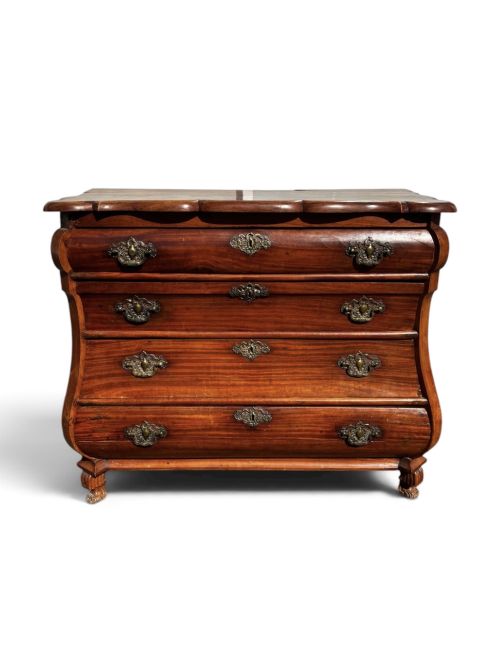
Listings feature eighteenth-century Dutch colonial solid satinwood and nineteenth-century teak campaign chests.
What Varies in Quality
The standard of a colonial chest of drawers rests on the integrity of its timber selection, the crispness of its brass mountings and the original condition of its internal fittings. Superior examples retain matching wood grains across sectional halves and incorporate intact secretaire drawers with fully functioning pigeonholes.
Construction details distinguish workshop tiers, from robust military pieces built with heavy-duty recessed hardware to decorative Anglo-Indian and Dutch colonial furniture featuring elaborate carved details, solid satinwood bodies or bone inlay. Original transportation cases and unpolished surfaces elevate historical value.
Army And Navy·Arthur Foley And Son·Graves And Sons
The Colonial Chest of Drawers Glossary
- Campaign chest
- A sectional storage cabinet built in two or more parts with recessed brass handles and corner braces for military transport. These pieces were designed to be easily packed and moved on expeditions.
- Secretaire chest
- A chest of drawers featuring a pull-out drawer with a fitted drop-front writing surface and internal pigeonholes. This combines wardrobe storage with a compact bureau.
- Camphor wood
- A fragrant tropical timber utilised for campaign furniture because its natural oils repel insects. It provides a distinct scent and a durable carcase for maritime travel.
- Two-part chest
- A modular furniture design where the upper and lower sections separate completely for transit. The halves stack securely using internal alignment pins.
- Padouk
- A heavy, reddish-brown tropical hardwood favoured by cabinetmakers in colonial workshops for its resilience and fine finish. It holds intricate carved details exceptionally well.
Colonial Chest of Drawers: Frequently Asked Questions
Why are these chests made in two parts?
Sectional construction allowed British officers, officials and merchants to pack heavy belongings securely for long journeys by ship, train or pack animal.
Splitting the carcase into manageable upper and lower halves made transport through tight spaces and rugged terrain practical during constant relocation.
How do I identify camphor wood?
Camphor wood is recognised by its distinct, aromatic scent and a pale golden-brown grain that darkens gracefully over time. The timber was specifically chosen for overseas travel because its natural oils protected stored garments from insects.
Many nineteenth-century military chests utilise this wood for its lightweight durability compared to denser timbers like teak or padouk.
What is a secretaire drawer?
A secretaire drawer conceals a fitted writing desk behind a false drawer front that pulls out and folds down on hinges. Inside, you will find small drawers, cubbies and leather writing surfaces designed for correspondence.
This built-in workspace saved valuable floor space in cramped campaign quarters or ship cabins.