





Colonial Carved Wooden Stool
A colonial carved wooden stool brings intricate craftsmanship and dense timber into a room, offering both seating and rich texture.
Colonial Carved Wooden Stool
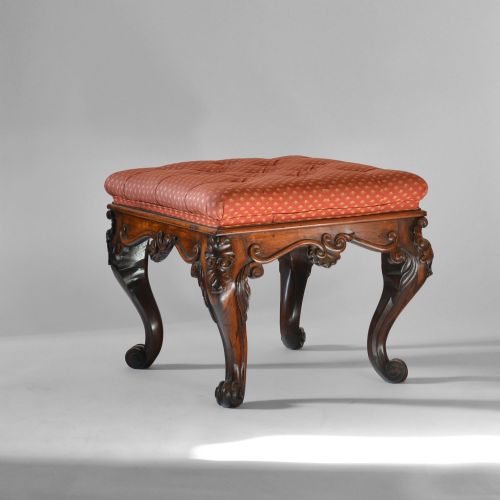
A colonial carved wooden stool emerges from 19th-century workshop traditions, spanning periods like the late Victorian era and the years around 1890, 1900, and 1920. These pieces frequently appear in Anglo-Indian, Anglo-Burmese, Batavian Baroque, and Hoshiarpur styles, reflecting the cross-cultural designs of their origins.
Buyers encountering this search phrase will find various forms including footstools, ottomans, side tables, occasional tables, and hall benches alongside standard seating. Hardwood, teak, rosewood, sandalwood, and painted wood form the primary structures, sometimes enhanced with fabric or bone inlay.
How they were made
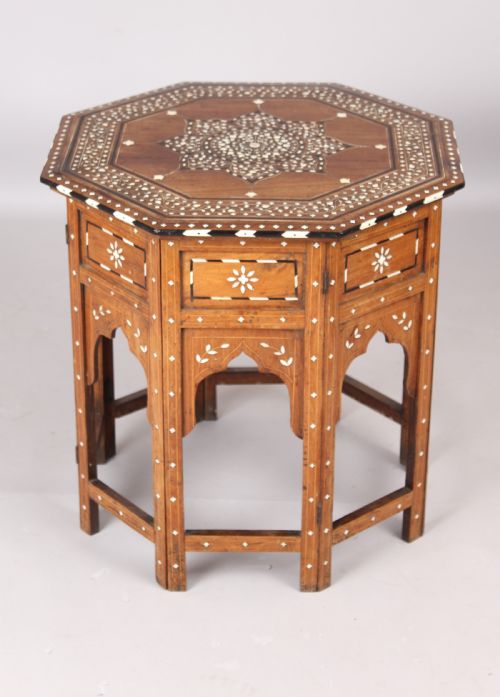
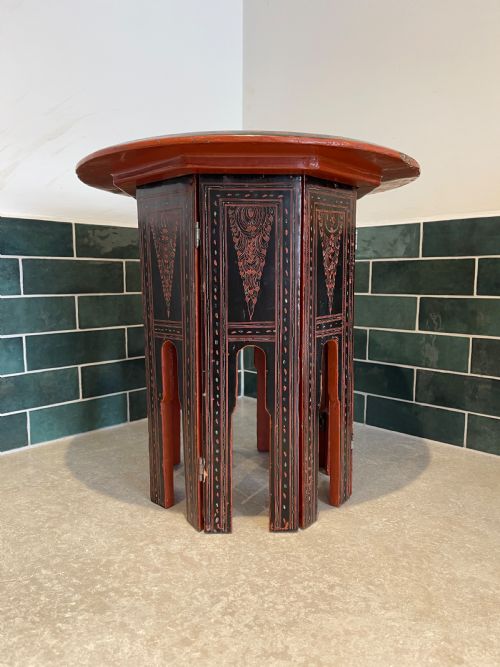
Craftsmen utilised dense timbers such as teak, rosewood, hardwood, and sandalwood to build these items, carving deep ornamentation directly into the wood. Intricate surface decoration often incorporated bone inlay and painted wooden details.
Some examples combined carved wooden frames with woven rattan or upholstered fabric surfaces, uniting structural joinery with textile elements.
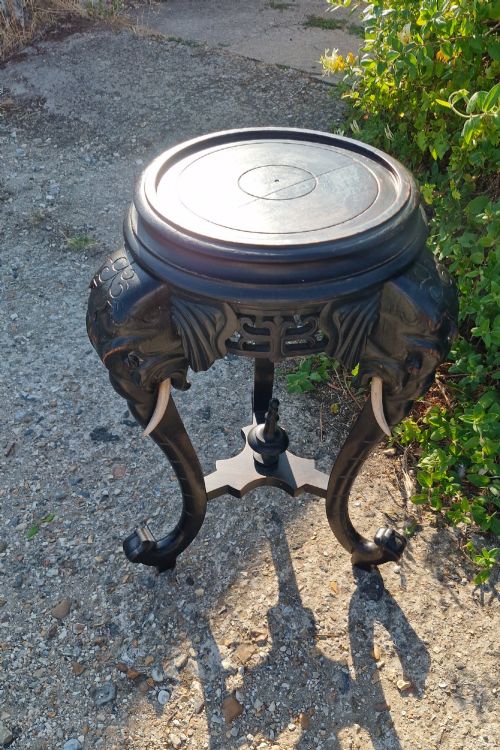
Several tables and benches feature carved wooden elephants acting as structural legs or sporting painted wooden tusks.
What varies in quality
The depth and crispness of the carving distinguish different examples, where sharply defined motifs demonstrate greater artisan control than softer or shallower incisions. The complexity of regional decorative programmes, such as intricate Hoshiarpur bone inlay or figural elephant elements, also elevates a piece.
Selection of timber grades plays a role, with heavy hardwoods and richly grained rosewood or teak offering superior durability and presence compared to plainer painted wood surfaces.
The Colonial Carved Wooden Stool Glossary
- Anglo-Indian
- A style describing furniture made in India during the British period, combining local craftsmanship with European forms.
- Hoshiarpur
- A North Indian centre known for intricate wooden furniture featuring dense geometric or floral bone inlay.
- Batavian Baroque
- A colonial style originating in Batavia, characterised by exuberant carved ornamentation on heavy timber furniture.
- Bone inlay
- A decorative technique where small pieces of bone are set flush into recesses carved into a wooden surface.
- Rattan
- A slender climbing palm used in woven form for seat panels and structural inserts.
Colonial Carved Wooden Stool: Frequently Asked Questions
What periods do these stools come from?
These items date from the 19th century, including specific years around 1880, 1890, 1900, and 1920.
Victorian and late Victorian periods also appear frequently among the listings.
How were these pieces used historically?
They served as practical seating, footstools, ottomans, and low tables within colonial interiors.
Many examples functioned as versatile occasional furniture in drawing rooms and hallways.
What woods are commonly found?
Hardwood, teak, rosewood, and sandalwood form the primary structural materials for these pieces.
Painted wood and bone inlay are frequently added to enhance the surface decoration.
How do regional styles differ?
Anglo-Indian and Hoshiarpur pieces often feature elaborate floral carving and bone inlay, while Burmese items display distinct figural elements like elephant supports.
Batavian Baroque pieces lean towards heavy, exuberant carved forms originating from Dutch colonial regions.