


Colonial Carved Wood Bench
A colonial carved wood bench brings regional craftsmanship and dense tropical timbers into domestic rooms with substantial presence.
Colonial Carved Wood Bench
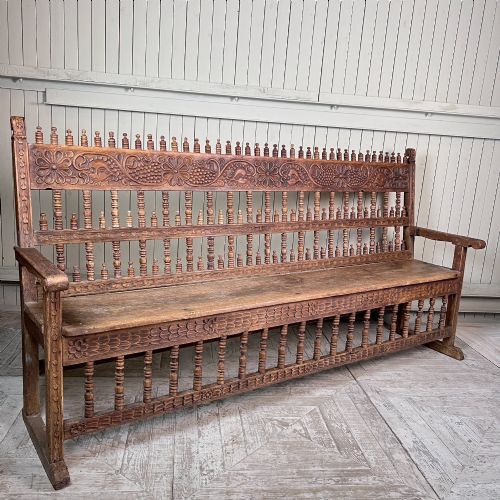
When you search for a colonial carved wood bench, you examine seating shaped by global trade routes and domestic utility across the eighteenth, nineteenth, and early twentieth centuries. These forms bridge diverse cultures, incorporating European upholstery conventions with distinct regional woodwork traditions from regions such as India, Ceylon, Burma, and Spanish colonial territories.
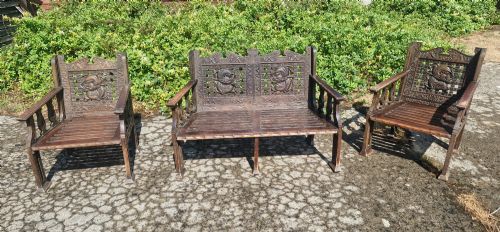
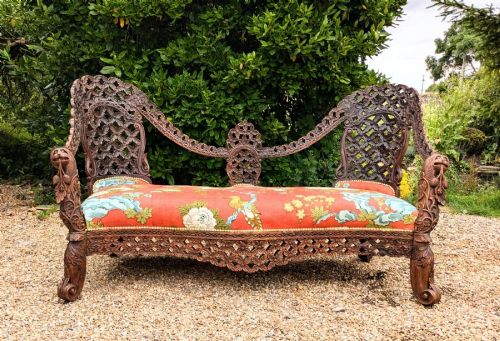
You are most likely to meet pieces from the nineteenth century on this page, particularly Anglo-Indian settees, daybeds, and hall benches created in dense tropical hardwoods. These examples often feature cane panels, turned supports, and elaborate hand-carved motifs reflecting local flora, fauna, and architectural ornamentation.
The category extends beyond simple benches to encompass settees, window seats, and expansive veranda furniture designed for warm climates and later adapted for English country houses and conservatories. Each item records the movement of design ideas between Britain, Europe, and the colonies, resulting in hybrid forms that remain both decorative and durable.
Materials and construction
Carpenters utilised heavy native timbers such as teak and various local hardwoods capable of sustaining deep relief carving without splitting. These woods were worked by hand using traditional joinery methods suited to tropical humidity and long-distance transport.
Cane work appears frequently on seats and back panels to provide cool seating, woven tightly through drilled frame apertures. Bone inlay and intricate surface engraving add linear detail to stiles and crest rails, contrasting against the dark grain of the underlying timber.
Assessing quality and execution
Quality rests upon the crispness of the hand-carved ornament and the depth of relief work across the frame. Superior pieces display proportional harmony and clean joinery that conceals structural repairs while maintaining the integrity of the original timber.
The condition of integrated cane work and secondary materials such as bone inlay heavily influences the standard of an item. Pieces retaining original surface patination without aggressive modern stripping demonstrate better preservation of their historical character.
The Colonial Carved Wood Bench Glossary
- Anglo-Indian
- Describing furniture made in India during the British period, combining British domestic forms with local carving styles and timbers. These items often incorporate dense hardwoods and native iconography.
- Cane
- Woven material made from the peeled outer bark of rattan palms, utilised for resilient and breathable seat and back panels. It requires careful maintenance to prevent drying and breakage.
- Hardwood
- Dense timber derived from broad-leaved trees, including teak, favoured for its structural stability and resistance to wood-boring insects. It forms the primary structural body of these seats.
- Settee
- A wide wooden or upholstered seat with a back and arms, designed to accommodate multiple people. These versions frequently display ornate crest rails and turned leg supports.
- Veranda Bench
- Large seating furniture constructed for shaded outdoor galleries in colonial residences. They are typically built from heavy teak to withstand fluctuating environmental conditions.
Colonial Carved Wood Bench: Frequently Asked Questions
How do I care for a cane seat?
Keep the woven cane clean by dusting it gently with a soft brush and wiping it occasionally with a damp cloth to maintain moisture.
Avoid placing these items near direct heat sources or in overly dry rooms, which can cause the natural fibres to become brittle and snap.
Where were these benches originally placed?
Colonial benches served primarily in deep verandas, hallways, and large reception rooms to provide cool, elevated seating in warm climates.
Later examples were frequently imported into British country houses for use in conservatories, garden rooms, and entrance halls.
Are these benches comfortable for daily use?
Many examples feature ergonomic sloped backs and woven cane panels designed specifically for airflow and comfort in humid environments.
Wooden settles and hall benches can be softened further with loose cushions or squabs tailored to fit the seat dimensions.
How do I distinguish an 18th-century piece from later copies?
Early pieces typically exhibit hand-cut joinery marks, iron fixings appropriate to the period, and deep, hand-carved patination acquired through decades of use.
Examine the underside and hidden framing areas for tool marks and timber shrinkage that confirm authentic age rather than twentieth-century reproduction work.