




Collectors Coin Chest Drawers
These collectors coin chest drawers organise small specimens securely within multiple fitted compartments.
Collectors Coin Chest Drawers
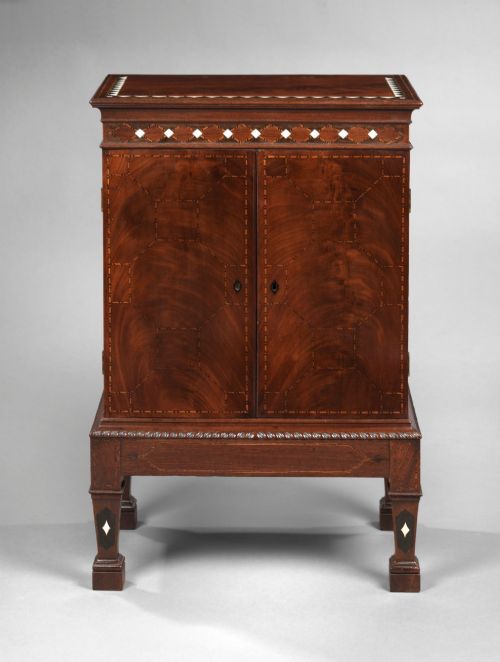
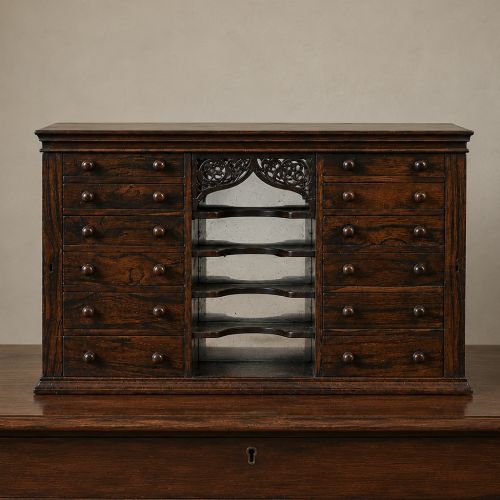
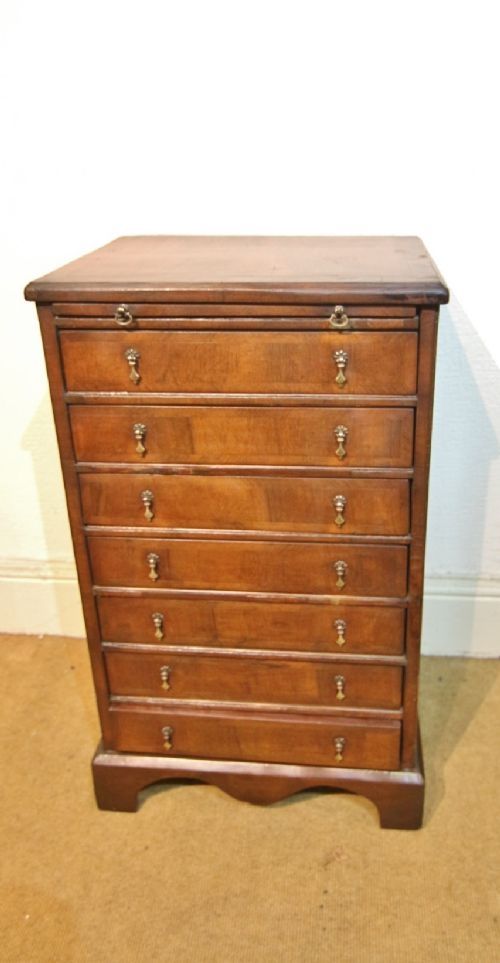
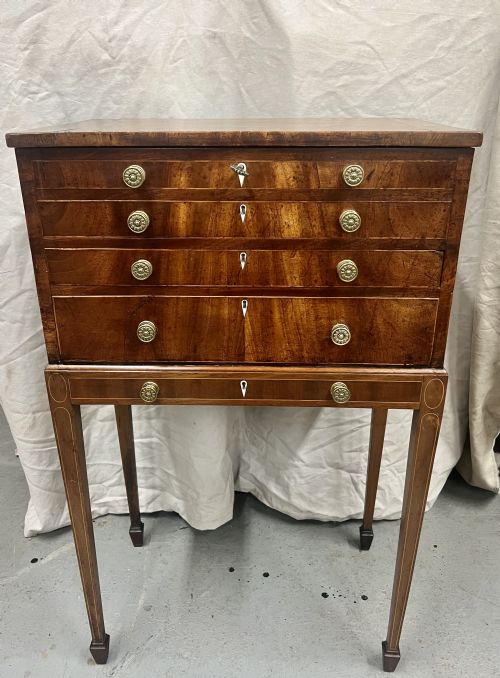
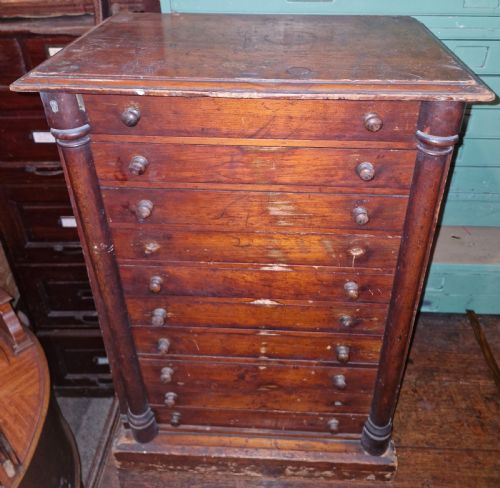
Collectors coin chest drawers are multi-drawer storage pieces designed to house small specimens, emerging primarily from Georgian, Regency, and Victorian periods. You will frequently encounter mahogany and walnut examples featuring banks of shallow drawers suited for sorting items.
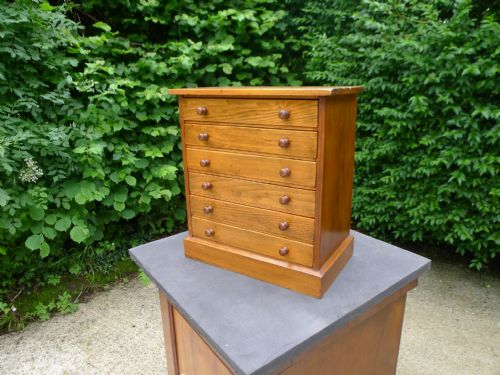
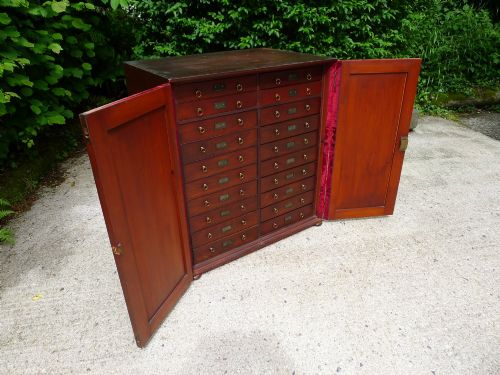
The format ranges from compact desktop specimen cases to large floor-standing cabinets holding dozens of drawers. Many survivors utilise solid timbers or secondary woods like deal and pine, constructed for practical sorting and display.
Materials and Construction
Cabinet makers built these pieces using dense hardwoods such as mahogany, oak, and walnut, often accenting them with veneers like burr walnut or satin birch. Brass hardware, including drop handles and locks, appears frequently to secure the small drawer banks.
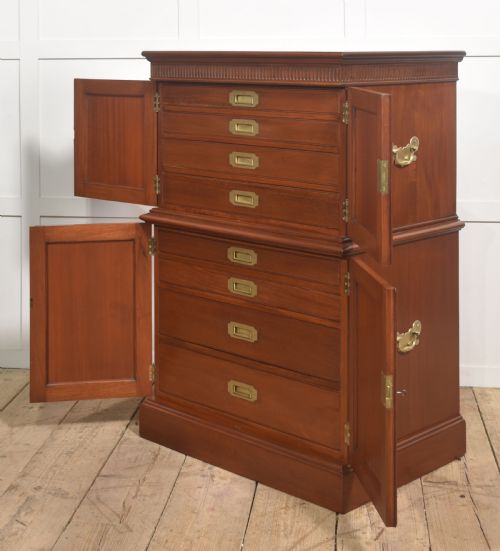
Internal construction relies on tightly fitted timber drawers, sometimes paired with glass doors or mirrored components. Secondary woods like deal and pine formed the internal framing and drawer linings.
Some forty-drawer cabinets required remarkable patience from the insects inside them.
Factors of Quality
Quality rests in the density and selection of the timber, from plain deal to figured English oak and solid Cuban mahogany. The scale of the drawer count, ranging from compact five-drawer boxes to extensive forty-drawer storage banks, distinguishes finer workshop output.
Maker attribution and documented provenance elevate specific pieces, as seen in signed works from workshops like Brady of Edmonton. Precision in the joinery of numerous small drawers dictates the standard of execution.
Brady of Edmonton·Charles William Schofield
The Collectors Coin Chest Drawers Glossary
- Specimen cabinet
- A multi-drawer piece intended for the storage of natural history items, coins, or small collectibles. These units feature shallow drawers designed to protect delicate objects.
- Wellington chest
- A tall chest of drawers secured by a locking hinged side strip that fastens over the drawer edges. This form appears in Regency and Victorian periods.
- Deal
- Fir or pine timber commonly utilised by cabinet makers for secondary framing and internal construction. It provides a stable base beneath finer veneers.
- Brass drop handle
- A suspended metal pull attached to drawer fronts via backing plates. These fittings facilitate the operation of heavy or numerous small drawers.
Collectors Coin Chest Drawers: Frequently Asked Questions
What were collectors coin chest drawers used for?
These cabinets stored classification specimens, natural history items, and valuable small objects within shallow partitioned drawers. Collectors relied on them to keep delicate items protected and catalogued.
Cabinets offered secure storage through locking doors or hinged locking stiles, ensuring contents remained undisturbed. Their multi-drawer configuration allowed systematic sorting by category or type.
How do I date a collectors chest?
Dating relies on timber selection, structural hardware, and prevailing stylistic periods such as Georgian, Regency, or Victorian. Earlier pieces often utilise solid Cuban mahogany or oak, while later Victorian and 1900 examples introduce satin birch and deal.
Inspect the drawer construction and handles, as brass drop handles and dovetail joints evolved over the nineteenth century. Maker signatures or stamps on the drawer linings also help establish precise manufacturing decades.
Where should I place a specimen chest?
Place these chests on sturdy surfaces, low tables, or dedicated stands away from direct sunlight and temperature fluctuations. Solid woods and delicate veneers react poorly to extreme environmental shifts.
Desktop or compact variations suit study spaces or tabletops, while larger multi-drawer banks require stable floor placement. Ensure adequate clearance around the cabinet doors and drawers for easy access.
How do Victorian chests differ from Georgian ones?
Georgian and Regency chests frequently employ dense Cuban mahogany and understated classical proportions, sometimes incorporating stands. They reflect eighteenth and early nineteenth-century cabinet-making traditions.
Victorian iterations often expand the drawer count significantly, introducing glass fronts, varied secondary timbers like deal, and occasional campaign styling. Later nineteenth-century examples embrace diverse veneers including walnut and satin birch.