


Collector Storage Drawers
Collector storage drawers offer purposeful compartmentalisation for specimens and small items, combining functional utility with cabinet-making skill.
Collector Storage Drawers
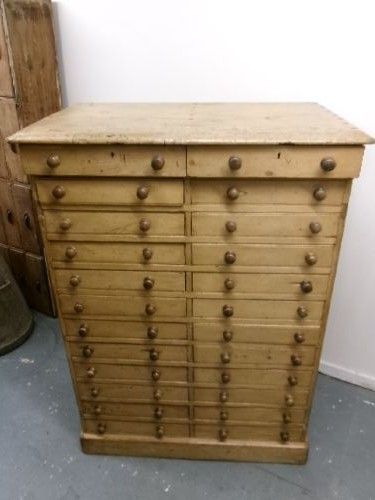
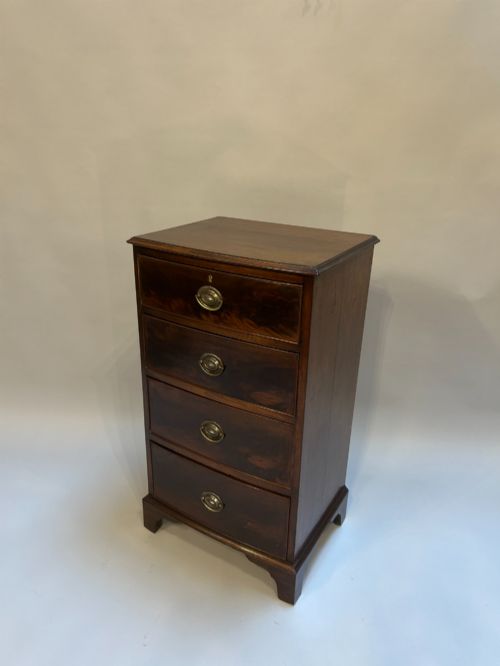
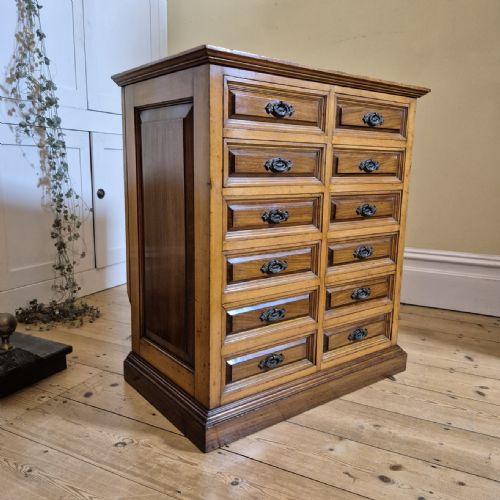
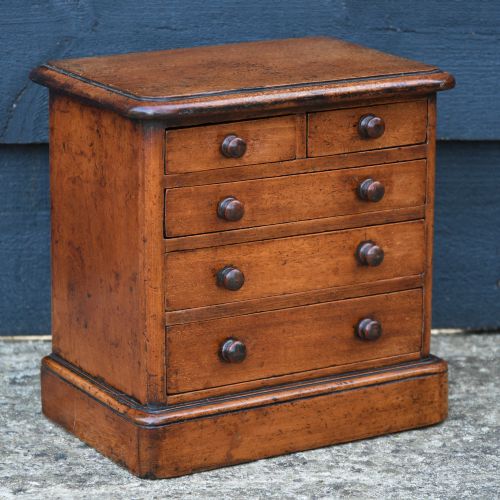
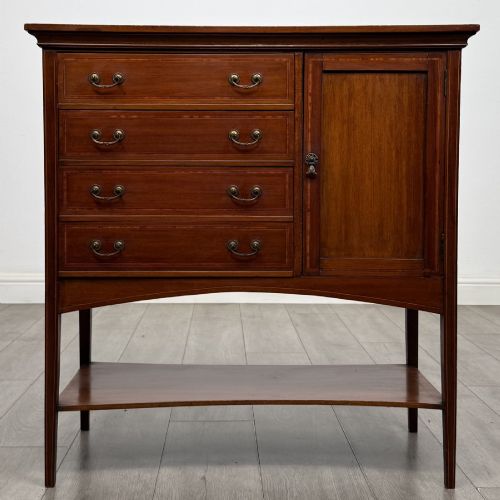
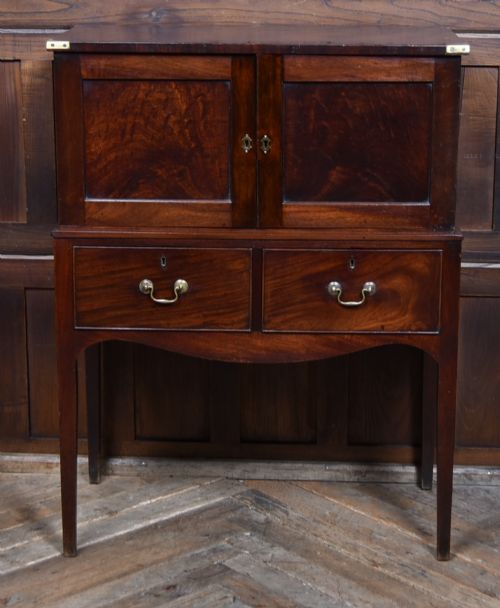
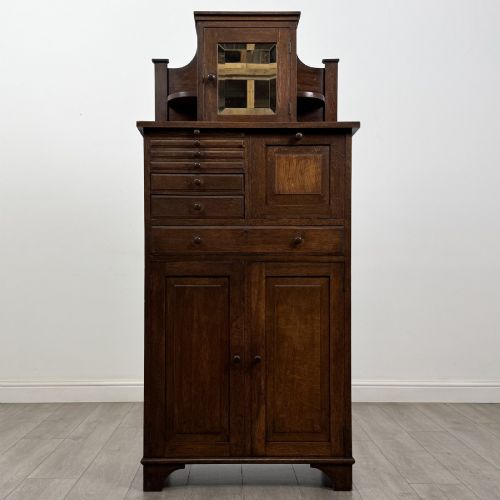
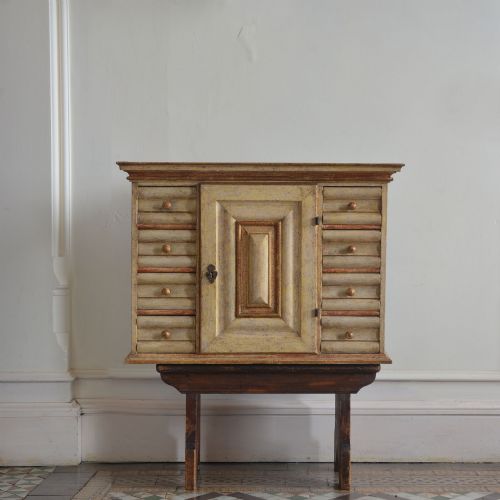
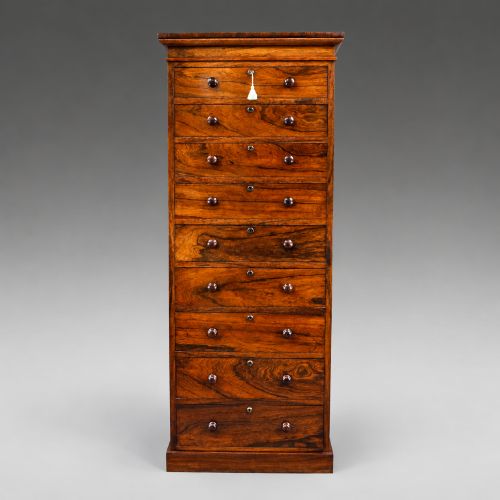
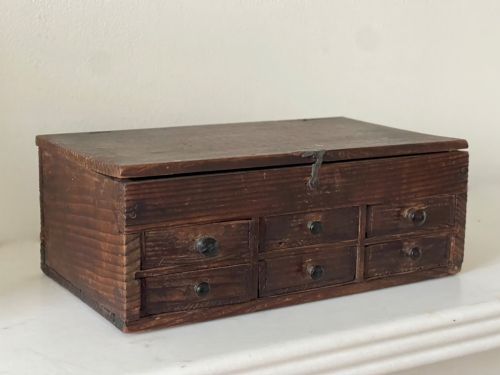
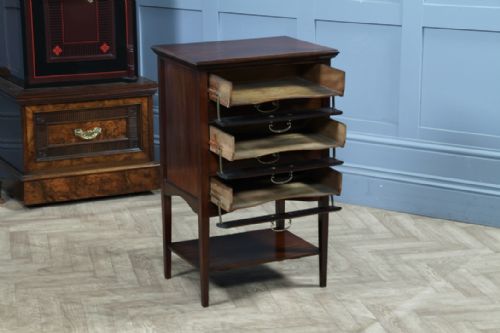
Collector storage drawers encompass small table-top units, tall filing chests, and specialist cabinets designed for specific pursuits like natural history or horology. You will frequently encounter Victorian and Edwardian examples alongside earlier Georgian or 18th-century pieces.
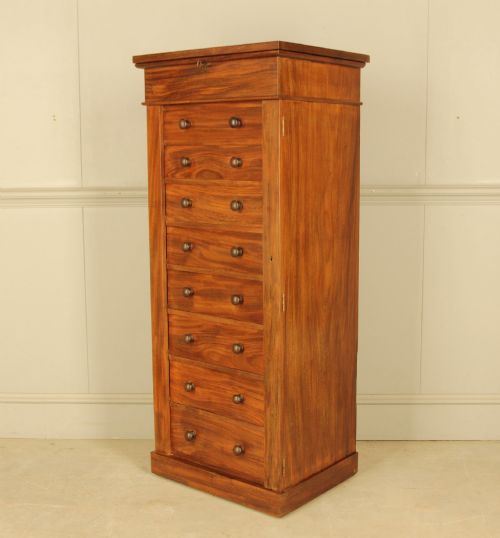
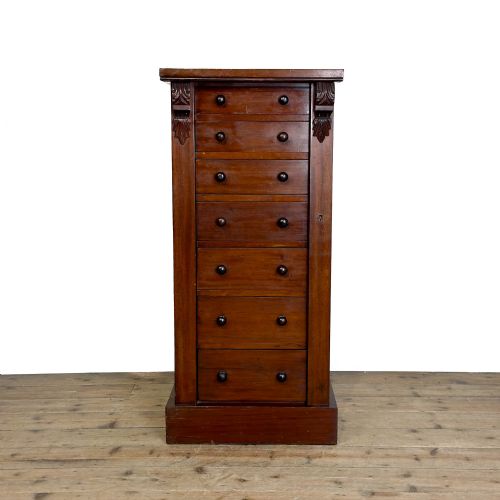
The configurations vary from multi-drawer banks and Wellington chests to apothecary units and miniature apprentice pieces. Mahogany, oak, and pine serve as the primary timber choices across these utilitarian and refined domestic forms.
Materials and Technique
Cabinet makers utilised dense hardwoods like mahogany, walnut, and rosewood alongside utilitarian softwoods such as pine and oak to construct these multi-drawer carcasses. Joinery relied on tight dovetail joints for drawer construction to withstand repeated sliding within the housing frame.
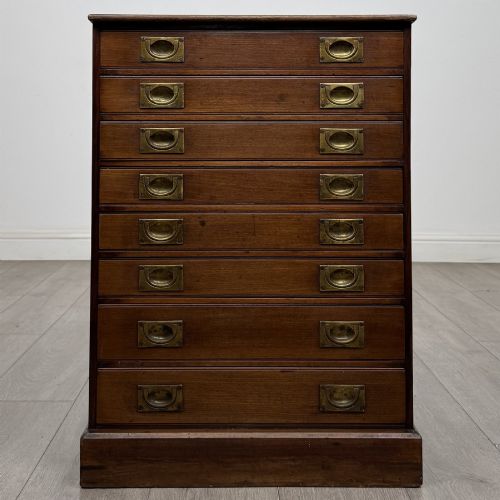
Hardware additions typically include brass shell pulls, label holders, and specialised locking mechanisms such as the locking stile found on Wellington chests. Drawer interiors often feature fitted compartments lined for specific storage needs.
Collector Storage Drawers Retail Price Guide 2026
Typical asking prices for collector storage drawers among the pieces listed under this phrase on Sellingantiques today, from the lower quarter to the upper quarter. They describe what is for sale here now, not the wider market.
The material selection spans dense hardwoods like mahogany and rosewood alongside accessible softwoods such as pine and oak.
Evaluating Construction
The standard of timber selection and interior fitting distinguishes simpler storage boxes from superior collector cabinets. Finely figured mahogany or oak paired with original brass hardware and well-executed dovetailing marks the higher tier of production.
Specialised internal dividers and makers' signatures elevate the standing of a piece, whereas standard utilitarian pine banks prioritise simple function over decorative cabinet work.
G. Bartholomew & Co·Watkins & Doncaster·Brady of Edmonton·D Napier & Sons
The Collector Storage Drawers Glossary
- Wellington chest
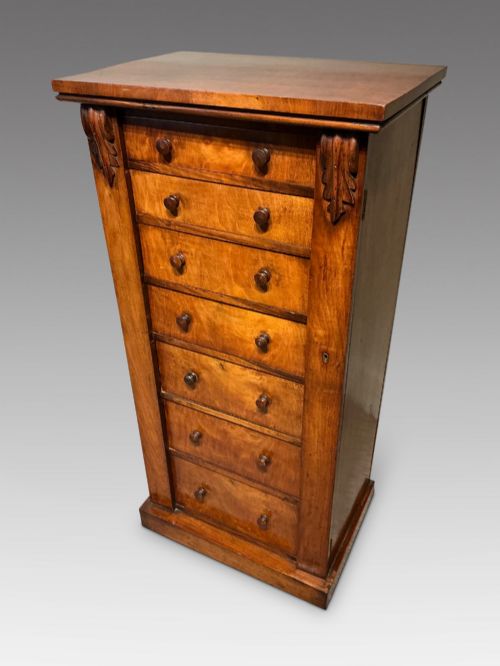
- A tall, vertical chest of drawers featuring a hinged locking stile on one side that secures all drawers when locked. This design originated in the 19th century.
- Apprentice chest
- A small-scale cabinet or chest made by a craftsman to demonstrate skill for trade qualification. These miniature pieces mirror the full-sized furniture of their period.
- Shell pull
- A pressed metal handle shaped like an inverted scallop shell, commonly found on Edwardian and late Victorian multi-drawer filing banks.
- Fitted interior
- An arrangement of internal compartments, trays, or specific dividers designed to organise small objects. These are frequently lined in velvet or cloth.
- Dovetail
- A traditional wood joint formed by interlocking wedge-shaped fingers. It provides strong tensile strength for drawer corners.
Collector Storage Drawers: Frequently Asked Questions
What were collector storage drawers originally used for?
These cabinets housed specialised items such as insect specimens, watch parts, coins, or sheet music. Craftsmen and naturalists relied on the multiple shallow drawers to keep delicate objects organised and protected from light.
Larger banks served commercial or apothecary purposes, holding dry goods, remedies, or administrative papers in distinct compartments.
How do I identify a Wellington chest?
A Wellington chest stands out as a tall, narrow cabinet with six or seven drawers secured by a hinged vertical locking flap on the right side. This locking stile fastens with a key, blocking all drawers simultaneously.
Most examples date from the Victorian era and are constructed from mahogany, walnut, or pine.
Are miniature chests of drawers doll furniture?
Miniature chests, often termed apprentice pieces, were not intended as children's toys. Craftsmen produced them to scale to prove their mastery of woodworking techniques.
They feature the same dovetail construction and timber quality as full-size furniture.
How do I care for antique multi-drawer cabinets?
Maintain these pieces in stable room conditions away from direct sunlight and heat sources to prevent timber shrinkage. Wax polish applied sparingly preserves the finish of mahogany and oak surfaces.
Avoid overloading shallow drawers with excessive weight to protect the original runners and internal framing.