



Collectible Glass Vase
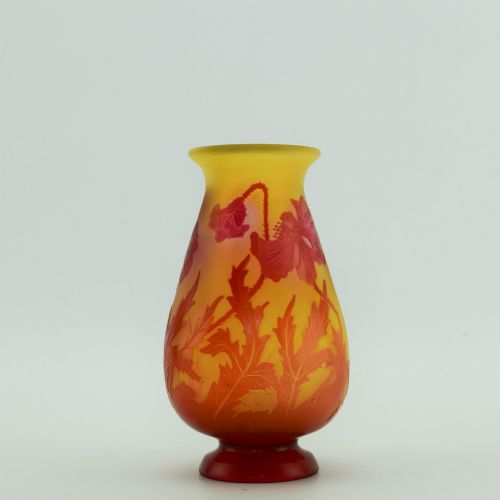
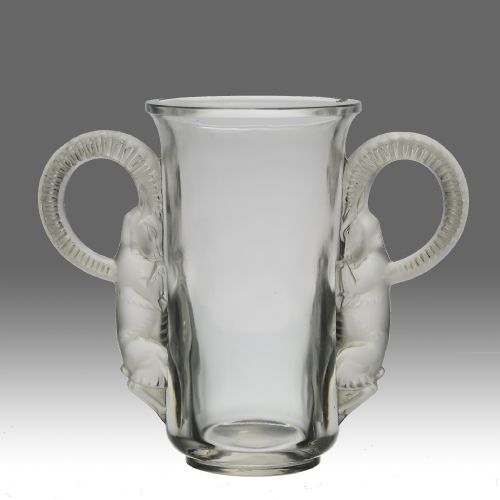
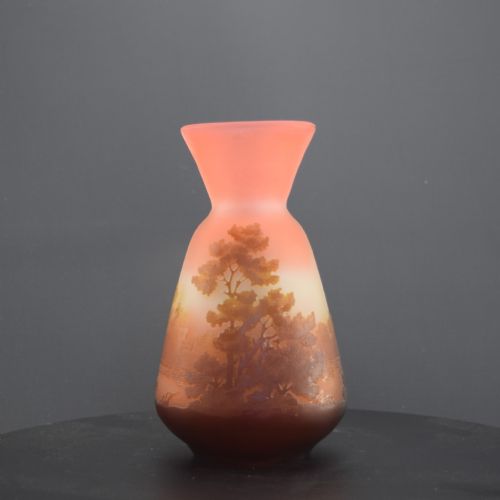
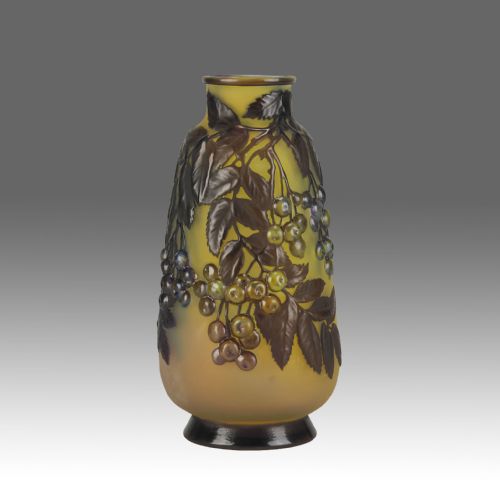
A collectible glass vase brings distinct colour and tactile form to a room, ranging from delicate floral cameo work to bold geometric moulding.
Collectible Glass Vase
A collectible glass vase spans the late nineteenth and early twentieth centuries, capturing the creative shifts from organic Art Nouveau motifs to streamlined Art Deco geometry. These vessels take various profiles, from slender banjo shapes and footed bowls to robust goblet forms, each serving as a canvas for specialised glassmaking techniques.
The pieces on this page are most frequently encountered in styles defined by leading French and British workshops of the period. Buyers meet examples utilising cameo techniques, opalescent finishes, and pate de verre, spanning the years from the eighteen-nineties through the nineteen-thirties.
Materials and Techniques
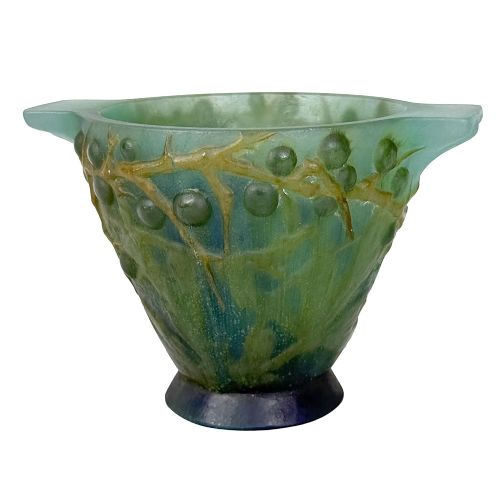
Makers shaped these vessels through intensive glassworking methods, utilising acid-etching, layering, and moulding to achieve depth and texture. Cameo pieces involve cutting away outer layers of coloured glass to reveal contrasting backgrounds, while pate de verre relies on fusing powdered glass within a mould.
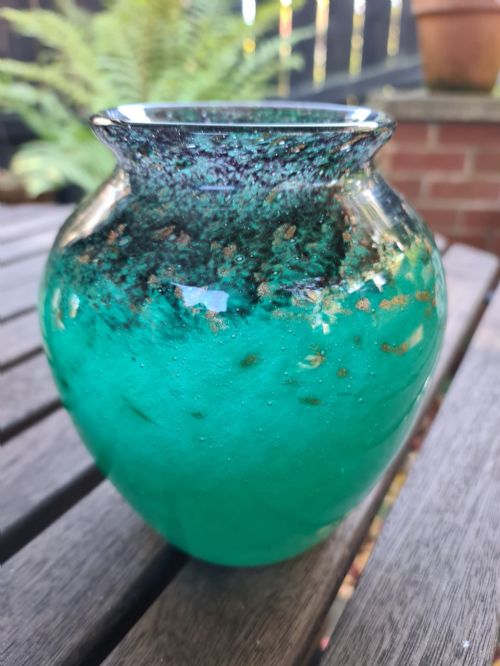
Specialised inclusions such as aventurine flakes provide metallic shimmer within the body of the material. Frosted and opalescent finishes manipulate light passing through the glass, altering the visual density and surface sheen of the vessel.
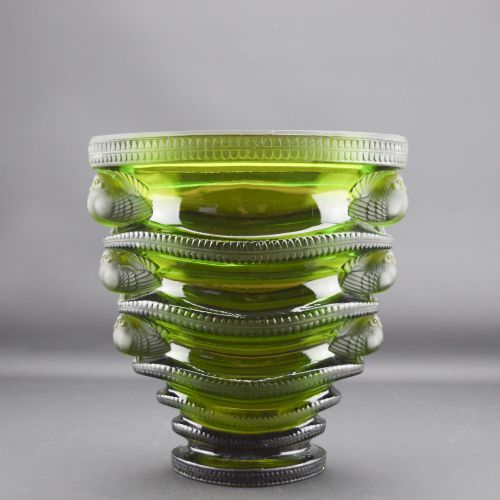
The listings span from 1890 to 1930, capturing the transition from ornate Art Nouveau cameo work to geometric Art Deco moulding.
Judging Quality and Execution
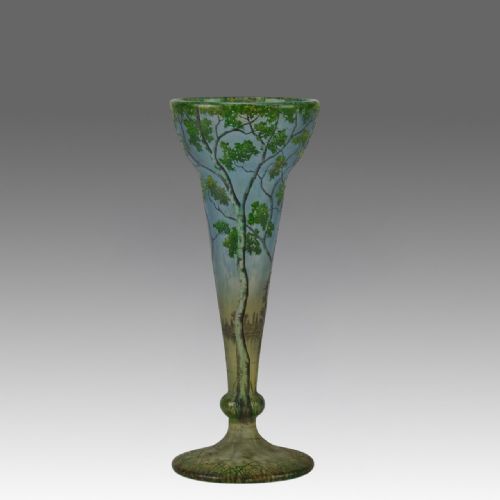
Quality rests upon the precision of the execution and the clarity of the design motif, whether in the undercut relief of a cameo landscape or the crisp geometry of an Art Deco moulding. The interaction between light and the specific density of the glass dictates the success of opalescent and frosted surfaces.
The distinction between standard production and finer pieces lies in the subtlety of the colour blending and the sharpness of the surface detail. Master workshops achieved a depth in multi-layered cameo and enamel work that elevates the visual impact of the form.
Rene Lalique·Vasart Glass·Henry Berge·Amalric Walter·Daum Freres·Galle·Monart
The Collectible Glass Vase Glossary
- Cameo Glass
- Glass vessels formed with multiple fused layers of contrasting colours, then carved or acid-etched to create raised designs. This technique requires exceptional control to prevent exposing the inner layer prematurely.
- Pate de Verre
- A kiln-casting method using finely crushed glass mixed with a binding agent, melted into a mould to produce textured pieces with a sugary appearance. The process yields rich colour saturation and distinctive granular detail.
- Opalescent Glass
- Semi-translucent glass that displays a milky blue or amber glow when lit from the front, while appearing warm when backlit. Makers harnessed this optical effect to accentuate moulded botanical and aquatic motifs.
- Acid-Etched Glass
- A technique using hydrofluoric acid to eat away exposed surfaces of the vessel, creating matte designs or removing layers in cameo production. It allowed artisans to replicate intricate hand-carved details with high consistency.
- Aventurine
- Glass containing suspended metallic inclusions, typically copper crystals, which create a glittering or sparkly appearance within the material. It demands precise temperature control during cooling to suspend the particles evenly.
Collectible Glass Vase: Frequently Asked Questions
How do I care for antique glass?
Wash antique glass gently by hand using lukewarm water and mild soap, avoiding harsh detergents or abrasive sponges. Dry each piece immediately with a soft, lint-free cloth to prevent water spots.
Keep vessels away from direct, intense sunlight and sudden temperature changes to protect delicate enamels, opalescent finishes, and metallic inclusions.
What is the difference between cameo and moulded glass?
Cameo glass involves carving or acid-etching through distinct layers of coloured glass to produce a raised design in relief. Each piece requires extensive hand-finishing by skilled artisans.
Moulded glass is formed by pressing molten material into a prepared mould to shape the vessel and its pattern simultaneously, allowing for consistent production runs.
How can I tell Art Deco from Art Nouveau?
Art Deco design relies on symmetry, stylised geometry, and clean lines, often reflecting industrial progress and modern forms. The glass from this period frequently utilises clear, frosted, or opalescent surfaces with abstract or repeating motifs.
Art Nouveau embraces flowing, asymmetrical curves and direct references to the natural world, using complex multi-coloured cameo layers to depict flora and fauna.