
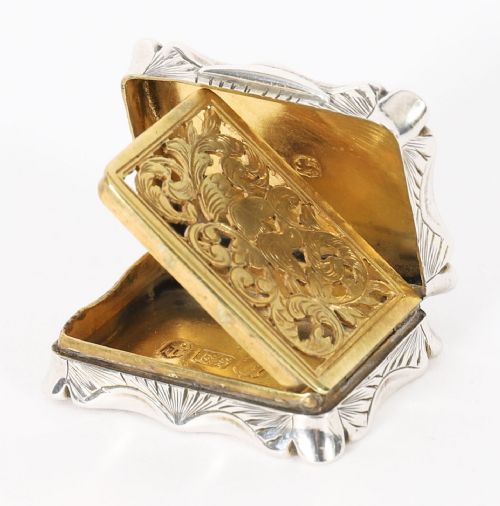


Collectable Perfume Bottle
A collectable perfume bottle holds the essence of past decades, offering tactile beauty and functional art in small glass and silver forms.
Collectable Perfume Bottle
A collectable perfume bottle brings together personal vanity and decorative art from the nineteenth and twentieth centuries. The pieces on this page span the Victorian period through to the Art Deco era, encompassing both British silver work and French glassmaking.
You are most likely to meet moulded glass vessels from the 1920s alongside earlier nineteenth-century silver-mounted scent bottles and vinaigrettes. Forms range from simple scent bottles to elaborate creations complete with original stoppers and boxes.
How they were made
Makers shaped these vessels using clear, frosted, and opalescent glass, often enhanced with enamel or red staining to accentuate the moulded relief. French works utilise sophisticated moulding techniques that capture fine botanical and geometric details across the surface.
Victorian examples incorporate sterling silver mounts and intricate metalwork, combining glass bodies with hinged caps designed for vinaigrettes and pocket scents. Paper labels and original boxes occasionally survive to document the original packaging of these commercial luxury items.
Some bottles spent a century hiding in their original cardboard boxes, waiting for someone to unscrew a cap that still smells faintly of 1920s rose extract.
What varies in quality
The distinction between ordinary and exceptional examples rests upon the crispness of the moulded relief and the survival of original components like stoppers and packaging. Pieces that retain distinct staining or original boxes demonstrate a higher degree of preservation.
Artistry in the glasswork, particularly the depth of frosting and the subtlety of opalescence, separates standard production from masterworks. Silver mounts show variation in the weight of the metal and the complexity of the chased decoration.
Edward Smith·Rene Lalique·Sabino
The Collectable Perfume Bottle Glossary
- Vinaigrette
- A small ornamental box or bottle with a perforated inner grill, used to hold a sponge soaked in aromatic vinegar. These date primarily to the nineteenth century.
- Opalescent Glass
- Glass that diffuses light to display a milky blue or white appearance, shifting in tone depending on the angle of illumination.
- St stopper
- The glass or metal plug designed to seal the neck of the bottle, matching the design of the main vessel.
- Enamel
- A decorative glassy substance fused to metal surfaces through firing, adding colour and pattern to silver mounts.
Collectable Perfume Bottle: Frequently Asked Questions
How do I spot an original stopper?
An original stopper matches the frosted texture, colour, and decorative motif of the bottle body itself. Look for matching serial numbers or ground glass fitting surfaces that indicate factory pairing.
Replacement stoppers often sit incorrectly in the neck or display a different shade of glass under natural light. Examine the wear around the neck interior to confirm long-term association between stopper and vessel.
What is red staining on glass?
Red staining is a deliberate surface colouration applied to the recesses of moulded glass designs to create contrast. Makers used this pigment to make fine details stand out against frosted backgrounds.
Over decades, gentle cleaning can diminish this pigment, so surviving staining indicates careful handling. It remains a hallmark of specific twentieth-century French production methods.
How should I display them?
Display these vessels away from direct sunlight to protect coloured glass and paper elements from fading over time. Stable shelving with adequate space prevents accidental knocks to delicate protruding stoppers.
Keep them in a dust-free environment where the play of light through frosted and opalescent surfaces remains visible. Proper lighting enhances the tactile qualities of the moulded glass.