




Collectable Glassware
Collectable glassware spans tactile early twentieth-century vessels and decorative plates designed to bring substance and pattern into domestic interiors.
Collectable Glassware
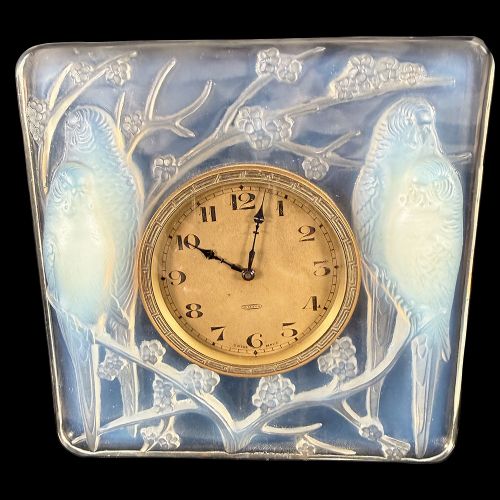
Collectable glassware encompasses decorative objects produced predominantly across the Victorian era and the early twentieth century, with a strong representation of pieces from the nineteen-twenties and nineteen-thirties. Buyers searching for collectable glassware encounter functional and display items including vases, decorative bowls, plates, clocks, candlesticks, decanters, perfume bottles, and shot glasses.
The material vocabulary of these objects draws heavily on opalescent, frosted, moulded, cameo, and clear glass, sometimes combined with metal or paper components. Stylistically, the selection bridges Victorian traditions, Art Nouveau curves, and the geometric clarity of Art Deco design.
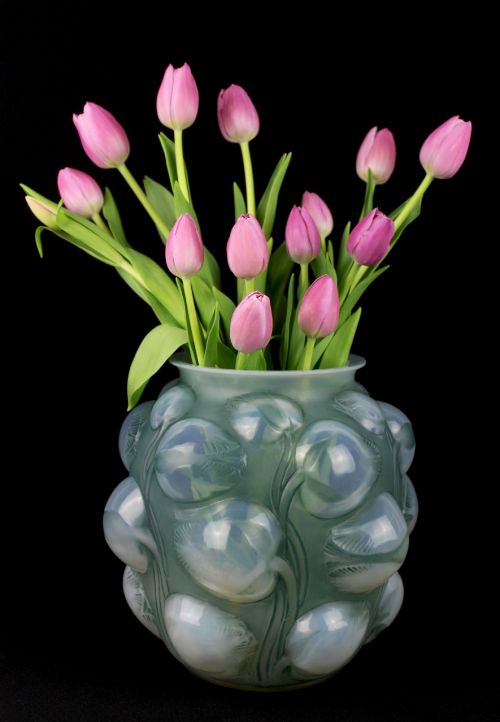
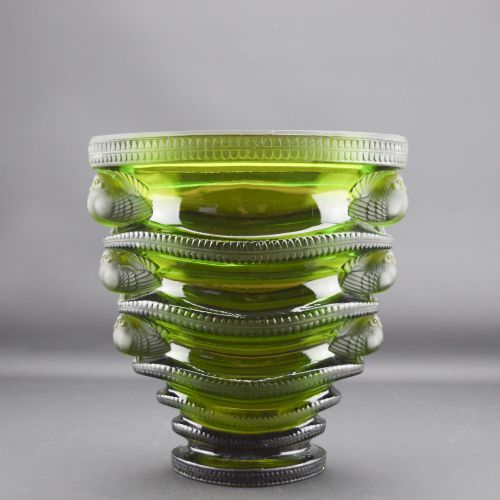
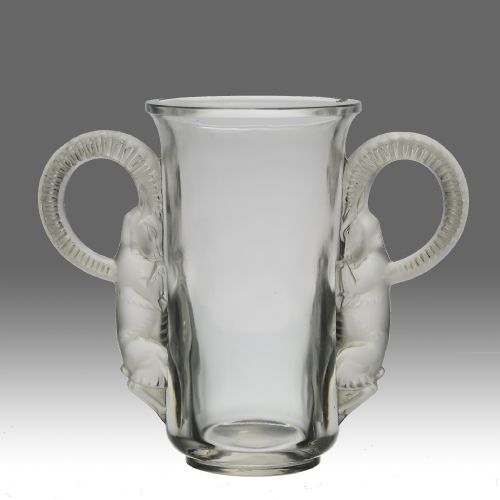
Vases and decorative plates dominate the groupings, frequently bearing specific named titles and moulded motifs by notable makers working in France and Britain. Pieces range from large opalescent bowls to intimate perfume bottles and apothecary vessels.
Materials and techniques
Makers utilised specialised moulding techniques to shape heavy glass vessels, pressing molten material into complex metal dies to achieve high-relief ornamentation. Opalescent glass required specific chemical additions during melting to create the characteristic milky, light-catching quality that shifts between blue and amber tones depending on the angle of illumination.
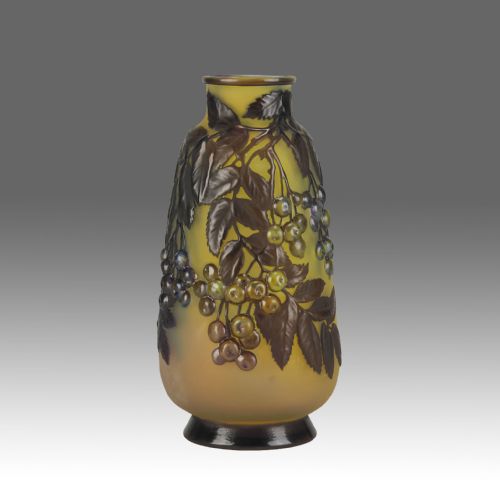
Frosted and clear surfaces were manipulated through acid-etching, fire-polishing, or hand-finishing to create contrast between translucent details and opaque backgrounds. Cameo glass involved layering different coloured glass blanks before carving away the exterior layers by hand or acid to reveal intricate botanical or figural designs in relief.
Collectable Glassware Retail Price Guide 2026
Typical asking prices for collectable glassware among the pieces listed under this phrase on Sellingantiques today, from the lower quarter to the upper quarter. They describe what is for sale here now, not the wider market.
Materials recorded include frosted, opalescent, moulded, cameo, and clear glass alongside metal and paper.
What separates the grades
Quality in these glass objects rests on the crispness of the moulded relief and the depth of the chemical opalescence within the material. Superior examples maintain sharp definition in figural or botanical motifs without losing the subtle translucency that gives the glass its visual weight.
The integration of design and form dictates aesthetic success, where decorative elements complement the structural profile of a vase, bowl, or plate rather than appearing merely applied. Pieces that retain their original intended surface finishes, whether polished highlights or matte frosted grounds, demonstrate greater material integrity.
Rene Lalique·Gallé
The Collectable Glassware Glossary
- Opalescent glass
- Glass containing agents that diffuse light, causing the material to appear milky bluish-white when viewed by reflected light and warm amber by transmitted light. This optical property defines many major decorative vessels of the period.
- Cameo glass
- Vessels constructed from two or more distinct layers of coloured glass fused together, where the outer layer is carved or etched away to form raised white or coloured designs against a contrasting ground.
- Moulded glass
- Objects shaped by pressing molten glass into an iron or bronze mould, allowing consistent production of complex three-dimensional relief patterns, panels, and figural details.
- Frosted glass
- A translucent finish achieved by treating clear or coloured glass with acid or mechanical abrasion to diffuse light and eliminate transparency.
- Art Deco
- A design style emerging in the nineteen-twenties characterised by stylised motifs, symmetry, geometric discipline, and streamlined silhouettes that replaced earlier organic curves.
Collectable Glassware: Frequently Asked Questions
How do I identify Art Deco glassware?
Art Deco glassware typically displays geometric patterns, stylised floral or animal motifs, and clean architectural lines rather than the flowing naturalism of earlier periods. Many pieces utilise frosted or opalescent finishes to accentuate these crisp structural forms.
Examining the weight and the clarity of the moulded relief helps distinguish production from this era. Signature placements and specific nomenclature associated with the design also clarify attribution.
What is opalescent glass?
Opalescent glass contains chemical additives that scatter light, creating a characteristic milky appearance that catches blue tones in daylight and warm amber tones against direct light. This effect adds visual depth to moulded surfaces.
Makers harnessed this property to highlight high-relief details on bowls, vases, and plates. The intensity of the opalescence varies across different production runs and cooling methods.
How should I display decorative glass?
Display decorative glass in positions where natural or directional artificial light can pass through the material. Placing opalescent or clear vessels near windows reveals the shifting tones within the glass.
Ensure shelves are stable and spacious enough to support heavy moulded pieces without crowding. Adequate spacing protects delicate rims and protruding sculptural elements from accidental impact.
Are apothecary bottles collectable?
Apothecary bottles from the nineteenth and early twentieth centuries form a distinct category of functional glassware valued for their utilitarian forms, heavy glass stoppers, and original labels. Their clear or tinted glass reflects traditional pharmacy production methods.
Collectors often group these bottles by size, form, or regional origin. Complete sets with matching stoppers and intact paper or painted labels hold particular interest.