
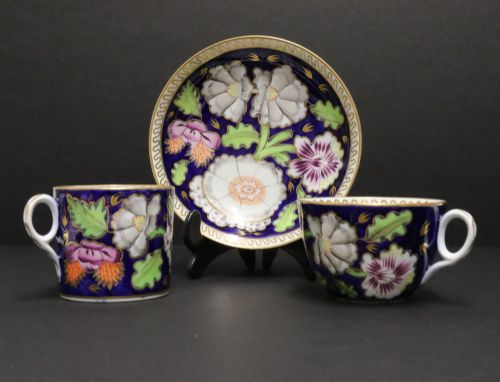
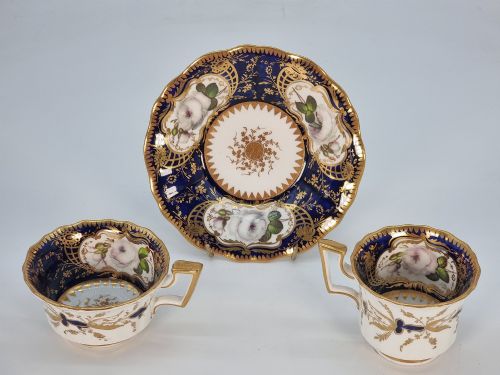


Cobalt Blue Teacup Set
These cobalt blue teacup set pieces bring vibrant colour and historic craftsmanship to any table, offering a striking display of porcelain and glass artistry.
Cobalt Blue Teacup Set
A cobalt blue teacup set comprises matching or complementary ceramic vessels designed for serving tea, typically featuring deep blue hues achieved through mineral pigments. When exploring a cobalt blue teacup set, buyers encounter configurations ranging from individual trios to full miniature tea services and larger tea sets.
The pieces on this page span several distinct periods including the eighteenth century, the Georgian and Regency eras, the Victorian period, and the early twentieth century. Common forms include tea cups and saucers, cabinet trios, teapots, jugs, and solitaire sets created by English and continental makers.
How they were made
Potters and glassmakers utilised materials such as porcelain, bone china, soft paste porcelain, and cobalt glass to form the body of each vessel. These pieces frequently incorporate enamel, gold leaf, and hand gilding to accentuate the rich blue ground.
Techniques such as hand gilding and enamel painting required steady hands and precise kiln firings to bond the metallic decoration to the ceramic surface. Artisans applied cobalt oxides before the final glaze firing to achieve the characteristic deep blue coloration seen across these items.
The listings span from the 18th century through the Georgian, Regency, and Victorian eras up to 1910, featuring porcelain, bone china, enamel, and gold leaf.
What varies in quality
The refinement of the paste and the depth of the cobalt ground set the foundation for a superior piece. Early soft paste porcelain and fine bone china display a translucency and delicacy that distinguish higher grade wares from heavier ironstone items.
The execution of the gilding and enamel work dictates the visual appeal of the finished set. Hand-painted details and raised gold leaf applied by skilled artisans elevate cabinet trios and miniature services far above standard production ware.
Newhall·Coalport John Rose·Derby·Moser·Worcester·Masons Patent Ironstone·Spode·Royal Crown Derby
The Cobalt Blue Teacup Set Glossary
- Cabinet trio
- A matching teacup, coffee cup, and saucer intended for display in a cabinet rather than daily use. These sets highlight the finest decorative painting and gilding of their period.
- Soft paste porcelain
- An artificial porcelain body developed in Europe before the discovery of true hard paste ingredients. It possesses a warm tone and a distinctive glaze texture.
- Gilding
- The application of gold leaf or gold gilt to ceramic surfaces for ornamentation. Skilled artisans often burnished the gold to create contrasting matte and shiny finishes.
- Bat wing pattern
- A specific decorative motif found on antique tea wares, often associated with nineteenth century Coalport production. The design mimics the segmented shape of a bat wing.
- Solitaire set
- A small tea service designed for one person, usually comprising a teapot, cup, saucer, and sometimes a jug and basin on a small tray.
Cobalt Blue Teacup Set: Frequently Asked Questions
What is a cabinet trio?
A cabinet trio consists of a matching teacup, coffee cup, and saucer designed primarily for display rather than active service. These pieces showcase the highest level of artistic painting from a manufacturer.
They allow collectors to appreciate fragile ceramic bodies and intricate gilding without the wear and tear of a working tea table.
How do I care for antique tea sets?
Antique tea wares require gentle hand washing in lukewarm water with mild soap. Avoid soaking pieces with delicate gold leaf or enamel decorations to preserve the surface.
Store them securely away from direct sunlight and extreme temperature fluctuations to protect the glaze and paste.
What is soft paste porcelain?
Soft paste porcelain is an early European ceramic composition created from a mixture of clays and glassy frits. It fires at lower temperatures than hard paste porcelain and has a softer, warmer appearance.
Items made from this material often display a creamy translucency when held up to the light.
Are these sets safe for drinking tea?
While many eighteenth and nineteenth century cups remain structurally sound, collectors generally reserve them for display or very occasional use. Older glazes and gold leaf can wear down with frequent handling and washing.
Using them thoughtfully preserves the historic enamel and gilding for future generations.
How do I identify a miniature tea service?
Miniature tea services feature scaled down teapots, jugs, cups, and saucers designed for cabinet display or children of affluent families. Their diminutive size distinguishes them from standard table service items.
Despite their small scale, they exhibit the same meticulous hand painting and gilding found on full sized sets.