
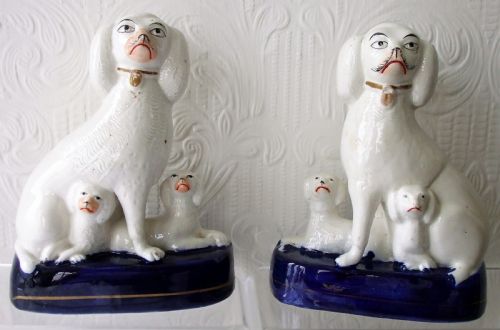
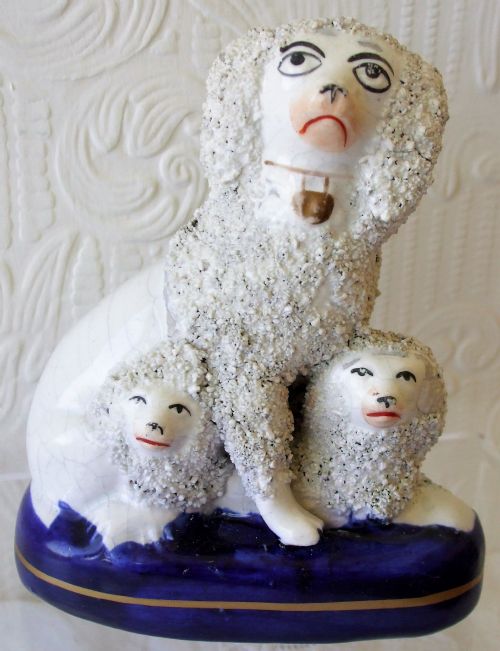


Cobalt Base Dog Figurines
Cobalt base dog figurines are charming ceramic canine sculptures set upon rich blue foundations, offering collectors delightful Victorian character.
Cobalt Base Dog Figurines
Cobalt base dog figurines encompass various Victorian Staffordshire pottery works and Continental porcelain examples depicting poodles, dalmatians, spaniels, and greyhounds. These decorative figures often portray dogs with pups or resting upon blue cushions, representing popular domestic themes of the nineteenth century.
Buyers will most frequently encounter pairs of Staffordshire poodles and spaniels alongside utilitarian forms such as dalmatian inkwells. Dating predominantly from around eighteen sixty through the late Victorian era, these pieces bring traditional ceramic craftsmanship directly into contemporary homes.
How they were made
Maker's workshops shaped these figures from earthenware and porcelain, applying lead glaze to create a smooth, protective finish. Artisans then added intricate details using enamel colours and gold leaf highlights.
Potters constructed decorative figure groups by hand-modelling ceramic clay and applying surface enamels before firing. Encrusting techniques were frequently utilised to give texture to the animals and their cushions.
The inventory includes functional inkwells alongside purely decorative canine figurines on blue bases.
What varies in quality
The sophistication of the modelling and the precision of the facial expressions set superior figures apart from simpler works. Finer examples display carefully painted enamel details and well-preserved gold leaf gilding on the blue bases.
The depth and consistency of the glaze application distinguish high-grade pieces. Superior ceramic groups maintain crisp definition in the fur and encrustations, whereas lesser items show softer contours.
The Cobalt Base Dog Figurines Glossary
- Earthenware
- Porous pottery fired at lower temperatures, commonly used for nineteenth-century Staffordshire figures. It forms the robust body beneath the glaze.
- Enamel
- Opaque vitreous paint applied to the surface of fired ceramics for decoration. It provides the distinct colours on these animal figurines.
- Lead glaze
- A glossy coating containing lead oxide applied to ceramics before firing. It gives these nineteenth-century pieces their characteristic shine.
- Inkwell
- A small pot for holding writing ink, often incorporated into the base of desk ornaments. Several pieces combine this function with animal figures.
Cobalt Base Dog Figurines: Frequently Asked Questions
What animals appear on these bases?
Poodles, dalmatians, spaniels, and greyhounds are the primary breeds depicted in these nineteenth-century ceramic sculptures.
Many examples feature adult dogs accompanied by their pups or resting upon cushions.
How do I date these figures?
Stylistic indicators and material composition help assign these works to the Victorian period, specifically around eighteen sixty.
Comparing the glaze types and enamel application also assists in establishing the production era.
Were these figures used daily?
Certain pieces, such as dalmatian inkwells, served practical purposes on nineteenth-century desks alongside writing equipment.
Other ceramic figures functioned purely as decorative ornaments within domestic parlours.
Where were these ceramics made?
English Staffordshire potteries produced the majority of these domestic animal figures during the Victorian era.
Continental workshops also contributed miniature porcelain dog figurines during the late nineteenth century.