




Coastal Art Decor
Coastal art decor brings maritime history and seaside views into a room through traditional paintings, dioramas, and maps.
Coastal Art Decor
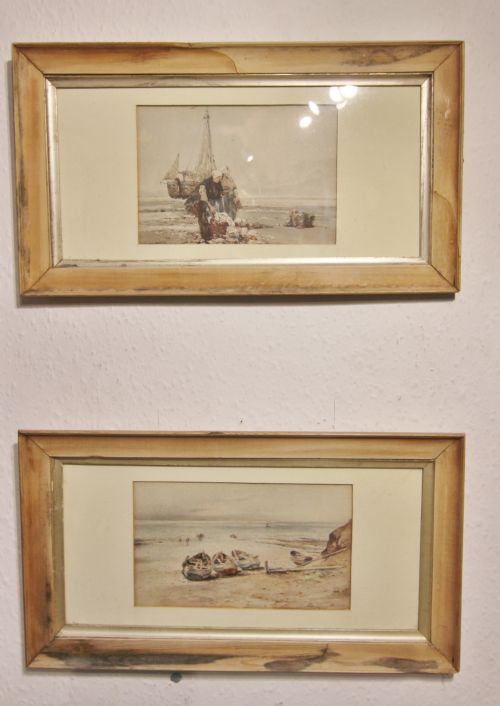
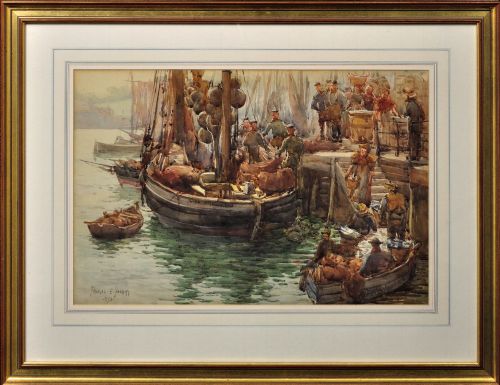
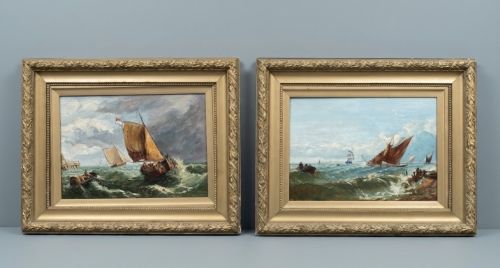
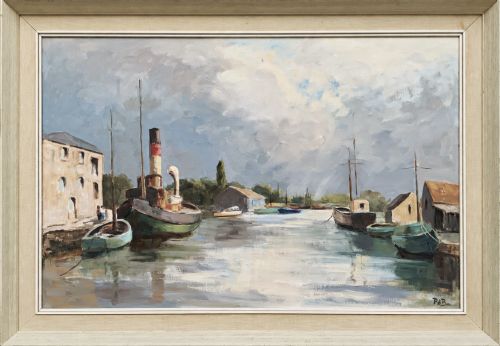
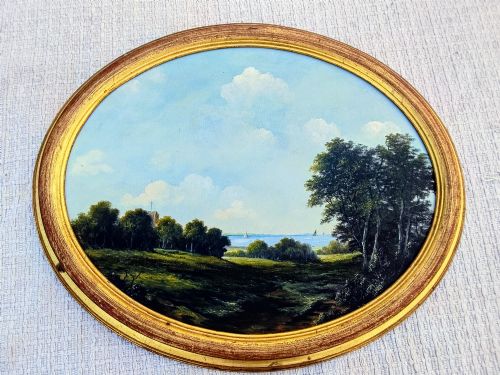
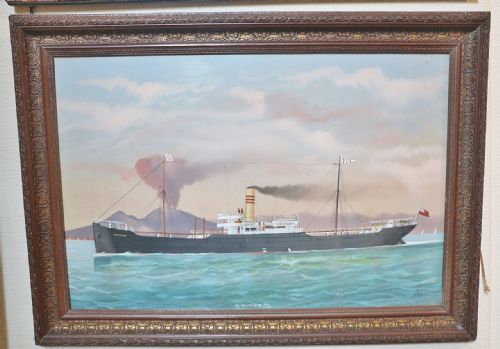
You are most likely to meet mid-century Cornish harbour scenes, traditional nineteenth-century marine paintings, and early twentieth-century views of ships and ports. Works by named artists such as Edward Matthew Elliott, Helen Layfield Bradley, and Thomas Bush Hardy appear alongside unsigned vintage sea views and maps. The forms extend from oval oil canvases to oak-framed watercolours and ship in a bottle dioramas.
Materials and techniques
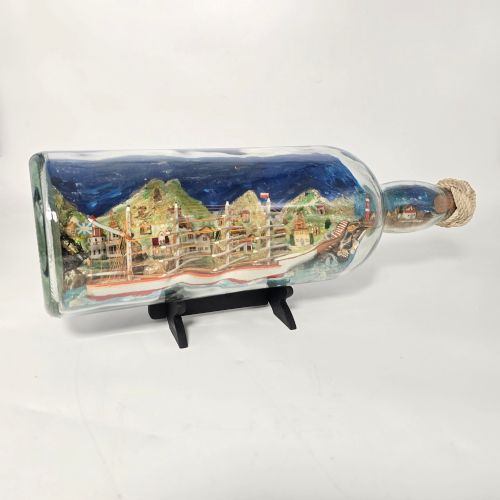
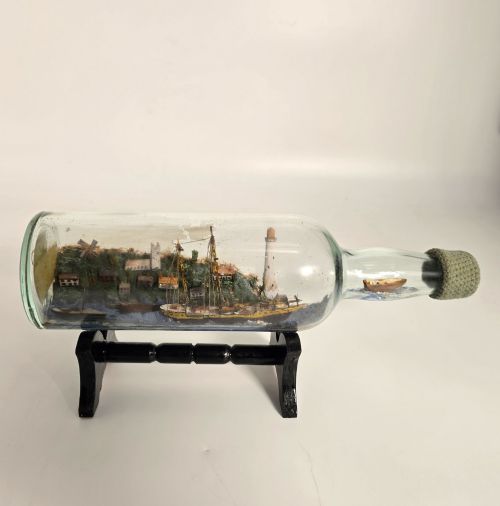
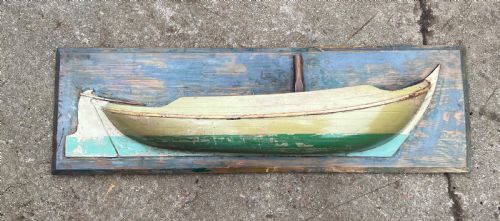
Makers and artists utilised oil paint on canvas, panel, and board, alongside watercolour on paper. Many works incorporate gilded wood frames or oak framing to house the paintings and prints. The physical construction extends to three-dimensional objects, including wooden half models of boats and glass bottles containing detailed ship dioramas.
The application of paint ranges from smooth nineteenth-century marine portraits to mid-century impasto oil techniques that build thick texture on the surface. Hand-coloured prints and antique paper maps utilise period printing and cartographic methods. These varied mediums reflect the transition from formal traditional maritime recording to impressionistic interpretations of the coast.
Coastal Art Decor Retail Price Guide 2026
Typical asking prices for coastal art decor among the pieces listed under this phrase on Sellingantiques today, from the lower quarter to the upper quarter. They describe what is for sale here now, not the wider market.
Listings feature works in oil paint, watercolour, and ink on paper, canvas, and wood panels.
Qualities that set pieces apart
The strength of composition and the handling of light separate superior marine works from standard decorative pieces. Masterful depictions of water, sky, and vessel architecture demonstrate an artist's deep familiarity with maritime subjects. Strong brushwork, particularly in impasto oil paintings and detailed watercolours, elevates a piece.
Condition and originality play a significant role in assessment, including the preservation of the original canvas, paper, or panel. The presence of period framing, often in oak or gilded wood, contributes to the integrity of the object. Signed works by documented painters carry greater historical weight than anonymous output.
James Hardy·Edward Matthew Elliott·Helen Layfield Bradley·Sir David Murray·Frank Wood·H. Hadfield Cubley·Charles Cameron Baillie·Micheal Matthews·James Kinnear·Johan Jens Neumann·Paul-Louis Barruel·Thomas Bush Hardy·Arthur Joseph Meadows
The Coastal Art Decor Glossary
- Impasto
- Paint applied thickly to a canvas or panel so that it stands out from the surface. This technique allows artists to capture the physical texture of sea foam and clouds.
- Diorama
- A three-dimensional miniature scene housed within a container. Folk art examples often place handmade model ships inside glass bottles.
- Half model
- A wooden representation of one side of a ship's hull built by boatbuilders. These pieces were used to design and record vessel proportions.
- Marine painting
- Artwork that depicts ships, harbours, and coastal scenes. This genre encompasses both calm port views and dramatic warship action.
Coastal Art Decor: Frequently Asked Questions
What periods do these pieces cover?
The selection spans from the nineteenth century through the Edwardian era and into the mid-twentieth century.
You will find items dated across the 1850s, 1880s, 1900s, 1920s, and 1950s alongside Victorian and Edwardian examples.
How do I identify a marine oil painting?
Marine oil paintings are executed on supports such as canvas, wood panel, or board using oil paint.
They typically depict ships, fishing trawlers, or coastal harbours with varying degrees of brushwork texture.
What is a ship in a bottle diorama?
A ship in a bottle diorama is a folk art object featuring a miniature model vessel enclosed within glass.
The rigging and hull are constructed to fold down for insertion and pop back into place inside.
Are these works signed by artists?
Many of the paintings, watercolours, and prints carry signatures or attributions to named historical artists.
Other items, such as vintage sea views and maps, remain unsigned but offer clear period characteristics.