

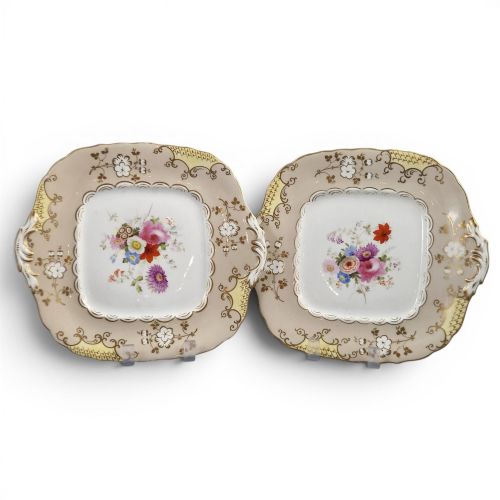


Coalport China Plate
These coalport china plate examples bring fine English porcelain into daily surroundings through hand-painted scenes, botanical studies, and armorial commissions.
Coalport China Plate
A coalport china plate search reveals diverse forms spanning dessert dishes, soup plates, and cabinet plates produced across the nineteenth century. Buyers encounter Georgian and Regency botanical serving dishes alongside Victorian dinner service pieces and commemorative exhibition ware.
The objects on this page range from early armorial soup plates made for nobility to topographical cabinet plates depicting Scottish castles and Chicago exhibition pieces. Most pieces reflect formal dining use or display traditions through distinct stylistic periods.
Early nineteenth-century examples often present detailed floral arrangements and botanical studies, while later Victorian items lean towards richly gilded borders and specific topographical views painted by notable hands.
Materials and Manufacture
Makers utilised fine porcelain and bone china as the core body for these plates, providing a smooth white surface for subsequent decoration. Artisans applied enamel paints by hand to render botanical specimens, landscapes, and armorial bearings with precision.
Gold leaf and rich gilt were incorporated extensively to highlight rims, borders, and central motifs, especially on exhibition pieces and formal service items. Kiln firing fixed both the porcelain body and the painted enamels, resulting in durable decorative surfaces.
Coalport China Plate Retail Price Guide 2026
Typical asking prices for coalport china plate among the pieces listed under this phrase on Sellingantiques today, from the lower quarter to the upper quarter. They describe what is for sale here now, not the wider market.
One plate records a nineteenth-century trip to Lake Menteith and Kilchurn Castle, proving that Victorian day-trippers loved souvenir merch just as much as we do.
Assessing Quality and Distinction
Quality rests upon the skill of the brushwork and the complexity of the design, distinguishing standard service ware from artist-signed cabinet pieces. Hand-painted topographical scenes and detailed floral studies executed by named painters elevate an individual plate above repetitive factory output.
The application and preservation of gold leaf also mark out superior items, where meticulous gilding frames the painted centre. Provenance and specific historical commissions, such as armorial plates made for known peers, add distinct archival interest.
Tom Keeling·Thomas Dickson
The Coalport China Plate Glossary
- Cabinet plate
- A decorative plate intended for display in a cabinet rather than for use at the dining table. These pieces usually feature elaborate painted scenes or rich gilding.
- Bone china
- A type of soft-paste porcelain incorporating bone ash, developed in England to create a strong, translucent body. It forms the foundation for many nineteenth-century table wares.
- Soup plate
- A wide, shallow dish with a flat rim, designed for serving soup during formal dinners. They often match the broader design scheme of a complete dinner service.
- Armorial
- Bearing a coat of arms or heraldic insignia. Plates decorated this way were custom-ordered for specific noble families.
- Gilt
- Covered with a thin layer of gold or gold-coloured material. This technique accentuates the rims and borders of fine ceramics.
Coalport China Plate: Frequently Asked Questions
What is a coalport china plate used for?
These pieces served multiple functions ranging from practical dining during formal meals to purely decorative display in cabinets. Service items handled soups and desserts, while specialised cabinet plates celebrated exhibitions and specific estates.
Over time, many of these utilitarian and decorative items transitioned into collector pieces appreciated for their artistic merit and historical associations.
How do I date a coalport china plate?
Dating relies on stylistic clues, paste composition, and painted motifs that align with periods like the Georgian, Regency, and Victorian eras. Early nineteenth-century items often feature botanical studies and specific armorial commissions, whereas later Victorian examples lean toward topographical views and heavier gilding.
Attributions to particular painters or exhibitions further narrow down the production window for individual pieces.
How should I display a coalport china plate?
Cabinet plates and decorative dishes suit wall mounting with appropriate plate hangers or secure placement in glass-fronted display cabinets. This protects the hand-painted enamels and delicate gilt borders from accidental damage.
Keeping them away from direct sunlight preserves the vibrancy of the enamel colours over the years.
Are these plates dishwasher safe?
Historic porcelain and bone china require gentle hand washing in lukewarm water with mild soap to protect the antique glaze and enamel work. Modern dishwashers use harsh detergents and abrasive water pressure that can strip away delicate gold leaf and hand-painted details.
Careful manual cleaning ensures the survival of fragile surface decorations for future years.