





Coal Hod Helmet
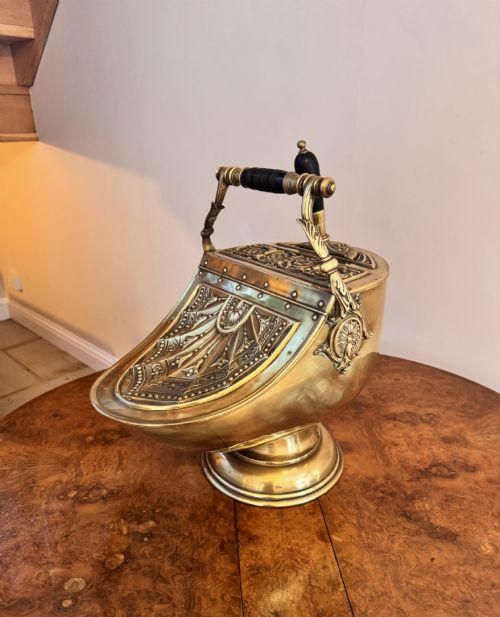
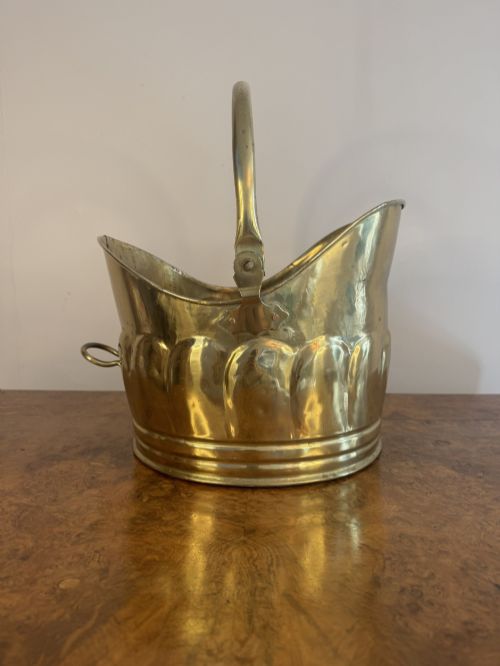
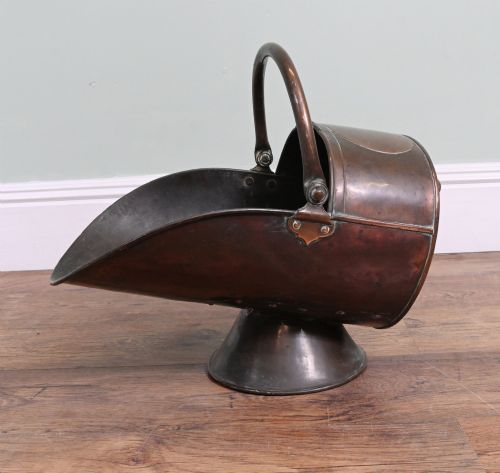
A coal hod helmet brings utilitarian warmth to the fireside, fashioned from heavy copper or brass with a distinct slanted lip.
Coal Hod Helmet
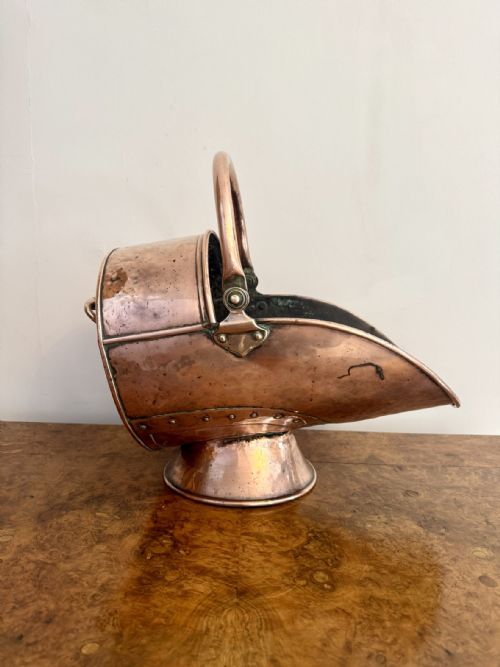
The coal hod helmet draws its shape from classical military headwear, inverted to hold domestic fuel by the hearth. Such vessels served as both storage and transport for coal, keeping the fireplace tidy during the Georgian, Regency, and Victorian eras.
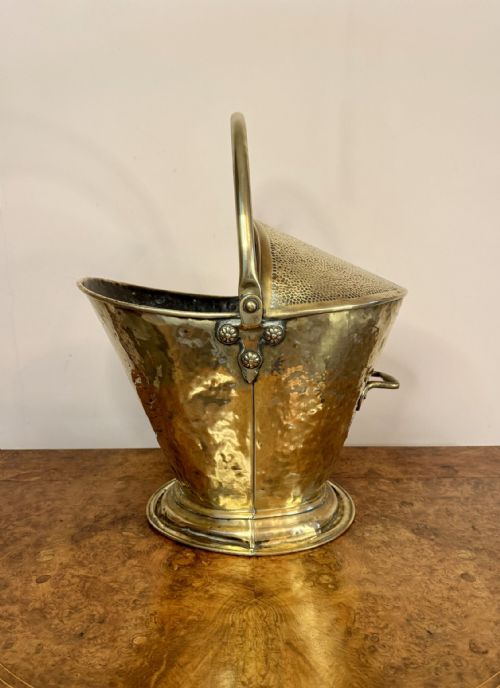
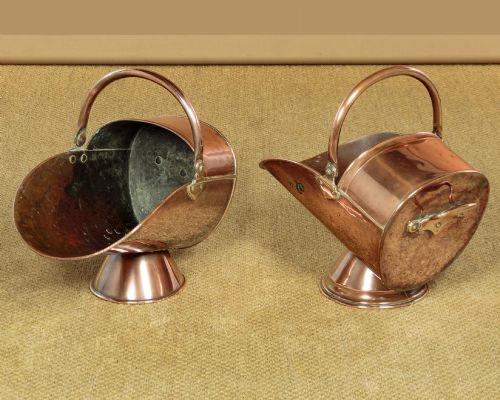
On this page, a buyer encounters these coal hod helmet designs primarily in solid copper or gleaming brass, often accompanied by matching iron or brass shovels. The forms span from simple Georgian buckets to elaborate Victorian and Edwardian helmet profiles.
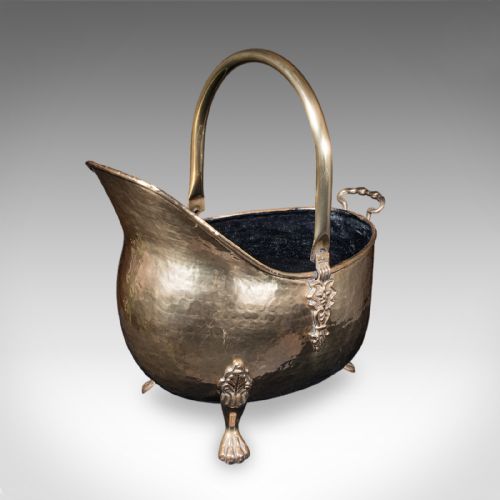
Arts and Crafts examples also appear here, introducing hand-beaten surfaces and simpler lines to the traditional fireside receptacle. These pieces bridge the gap between heavy utility and decorative interior metalwork.
Quality variations in metalwork and form
The calibre of a coal hod helmet rests on the weight of the metal used and the integrity of its riveted joints. Thicker gauge copper resists denting and holds its flared helmet silhouette under the daily strain of carrying fuel.
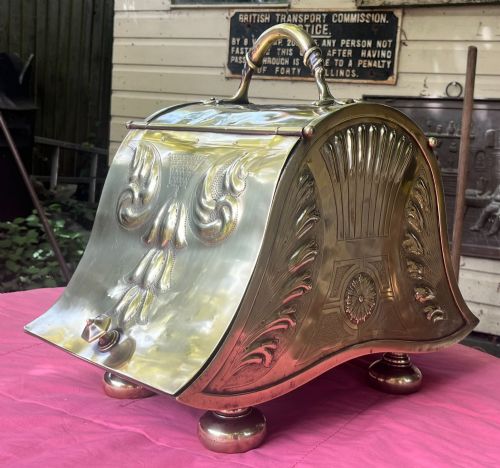
Superior examples display crisp handling of the swaged decorative lines and retain their original matching shovels. Finer items also feature well-balanced swing handles that stay upright when loaded, rather than sagging against the side of the bucket.
Coal Hod Helmet Retail Price Guide 2026
Typical asking prices for coal hod helmet among the pieces listed under this phrase on Sellingantiques today, from the lower quarter to the upper quarter. They describe what is for sale here now, not the wider market.
Listings feature coal hod helmets fashioned predominantly from copper and brass, spanning the Georgian, Victorian, and Edwardian periods.
Benham and Froud
The Coal Hod Helmet Glossary
- Helmet scuttle
- A coal container featuring a high, sloping rim that resembles a classical soldier's helmet. This specific profile allows coal to be poured forward cleanly into the grate.
- Swaging
- The process of shaping metal by hammering or pressing it through a die to create raised decorative bands or rigid borders. It reinforces the thin sheet metal against daily knocks.
- Dovetail seam
- A method of joining two edges of sheet metal by interlocking fingers of metal before hammering them flat. It provides a strong, watertight join on cylindrical and tapered bodies.
- Braziers
- Craftsmen who work specifically with brass and copper to form holloware vessels. Their skill determines the clean lines and solid construction of fireside metalwork.
- Hammer beaten
- A surface texture produced by deliberate, visible strikes from a small hammer head. This technique leaves a faceted finish popular in Arts and Crafts metalwork.
Coal Hod Helmet: Frequently Asked Questions
Are these coal hod helmets still usable?
These vessels remain entirely functional for holding logs or coal beside a modern fireplace. Their sturdy metal construction and reinforced bases are built to handle the heavy weight of solid fuel.
Many buyers also utilise them purely as decorative umbrella stands or dried flower holders in hallways. Their sculptural lines suit various interior settings beyond the hearth.
How do I date a copper coal hod helmet?
Examine the construction methods, such as whether the body uses hand-beaten panels, machine-stamped rivets, or dovetail seams. Georgian and early Regency pieces tend to feature heavier hand-wrought copper with distinct construction marks.
Later Victorian and Edwardian examples often incorporate stamped components and mass-produced brass mounts. Stylistic cues like Art Nouveau curves or Arts and Crafts hammering further narrow down the manufacturing decade.
Why do some coal hod helmets include a shovel?
The integrated shovel slot at the rear or side of the helmet held a matching tool designed for scooping small coal onto the fire. Original shovels are collected with the bucket because they complete the functional set.
Having the matching shovel often indicates a higher quality manufacturing standard from the original workshop. Many replacement shovels appear on older buckets, making an authenticated original pairing desirable.