



Coaching Scene Art
Coaching scene art captures the rapid motion and crisp detail of horse-drawn carriages, offering a lively glimpse into historical travel.
Coaching Scene Art
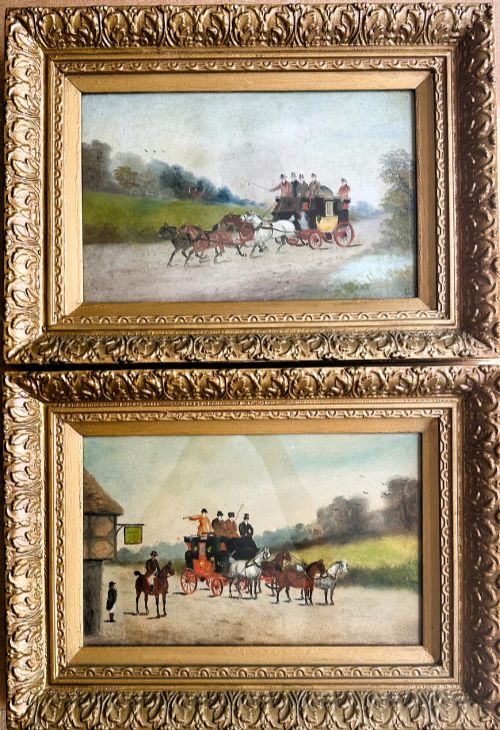
Coaching scene art encompasses framed works depicting stagecoaches, mail carriages, and horses in motion. These pieces frequently capture winter journeys, roadside inns, and equestrian sporting moments.
The versions most commonly met on this page date from the nineteenth and early twentieth centuries. They appear as oil paintings on canvas, watercolours, prints, and reverse glass paintings.
Makers and artists from the Victorian and Edwardian periods dominate the selections. Subjects range from snowbound mail coaches to horses changing at traditional coaching inns.
Materials and techniques
Artists deployed oil paint on canvas to build rich textures and deep tones for winter skies and horse coats. Watercolours on paper offered lighter, transparent washes suited to detailed narrative scenes.
Reverse painting on glass required precise brushwork applied directly to the rear panel, creating a glossy finished surface when viewed from the front. Frames in giltwood and plain wood provided structural support and decorative borders.
Coaching Scene Art Retail Price Guide 2026
Typical asking prices for coaching scene art among the pieces listed under this phrase on Sellingantiques today, from the lower quarter to the upper quarter. They describe what is for sale here now, not the wider market.
Several coaches appear stuck in surprisingly deep snowdrifts while horses look on with remarkably stoic expressions.
Distinctions in quality
Skill in rendering equine anatomy and the frantic energy of a galloping team distinguishes finer compositions. The handling of atmospheric conditions, such as driving snow or crisp morning light, separates accomplished works from ordinary execution.
The presence of a known artist's signature and detailed period framing often indicates superior craftsmanship. Condition of the underlying canvas or paper surface also plays a role in establishing the visual impact of the piece.
Philip Rideout·George Wright·Philip Henry Rideout·Samuel Henry Alken·John Charles Maggs·John Richard Worsdale·Frank Dadd·John Atkinson·James Pollard
The Coaching Scene Art Glossary
- Reverse glass painting
- A technique where the artist paints directly onto the back of a glass sheet, viewing the final image through the front. This method produces a lustrous surface that resists fading.
- Lithograph
- A print made from a design drawn on limestone or a metal plate with a greasy crayon. Colour lithographs apply multiple stones to build up rich hues.
- Giltwood
- Wood carved and coated with a thin layer of gold leaf or metallic powder. It frames many traditional sporting and oil paintings from the nineteenth century.
- Equestrian sporting scene
- Artwork focusing on horses, riders, and hounds in motion. These depictions often record historical hunting and coaching traditions.
Coaching Scene Art: Frequently Asked Questions
What periods do these paintings date from?
The available works span the nineteenth and early twentieth centuries, capturing Victorian and Edwardian aesthetics.
Artists during this era focused heavily on traditional British sporting subjects and historical coaching routes.
How were these artworks created?
Makers utilised oil paint on canvas, watercolours on paper, and pigments on glass. Skilled hands applied these materials to render horses, snowstorms, and roadside inns.
Framing materials typically include traditional wood and giltwood surrounds designed to complement the period style.
What subjects do coaching paintings show?
Paintings display mail carriages, stagecoaches, and horses navigating snowdrifts or stopping outside inns. Scenes often feature hounds and riders alongside the main coach.
These depictions record the realities of historical travel before the widespread adoption of the railway.
How do I identify a reverse glass painting?
Reverse glass pieces display the image beneath a smooth, reflective glass surface rather than open canvas or paper. The brushstrokes appear trapped behind the transparent barrier.
This technique gives the artwork a distinct glossy sheen and requires careful framing to protect the fragile panel.