


Clear Crystal Sconces
Clear crystal sconces bring brilliant illumination and classical elegance to a room, catching the light across Edwardian, Victorian, and early twentieth-century designs.
Clear Crystal Sconces
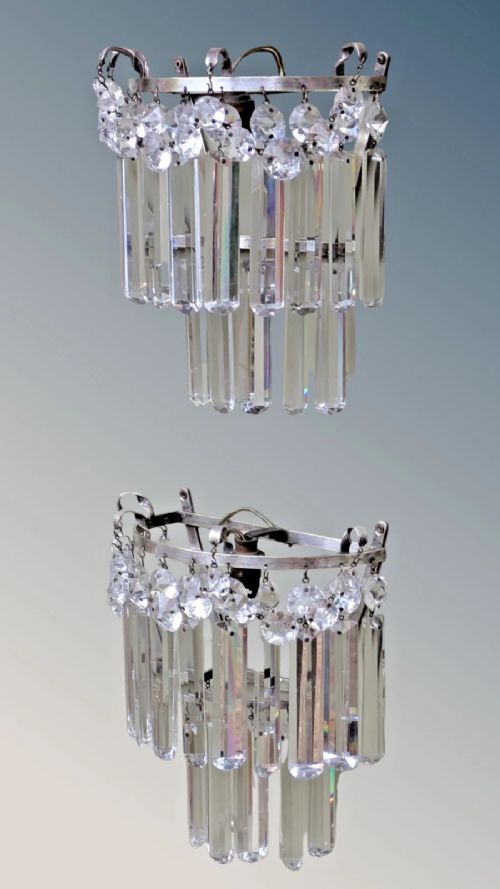
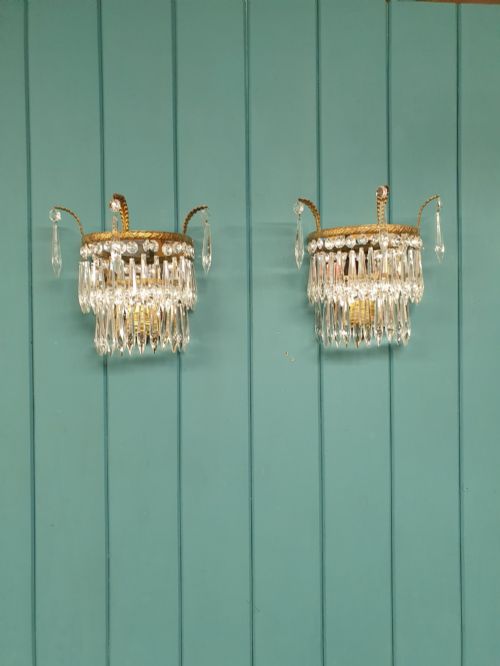
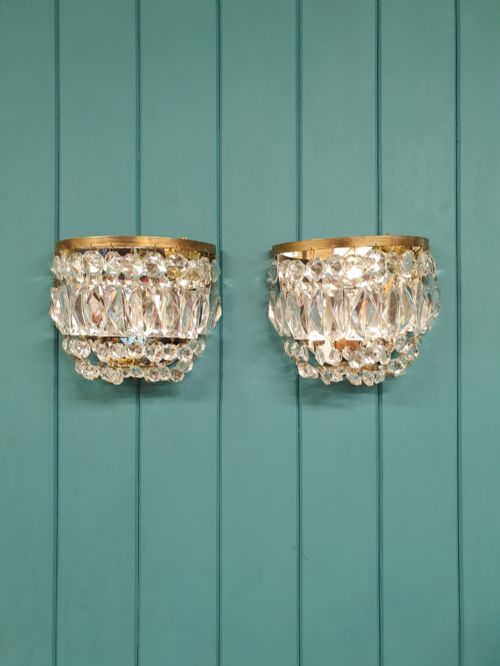
Clear crystal sconces encompass wall-mounted light fixtures and wall chandeliers designed to illuminate interiors while reflecting ambient light. The pieces gathered under clear crystal sconces range from Edwardian spike lights and prison bag designs to French Empire and Italian Regency wall lights.
Most examples found here date from the nineteenth century through the 1930s, reflecting classical revival styles including Regency, French Neoclassical, and French Chateau. Buyers encounter pairs of wall lights, lustre sconces with cherubs, and mirrored backplates designed to multiply the luminescence in a room.
Makers and origins span English workshops, Italian ateliers, and French foundries, alongside Scandinavian glass lustres and Florentine beaded fixtures. These varied regional interpretations share a reliance on reflective glass components mounted upon sturdy metal frames.
Materials and Construction
Clear crystal sconces combine glass elements with metal armatures, utilising brass, bronze, and gilt metal to support intricate hanging drops. Cut glass and crystal components are secured with wire pins or metal loops to central frames, allowing the prisms to move and disperse light.
Backplates often incorporate mirrored glass to amplify brightness, whilst arms and drip pans are cast from bronze or brass, sometimes retaining original gilding. Individual drops feature precise hand-cutting to enhance refraction, suspended from matching branches or tent structures.
Listings feature pieces spanning the nineteenth century through the 1930s, incorporating glass, brass, bronze, and gilt metal.
Factors of Distinction
The quality of clear crystal sconces relies upon the depth of the glass cutting and the purity of the crystal formula, which determines how cleanly light refracts. Finer pieces demonstrate crisp faceting on every pendant and drop, whereas lesser examples feature softer edges or moulded rather than cut glass.
Metalwork execution separates standard production from exceptional artistry, visible in the chiselling of bronze mounts, the weight of cast brass frames, and the secure integration of mirror backs. Original matched components throughout a pair indicate superior preservation compared to fixtures assembled from mixed parts over time.
Baccarat
The Clear Crystal Sconces Glossary
- Bag light
- A wall light featuring a basket or bag-like arrangement of hanging crystal drops suspended beneath the light source.
- Lustre
- A glass pendant, drop, or prism hung from a lighting fixture to refract and enhance illumination.
- Tent and bag
- A lighting configuration where crystal strands form an upper conical tent above a gathered lower bag of drops.
- Drip pan
- The shallow saucer positioned beneath a candle nozzle or bulb holder to catch melted wax and reflect light upwards.
- Gilt bronze
- Metal cast into decorative forms and coated with a thin layer of gold, commonly found on French frames.
Clear Crystal Sconces: Frequently Asked Questions
How do I clean clear crystal sconces?
Cleaning requires removing dust with a soft brush and washing individual crystal drops in warm soapy water. Dry each piece thoroughly before reattaching it to the metal frame.
Avoid harsh chemical cleaners that can damage vintage gilding or discolour aged brass and bronze components.
Were these wired for electricity originally?
Most pieces originating from the nineteenth and early twentieth centuries were designed for candles rather than electric lighting. Surviving fixtures often feature later electrical adaptations fitted inside original drip pans or branching arms.
Rewiring should be inspected by a qualified professional to ensure compatibility with modern safety standards.
How should wall sconces be positioned?
Placement typically depends on room proportions and ceiling height, commonly flanking mirrors, fireplaces, or architectural doorways. Eye level or slightly above ensures the light source and crystal drops disperse illumination evenly without glare.
Secure mounting is essential due to the combined weight of cast metal frames and dense crystal components.
How do I identify Edwardian sconces?
Edwardian pieces frequently display lighter proportions and neoclassical influences, often utilising spike designs or prison bag configurations. The metalwork from this period tends to show refined casting techniques distinct from heavier Victorian iterations.
Examining the construction of the pin attachments and the clarity of the glass helps confirm the period of manufacture.