



Claw Footed Pot
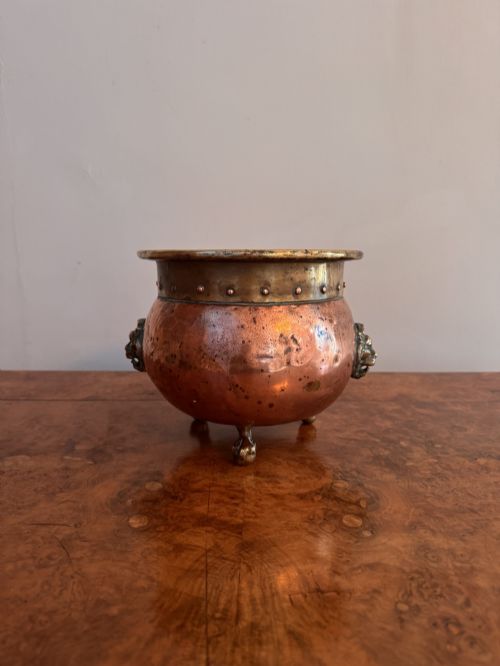
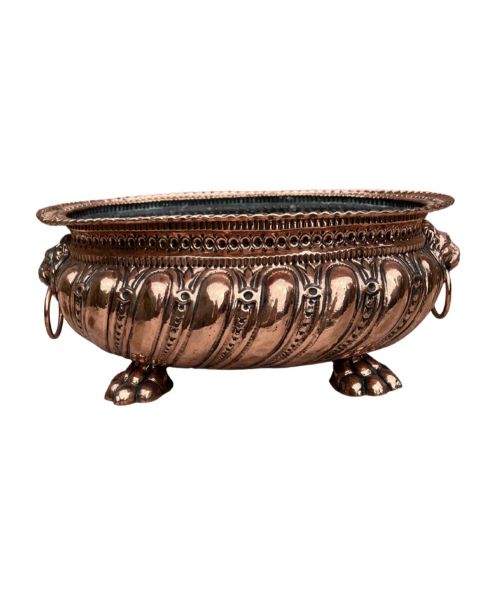
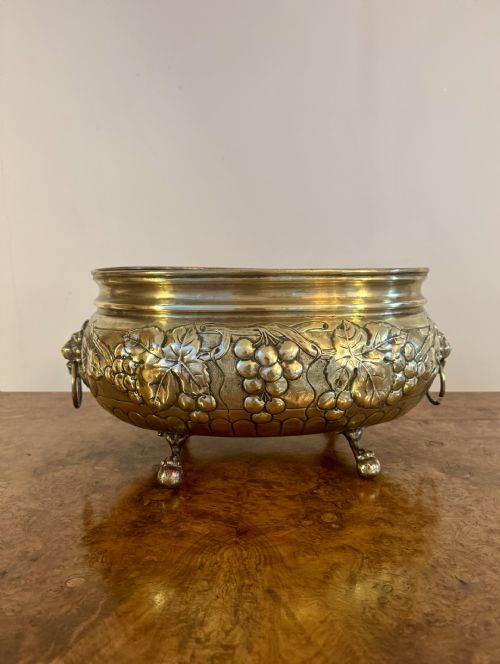
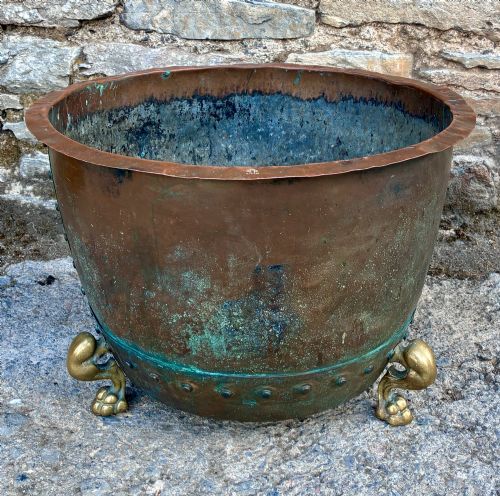
These claw footed pot selections bring together brass, copper, and mahogany vessels raised on animal paws, offering practical plant display and hearth storage.
Claw Footed Pot
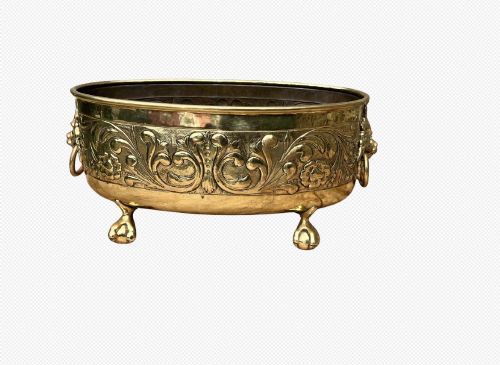
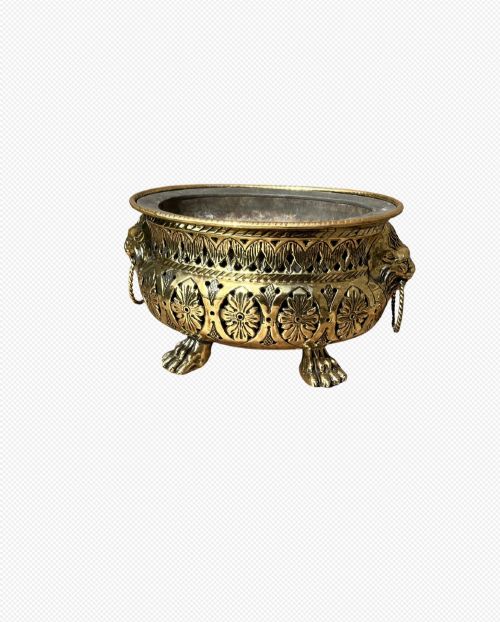
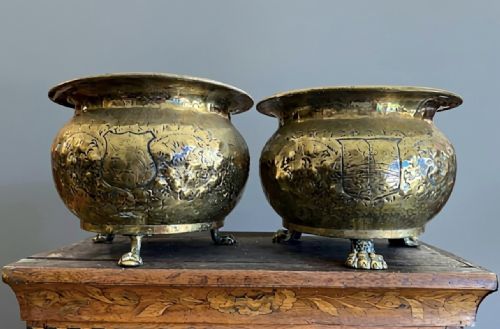
A claw footed pot encompasses jardiniere planters, log buckets, and plant stands raised on distinct feet, spanning the Victorian and Edwardian periods. Buyers searching this phrase most commonly meet pierced brass planters and metal vessels from the nineteenth century.
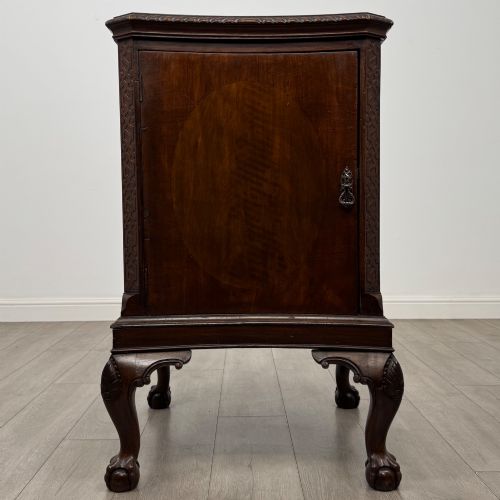
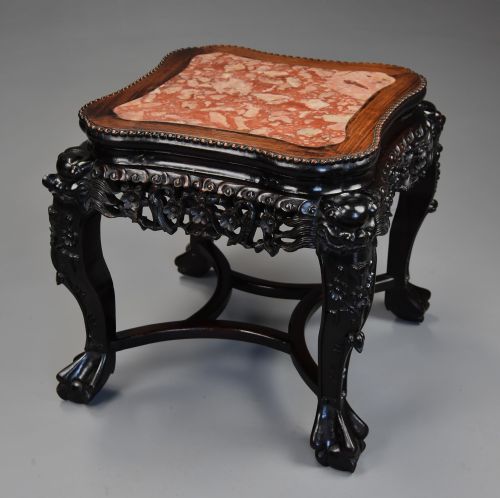
The form stretches from French Empire marble inkstands and Chinese hardwood pot stands to rustic copper boilers and mahogany cupboards with ball and claw feet. Makers produced these pieces in brass, copper, lead, and hardwood to serve both decorative and functional purposes in period rooms.
Domestic interiors utilised these vessels for housing indoor plants, containing fireplace logs, or holding ink and writing equipment upon a desk. The inclusion of claw feet elevates simple utilitarian containers into decorative furnishings with sculptural presence.
How they were made
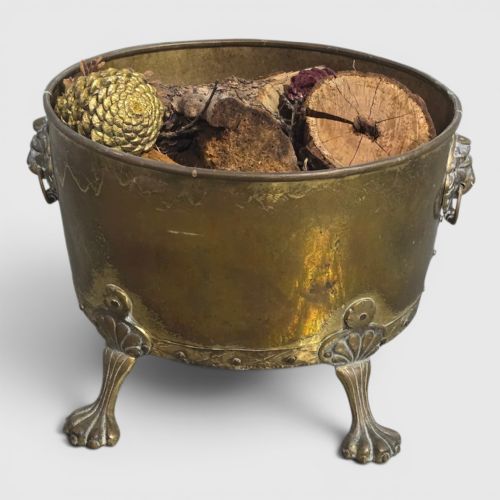
Craftsmen utilised sheet brass and copper, shaping the metal through repoussé work, piercing, and riveting to create decorative jardiniere planters and log bins. Workshops also employed cast ormolu, lead, and bronze for planters and inkstands.
Cabinetmakers worked with mahogany and hardwood for bedside cupboards and low pot stands, often incorporating inset marble tops and carved ball and claw feet. Rivets, chased details, and lion mask handles finished the metal forms.
Claw Footed Pot Retail Price Guide 2026
Typical asking prices for claw footed pot among the pieces listed under this phrase on Sellingantiques today, from the lower quarter to the upper quarter. They describe what is for sale here now, not the wider market.
Materials span brass, copper, mahogany, marble, hardwood, lead, and ormolu across Victorian and Edwardian manufacturing dates.
What varies in quality
Quality rests upon the crispness of the metal repoussé work, the depth of the chasing on animal heads, and the stability of the joinery in hardwood stands. Heavier gauge brass and thick copper plate signal superior manufacture compared to thinner, pressed sheet metal.
The definition in cast feet, whether brass claws or carved mahogany ball and claw details, separates standard containers from finer decorative works. Pierced galleries and applied handles executed with precision indicate higher workshop standards.
The Claw Footed Pot Glossary
- Jardiniere
- An ornamental pot or stand for holding plants or flowers. These vessels often sit on claw feet and appear in brass, copper, and ceramic.
- Repoussé
- A metalworking technique where the artisan hammers the design from the reverse side to create a raised pattern on the front. This method decorates many nineteenth-century brass planters.
- Ormolu
- Gilded bronze applied to ornamental objects, furniture, and inkstands during the eighteenth and nineteenth centuries. The technique provides a bright golden finish.
- Pierced
- Metalwork perforated with decorative patterns or openwork designs, commonly seen around the rims of Victorian jardinieres.
- Planter
- A container used for holding growing plants indoors or on terraces, frequently taking the form of metal tubs or lead troughs.
Claw Footed Pot: Frequently Asked Questions
What is a claw footed pot used for?
These vessels primarily function as jardiniere planters for indoor greenery, log bins beside the fireplace, or decorative cachepots.
Period interiors relied on them to conceal plain clay flower pots while protecting tabletops and floors from moisture.
How do I clean brass and copper?
Maintenance requires gentle washing with warm soapy water and a soft cloth to remove dust and preserve the aged surface.
Harsh metal polishes strip away desirable historical patination and can damage delicate repoussé relief work.
How do I date a brass planter?
Dating relies on manufacturing methods such as hand-cut rivets, hammered repoussé details, and the weight of the metal.
Victorian and Edwardian examples often display characteristic handle styles and foot configurations typical of nineteenth-century metalwork.
Are these pots waterproof?
Original metal liners or heavy metal construction allow many jardinieres to hold potted plants, though older seams may develop minor leaks.
Placing a modern saucer inside protects the historic bottom from continuous dampness and mineral deposits.