


Claw Foot Log Bucket
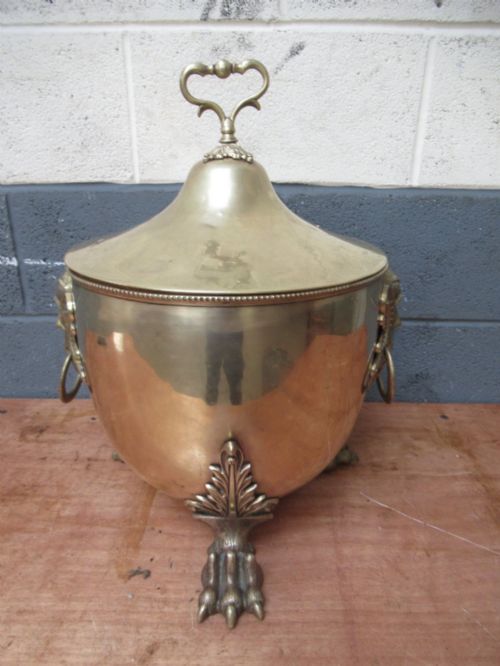
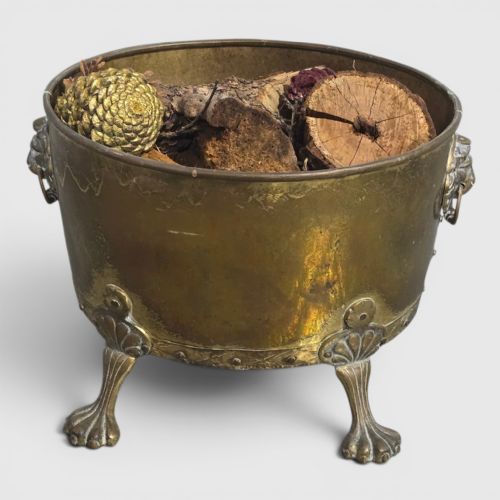
A claw foot log bucket keeps timber tidy beside a hearth, and these brass and copper examples bring heavy metal presence to a fireside.
Claw Foot Log Bucket
When you search for a claw foot log bucket, you are looking at substantial fireside containers designed to hold logs and coal for an open fire. These heavy vessels serve a purely practical hearth function while adding metallic warmth to a room.
The versions you are most likely to meet on this page hail from the Victorian period, alongside examples dated to the nineteenth century, nineteen-ten, and the Regency era. They appear in forms such as log bins, coal buckets, cauldrons, and scuttles.
Makers shaped these utilitarian objects from copper and brass, occasionally incorporating wood and ebony handles or mounts. Styles range from plain country house utility to ornate Victorian embossed designs and rustic farmhouse pieces.
Materials and construction
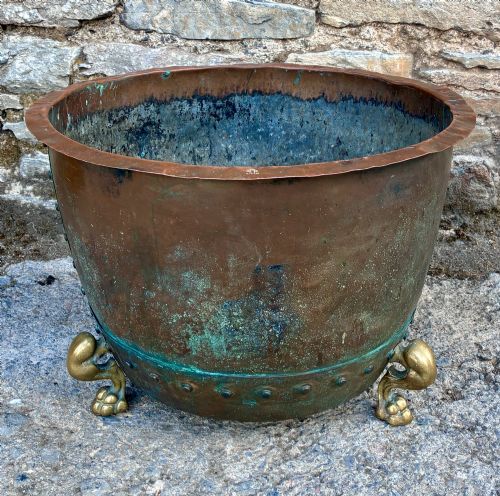
The primary materials recorded in these listings are heavy gauge brass and copper sheets, shaped into rounded bodies to hold fuel. Makers frequently reinforced these vessels with riveted copper bands and fitted them with sturdy metal handles.
Details such as hand-beaten textures and embossed motifs demonstrate skilled metalworking techniques rather than mass production. Supporting claw feet raise the metal bodies off the floor, often cast separately and attached firmly to the base.
Listings feature Victorian, Edwardian, and Regency periods, alongside nineteenth century and nineteen-ten dates.
Distinctions in quality
Quality in a claw foot log bucket rests on the thickness of the metal and the crispness of any embossed decoration or hand-beaten texture. Substantial gauge brass and copper maintain their structural integrity far better than thin sheet metal.
The execution of the feet and handles marks the difference between standard utility items and finer workshop production. Identified makers like William Soutter and Sons indicate a higher standard of manufacture compared to unmarked pieces.
William Soutter and Sons
The Claw Foot Log Bucket Glossary
- Log bin
- A large container designed specifically for storing firewood beside a fireplace. These vessels keep timber contained and prevent bark from littering the hearth floor.
- Coal scuttle
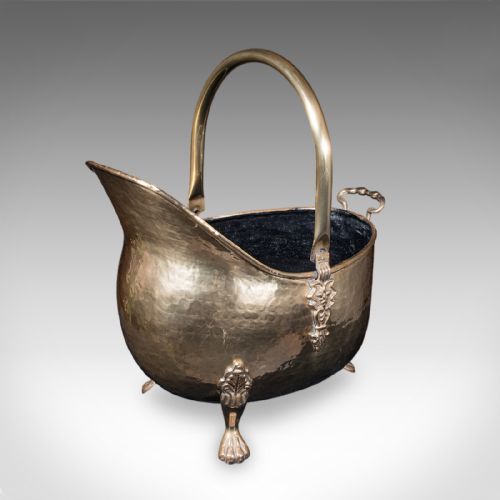
- A bucket or scuttle shaped with a sloping lip for carrying and pouring coal onto a fire. Many feature a swing handle and a smaller grip at the back to aid tipping.
- Embossed brass
- Sheet brass hammered or pressed from the reverse side to create a raised decorative relief pattern. This technique adds surface texture and visual interest to plain metal bodies.
- Handbeaten copper
- Metalworked by hand using a hammer to shape the vessel and leave characteristic small facets across the surface. This traditional method creates a tactile finish unique to each piece.
- Regency
- An architectural and design period dating from the early nineteenth century known for classical restraint and elegance. Pieces from this era often display cleaner lines and refined proportions.
Claw Foot Log Bucket: Frequently Asked Questions
What is a claw foot log bucket used for?
These metal containers are built to store logs, coal, and kindling right next to an open fireplace or wood burning stove. They keep hearth fuel tidy and contained while introducing a metallic decorative element to the room.
Beyond simple storage, many of these vessels double as large planters or decorative coal scuttles. Their robust construction allows them to handle heavy loads of timber safely.
How do I date a brass log bucket?
Dating relies on observing construction methods, material choices, and decorative styles across different periods. Victorian pieces often feature heavy embossing and riveted copper bands, whereas Regency examples tend towards simpler classical forms.
Makers' marks stamped into the base offer the most precise dating evidence when present. Material shifts from handbeaten copper to machine-rolled brass also help narrow down the manufacturing era.
Can I use an antique copper bucket outside?
While these vessels were made of durable brass and copper, antique pieces are generally suited to interior fireside display. Exposure to harsh weather outdoors can accelerate metal tarnishing and weaken historic riveted joints.
Some collectors do utilise them indoors as large indoor plant containers rather than fuel holders. Keeping them inside protects the original patina and any delicate wooden or ebony handles.
How do I clean a brass and copper log bin?
Gentle dusting with a dry or slightly damp cloth is usually sufficient for regular maintenance of historic metalwork. Aggressive metal polishes can strip away the authentic dark patina that collectors value on nineteenth-century pieces.
If polishing is desired, use a mild cream specifically formulated for brass or copper and apply it sparingly. Avoid harsh abrasives that might scratch the handbeaten surface or damage embossed details.