


Classical Twin Light Sconce
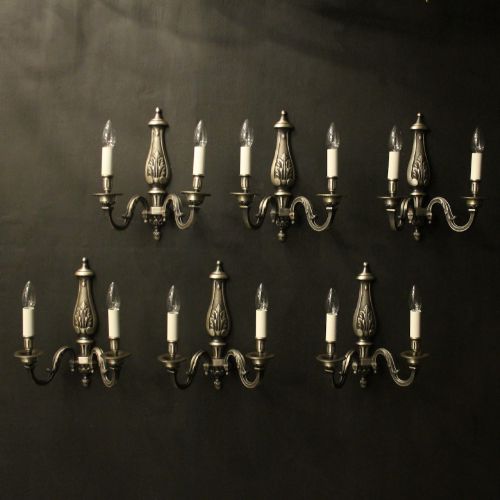
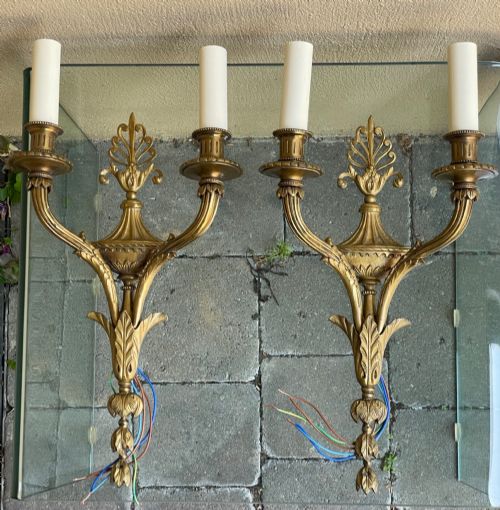
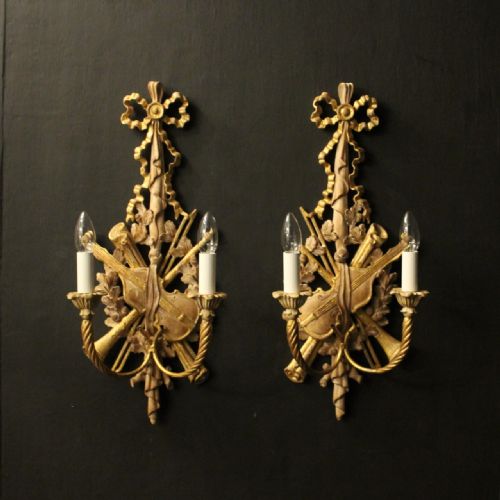
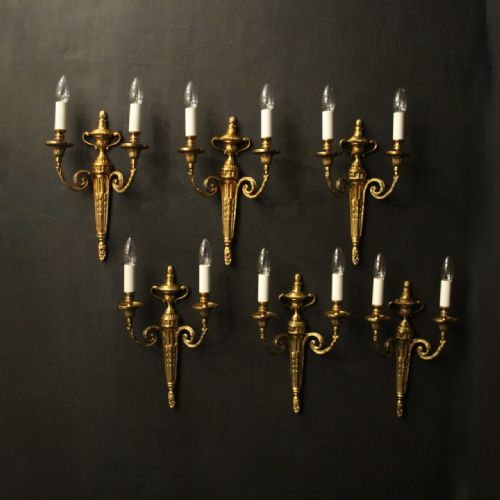
A classical twin light sconce brings structured symmetry and warm illumination to a panelled wall or flanking a mirror.
Classical Twin Light Sconce
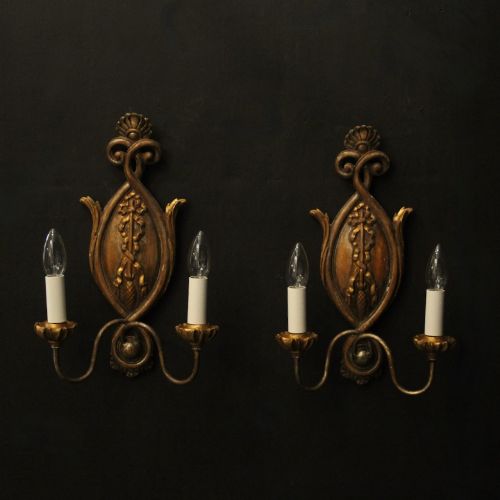
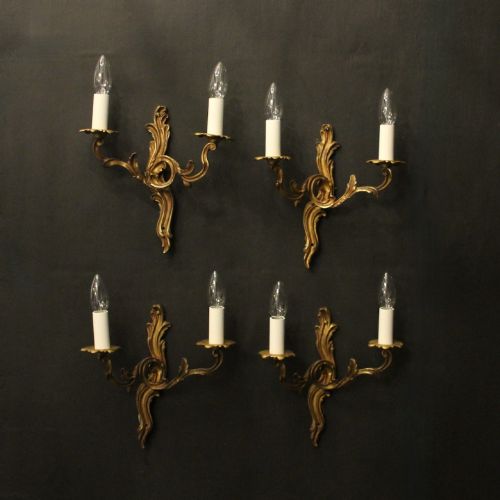
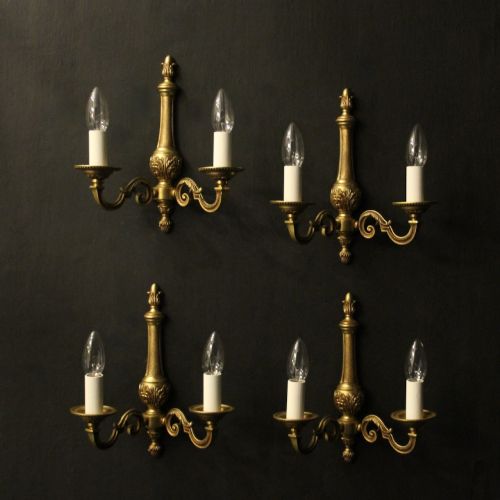
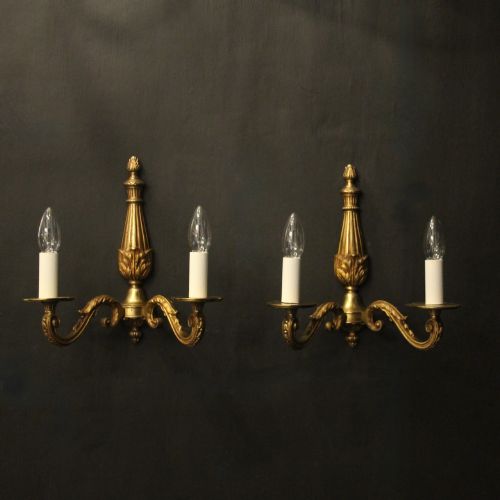
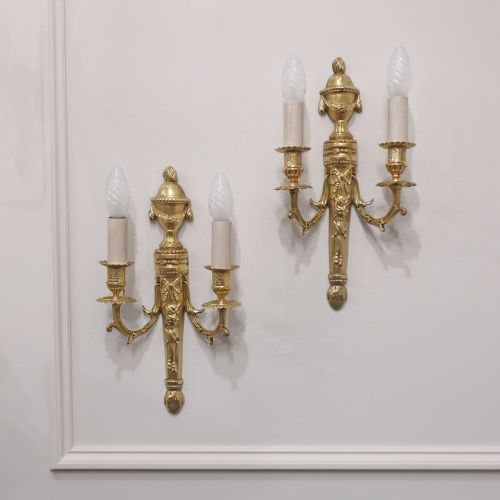
A classical twin light sconce provides balanced wall illumination through two candle arms projecting from a central backplate. When you search for this phrase, you find wall lights and sconces originating from the Edwardian period and spanning the decades up to nineteen thirty.
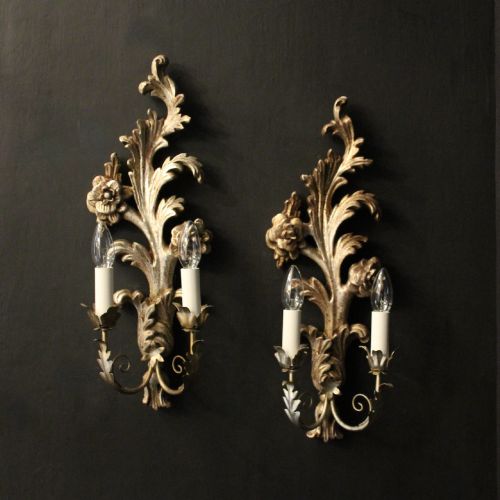
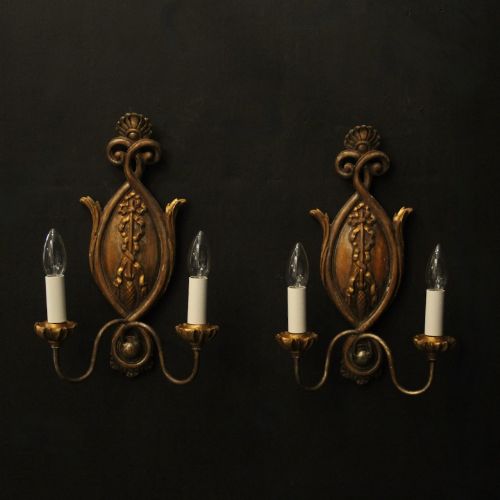
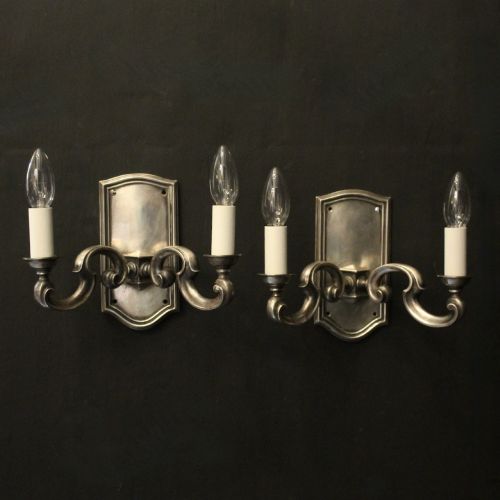
The selection leans heavily towards continental workshops, with French Neoclassical, Louis XVI, and Italian Florentine designs dominating the offerings. English interpretations appear in brass and silver-plated metal, often channelling Adam style proportions.
These fixtures serve primarily as decorative accent lighting, designed to mirror architectural symmetry in formal rooms, hallways, and above mantelpieces.
How They Were Made
The construction relies heavily on cast metals such as brass, bronze, and ormolu, which provide the structural rigidity needed for projecting twin arms. Many pieces receive a gilt or gold leaf finish to catch the ambient light.
Carved wood and giltwood appear in Florentine and Italian pieces, whilst other variations utilise silver plating or polychrome paint over a metal base. Backplates are stamped, cast, or carved before being fitted with standard electrical or conversion hardware.
Several sets include up to six matching sconces, perfect for illuminating a very long hallway in style.
What Varies in Quality
The distinction between standard production and superior execution lies in the crispness of the casting and the depth of the metal ornamentation. Finer examples display hand-chased detail on the bronze or ormolu mounts rather than simple smooth surfaces.
The integrity of the gilding or silvering separates exceptional pieces from weathered counterparts, with genuine gold leaf and fire-gilt bronze retaining a richer lustre over time. Heavier gauge brass and solid bronze backplates ensure the arms remain rigidly aligned.
Casier·F. & C. Osler
The Classical Twin Light Sconce Glossary
- Ormolu
- A technique of applying finely ground high-carat gold-mercury amalgam to a bronze object. This historic process gives a distinctive warm, golden surface.
- Giltwood
- Timber, often gessoed and carved, coated with thin gold leaf. It offers a lighter alternative to cast metal backplates.
- Backplate
- The flat or shaped structural metal or wood component that mounts directly to the wall. It supports the projecting candle arms.
- Applique
- A French term frequently used interchangeably with wall sconce or wall light. It denotes a decorative fixture fixed to a vertical surface.
Classical Twin Light Sconce: Frequently Asked Questions
How do I wire old sconces?
Most antique wall lights require rewiring to meet modern electrical safety standards before installation. A qualified electrician can thread contemporary heat-resistant flex through the arms and backplate.
Original internal channels usually accommodate modern thin-gauge wiring without altering the exterior appearance of the metal or wood.
Where should I mount them?
Twin arm sconces look best mounted at eye level, roughly one hundred and fifty centimetres from the floor. They work particularly well flanking a fireplace, a large mirror, or defining the edges of a dining room.
Ensure the backplate is screwed into wall studs or secured with appropriate hollow-wall anchors given the weight of cast bronze and brass.
How do I clean gilt bronze?
Dust gilt bronze and ormolu gently with a soft, dry microfibre cloth to prevent the accumulation of grime. Avoid all abrasive cleaning agents, polishes, and chemical solvents that might strip the historic gilding.
If the metal requires more attention, a damp cloth with mild soap can be used sparingly, followed immediately by thorough drying.
Are these sconces strictly French?
While a significant portion of the pieces reflect French Neoclassical, Empire, and Rococo styles from continental makers, English and Italian pieces are also prominent. English examples often feature restrained Adam style silver-plated or brass designs.
Italian workshops contribute heavily to the carved giltwood and polychrome wooden variants found within this category.