

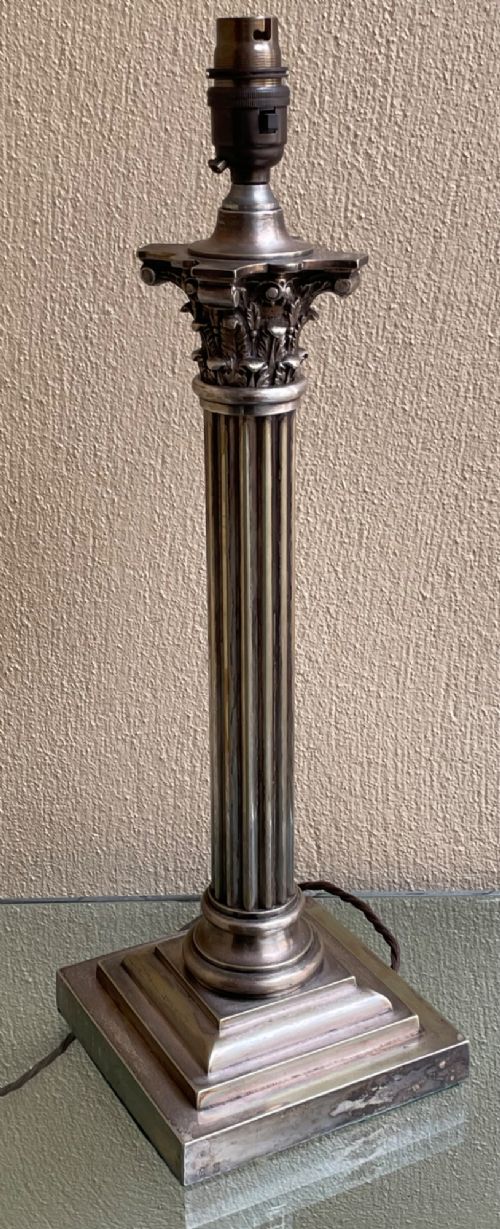


Classical Silver Lamp Base
A classical silver lamp base brings solid architectural dignity to a room, channelling antique columns and classical forms into a working table light.
Classical Silver Lamp Base
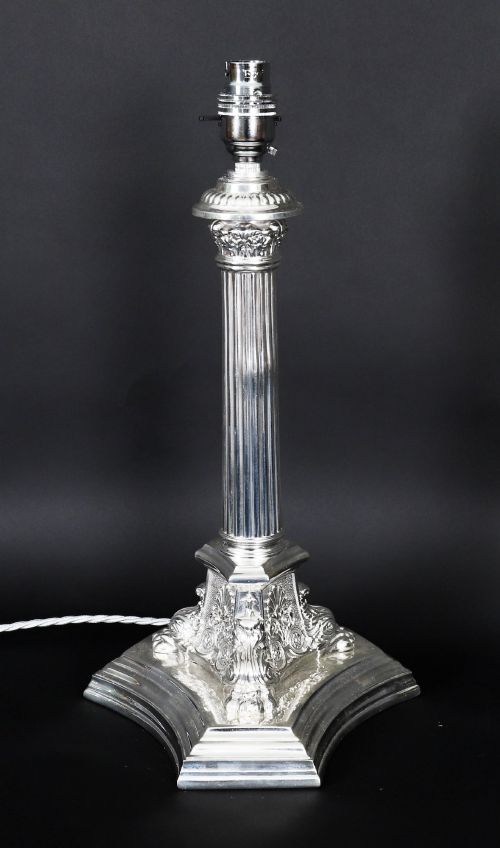
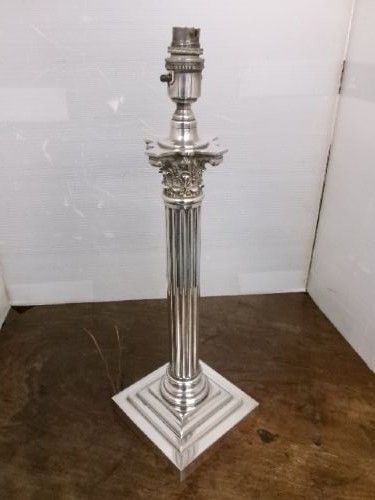
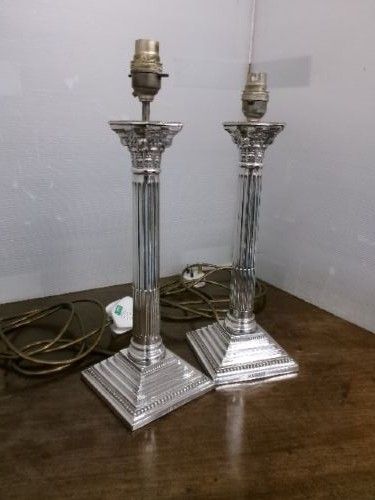
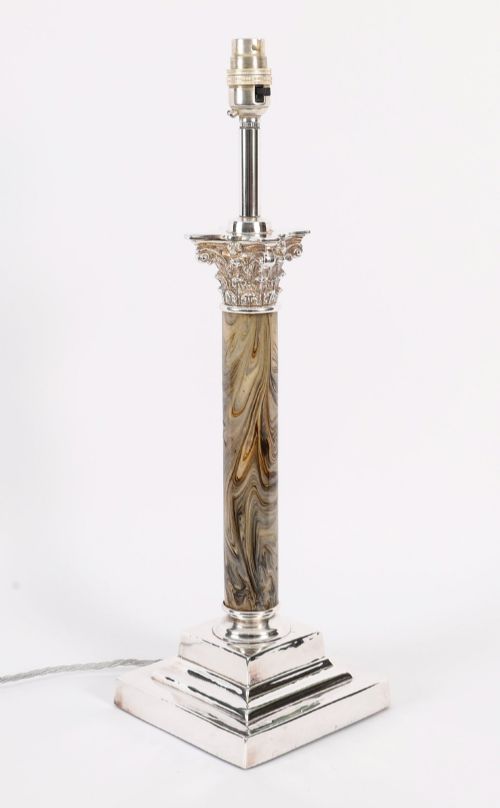
A classical silver lamp base takes the form of a Corinthian column or neoclassical pillar, standing firm on square plinths or lion's paw feet. These table lamps draw directly from nineteenth-century and early twentieth-century revivals, spanning Victorian, Edwardian and later periods.
Most pieces encountered here are formed from silver plate over a sturdy metal core, alongside occasional solid sterling silver examples. The dominant architectural vocabulary relies heavily on fluted shafts, stepped bases and ornate acanthus leaf capitals.
How they were made
Silversmiths constructed these columns using silver plating techniques over base metals like brass, or shaped solid sterling silver for higher-end commissions. Structural stability required weighted bases, often incorporating cast metal elements and detailed decorative feet.
Detailing on the capitals and bases involved precision casting, chasing and stamping, frequently bearing maker marks or town stamps such as Sheffield. Some variations integrate cut glass or onyx elements directly into the column shaft alongside the metalwork.
Classical Silver Lamp Base Retail Price Guide 2026
Typical asking prices for classical silver lamp base among the pieces listed under this phrase on Sellingantiques today, from the lower quarter to the upper quarter. They describe what is for sale here now, not the wider market.
Some Corinthian columns stand guard over your reading nook supported entirely by miniature cast lion's paw feet.
What varies in quality
Quality rests upon the crispness of the cast ornamentation on the Corinthian capital and the depth of the silver layer over the underlying metal. Sharply defined acanthus leaves and substantial weight separate superior examples from softer, worn pieces.
Maker attribution and official hallmarks or stamps elevate certain pieces significantly, indicating premier workshops. The integration of high-grade materials like cut glass or solid sterling silver rather than standard silver plate defines the upper tier.
Goldsmiths and Silversmiths Company·Harrison Brothers and Howson·Walter Latham and Son·Auguste Moreau
The Classical Silver Lamp Base Glossary
- Corinthian column
- An architectural order featuring an ornate capital decorated with rows of acanthus leaves. This form is the most prevalent design seen across these lamp bases.
- Silver plate
- A thin layer of silver fused or electroplated onto a base metal such as brass or copper. This technique allowed makers to achieve the look of solid silver at a lower cost.
- Sterling silver
- A silver alloy containing substantial pure silver by mass, hallmarked for standard purity. Pieces made to this specification represent the higher tier of production.
- Neoclassical revival
- An artistic movement drawing inspiration from classical antiquity, particularly Greek and Roman architecture. It governs the symmetrical columns and strict proportions seen here.
- Capital
- The uppermost member of a column, situated directly below the lamp fitting. On these pieces, it typically displays detailed classical foliage.
Classical Silver Lamp Base: Frequently Asked Questions
What periods do these lamp bases date from?
The listings span from the Victorian era through the Edwardian period and into the early twentieth century, roughly covering the mid nineteenth century to 1920.
Most items reflect nineteenth-century neoclassical revivals, while others date from the Edwardian period or the 1920s.
What materials were used to make them?
Makers primarily utilised silver plate over a metal core, alongside solid sterling silver, brass, cut glass and onyx. Fabric shades frequently complete the structure.
Heavier pieces often incorporate weighted bases and cast metal components to ensure stability on a table.
Are these lamps marked by makers?
Certain examples bear stamps from notable makers such as Goldsmiths and Silversmiths Company, Harrison Brothers and Howson, or Walter Latham and Son.
Other pieces feature town stamps like Sheffield or carry maker initials like GS.
How do I live with a classical silver lamp base?
These tall architectural lamps suit side tables, desks or sideboards where their vertical proportions and reflective metallic surfaces stand out. Pair them with traditional fabric shades.
Maintenance involves gentle cleaning suited to silver plate or sterling silver to preserve the finish without stripping the underlying plating.