




Classical Shell Cameo
Classical shell cameo pieces are hand-carved miniature reliefs set into gold, silver, or pinchbeck mounts to wear as brooches, rings, and earrings.
Classical Shell Cameo
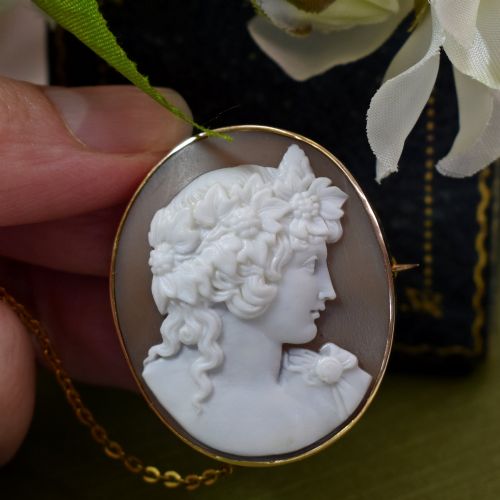
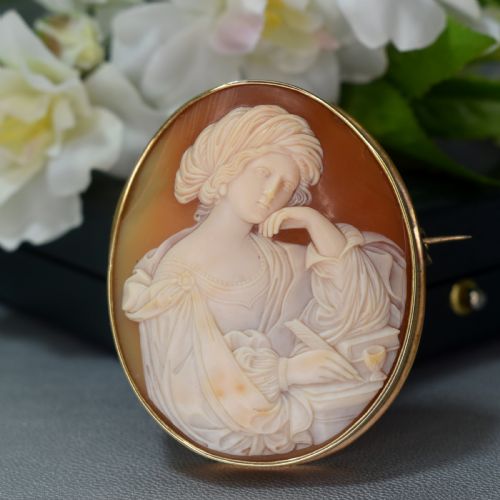
A classical shell cameo is an item of jewellery featuring a carved portrait or mythological scene taken from antiquity, typically mounted in gold or silver. These pieces appear across several eras, with Victorian examples frequently depicting figures such as Antinous, Aphrodite, and the Goddess Flora in detailed relief.
Buyers encounter these carvings primarily as brooches and drop earrings, alongside bracelets and rings formed from multiple shell links. The forms range from small teardrop earrings to monumental brooches set within ornate metal frames.
Originating largely from Italian workshops, these carvings utilise the natural strata of shells to create contrasting light figures against a darker background. The subjects draw heavily on classical mythology, including representations of Psyche, Cupid, and Aurora in her chariot.
How they were made
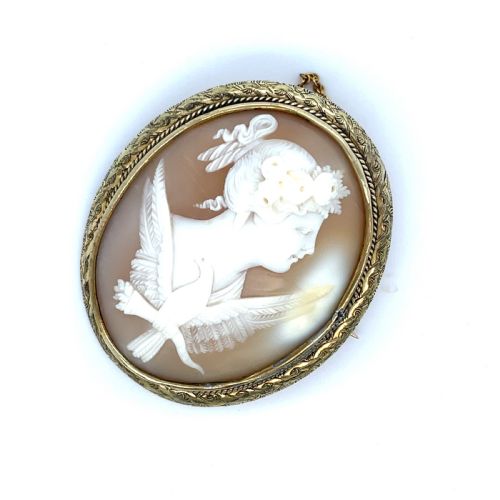
The finished carvings are secured into metal mounts using bezels, claws, or pins, often fashioned from nine-carat, fifteen-carat, or eighteen-carat gold, as well as silver and pinchbeck. Frames occasionally feature elaborate wirework, Etruscan revival granulation, or simple polished bezels designed to complement the shape of the shell.
Classical Shell Cameo Retail Price Guide 2026
Typical asking prices for classical shell cameo among the pieces listed under this phrase on Sellingantiques today, from the lower quarter to the upper quarter. They describe what is for sale here now, not the wider market.
Carvers occasionally utilised natural blemishes in the shell to position a tiny carved cloud behind a racing goddess.
What varies in quality
The choice of metal for the frame also defines the tier of the piece, with solid fifteen or eighteen-carat gold and substantial silver mounts indicating higher status than pinchbeck or lower carat gold alloys. The natural colour and evenness of the shell background contribute further to the visual harmony of the finished item.
R. Pernice
The Classical Shell Cameo Glossary
- Cameo
- A method of carving an object such as an engraved gem, item of jewellery, or vessel. In shell pieces, this involves carving a raised relief from a layered material.
- Pinchbeck
- An alloy of copper and zinc invented in the eighteenth century to imitate gold. It provides a warm golden tone for jewellery frames without using precious metal.
- Bezel
- A ring of metal that holds a stone or shell in place by overlapping its edges. It forms a clean, secure border around the carved cameo.
- Granulation
- A decorative technique where tiny spheres of gold are soldered onto a metal surface in geometric patterns. It appears frequently on nineteenth-century revival frames.
- Ground
- The background layer of the shell exposed behind the raised carved figure. A dark, uniform ground enhances the contrast of the white relief.
Classical Shell Cameo: Frequently Asked Questions
What shell is used for cameos?
Carvers select specific shells with distinct colour layers, most notably the queen conch, which yields a pinkish-orange or white relief against a darker backing.
These natural strata allow the artisan to carve distinct foreground figures that stand out clearly from the darker base of the shell.
How do I date a cameo?
Dating relies on the style of the metal mount, the clasp mechanism, and the subject matter depicted in the carving.
Victorian and Georgian pieces often feature open c-clasps and heavy gold frames, whereas Edwardian examples tend to utilise lighter silver or gold settings.
Were cameos worn as mourning jewellery?
While many cameos depict joyous mythological scenes, certain Victorian examples incorporated dark shell grounds or jet frames to suit formal mourning attire.
The subject matter generally reflects classical antiquity rather than personal remembrance, distinguishing them from standard hair-work mourning brooches.
How should I clean a shell cameo?
Shell is a relatively soft organic material that reacts poorly to harsh chemical dips or ultrasonic jewellery cleaners.
A gentle wipe with a soft, damp cloth removes surface dust without damaging the polished background or the metal mount.