





Classical Portrait Relief
A classical portrait relief captures the timeless profile of a historical figure, deity or literary icon in carved stone, shell, metal or ivory.
Classical Portrait Relief
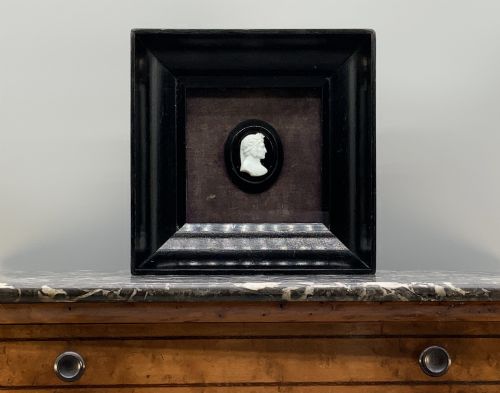
A classical portrait relief presents a profile likeness drawn from antiquity, mythology or literature, rendered in three dimensions against a flat background. These works emerge predominantly as wall plaques, framed cameos, brooches and sculptural roundels originating from the eighteenth and nineteenth centuries.
The pieces on this page lean heavily toward nineteenth-century Grand Tour souvenirs and Victorian revivals, capturing figures such as Dante, Virgil, Roman emperors and classical deities. Buyers encounter everything from small wearable shell cameos mounted in gold to substantial carved mahogany and Italian marble wall plaques.
Makers ranged from Italian souvenir workshops and regional sculptors to established factories like Wedgwood producing jasperware cameos. The format bridges decorative art and sculpture, serving equally well mounted on a wall or housed in a display cabinet.
Materials and methods
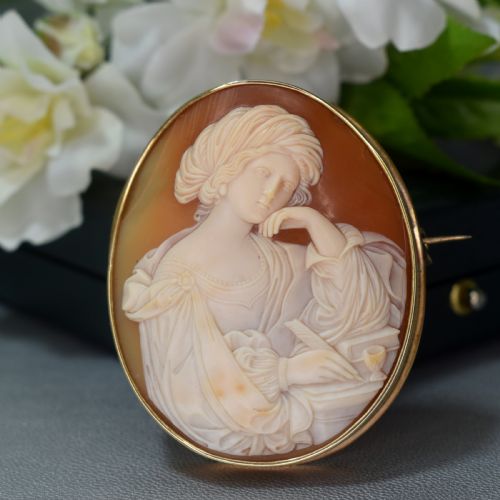
Carvers shaped white marble, conch shell, lava stone and ivory by hand, cutting away the background material to leave the raised profile standing proud. Shell cameos exploit the natural colour layers of the conch, contrasting a creamy white portrait against a warm peach or orange backing.
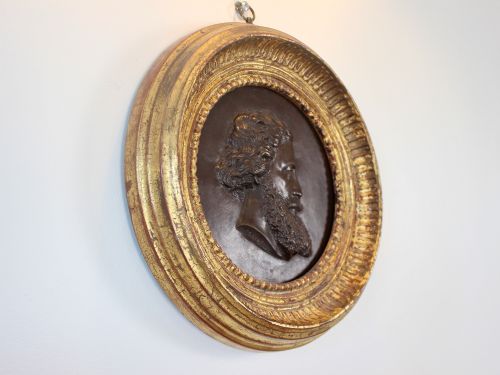
Foundry casters utilised bronze, cast lead and pinchbeck for metallic portrait plaques and frames, sometimes applying a bronzed finish. Potters like Wedgwood pressed fine clay into moulds to create matte jasperware cameos, while woodworkers turned mahogany frames to house plaques and intaglios.
Classical Portrait Relief Retail Price Guide 2026
Typical asking prices for classical portrait relief among the pieces listed under this phrase on Sellingantiques today, from the lower quarter to the upper quarter. They describe what is for sale here now, not the wider market.
Listings feature materials spanning carved ivory, white marble, Queen conch shell, mahogany, glass, textile and bronze.
Understanding quality
Quality rests entirely in the sharpness and anatomical accuracy of the carvers hand or the precision of the mould. Superior portrait reliefs capture subtle shifts in expression, hair texture and musculature, whereas inferior pieces rely on soft, flat moulding or crude incision.
The choice of medium also dictates the calibre of the piece, with fine-grained Italian marble and deep-relief carved ivory sitting at the upper end of the craft. Original period mounts in gold or turned mahogany elevate the status of a plaque far beyond later replacements.
MAINFROY·Thorvalsen Workshop·R.Pernice·Kasper Hendrik Roskam·Wedgwood
The Classical Portrait Relief Glossary
- Intaglio
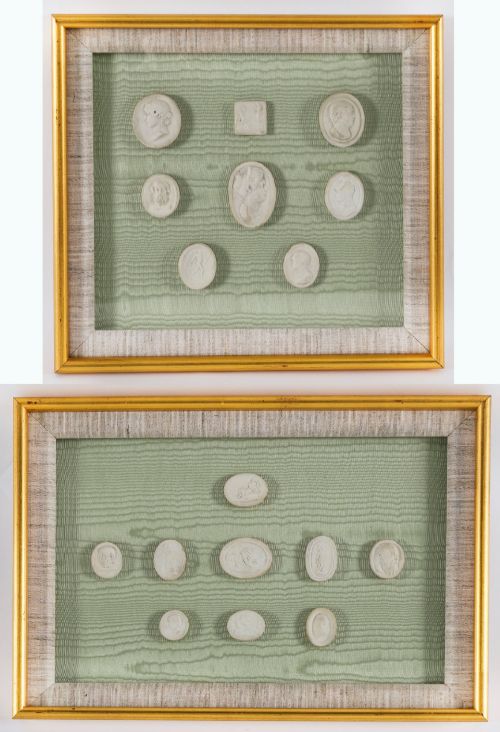
- A design engraved into the material rather than raised above it, often used for seal impressions and commonly made in plaster during the nineteenth century.
- Grand Tour
- A cultural journey through Europe undertaken by young upper-class men in the eighteenth and nineteenth centuries, resulting in souvenir purchases of carved marble and shell profiles.
- Jasperware
- A type of fine stoneware developed by Josiah Wedgwood, characterised by a matte coloured body with applied white neoclassical reliefs.
- Pinchbeck
- An alloy of copper and zinc invented in the eighteenth century to imitate gold, frequently utilised for jewellery frames and mounts.
- Roundel
- A circular panel or plaque utilised for decorative wall art, frequently cast in metal or carved from wood and marble.
Classical Portrait Relief: Frequently Asked Questions
What is a classical portrait relief?
A classical portrait relief is a carved, cast or moulded representation of a human head in profile, typically drawing inspiration from ancient Roman and Greek art.
These pieces range from tiny shell cameo brooches to substantial Italian marble wall plaques and bronze roundels.
How were these pieces used historically?
Many of these items served as personal ornaments worn as brooches or earrings, or were collected as souvenirs during European travels.
Larger marble, mahogany and plaster versions were displayed in nineteenth-century interiors as wall art to signal classical learning and refined taste.
How do I date a classical portrait relief?
Dating relies on examining the materials, framing techniques, and stylistic revivals present in the object, such as Victorian interpretations or eighteenth-century Grand Tour conventions.
Signatures, stamps, and the specific composition of the stone or shell also point towards particular manufacturing periods.
How do I care for marble and shell pieces?
Marble plaques require gentle dusting with a dry cloth and protection from moisture and harsh cleaning chemicals.
Shell cameos need careful handling to avoid dropping, as the natural material is brittle and sensitive to extreme temperature shifts.