


Classical Ormolu Wall Sconces
Classical ormolu wall sconces bring heavy French character and warm metal glow to a room, offering genuine period illumination.
Classical Ormolu Wall Sconces
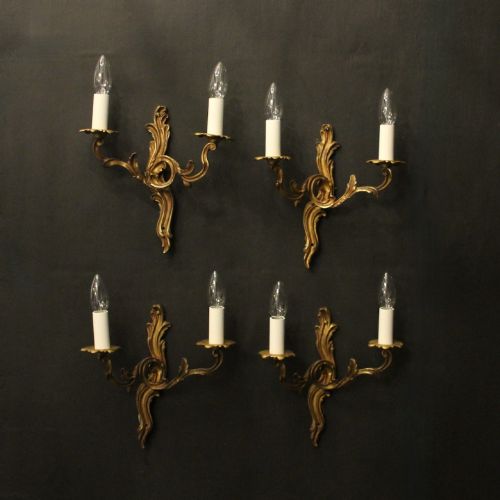
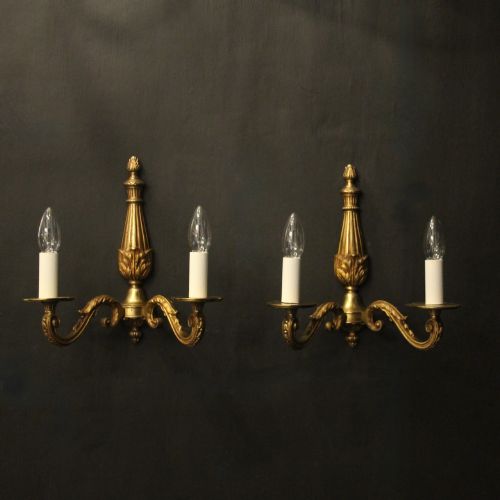
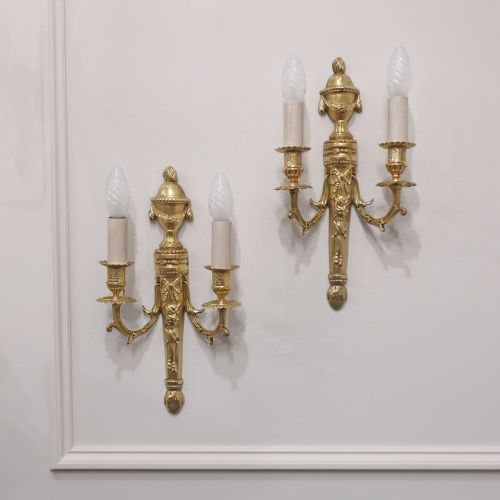
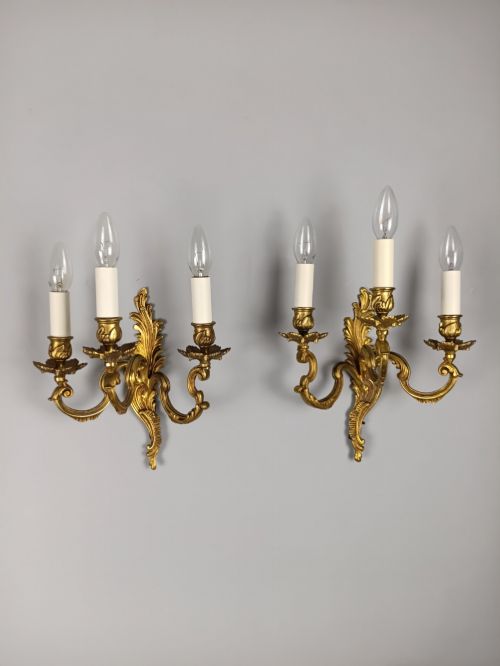
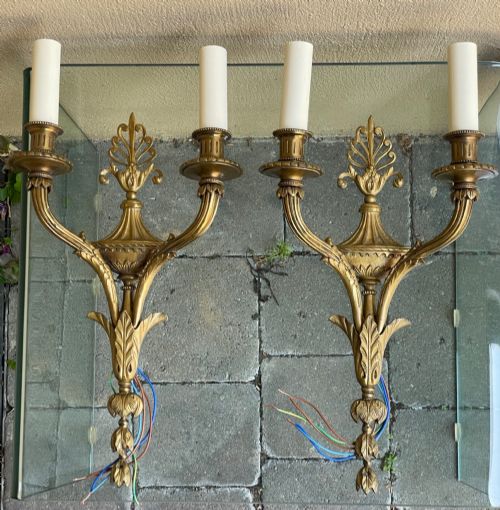
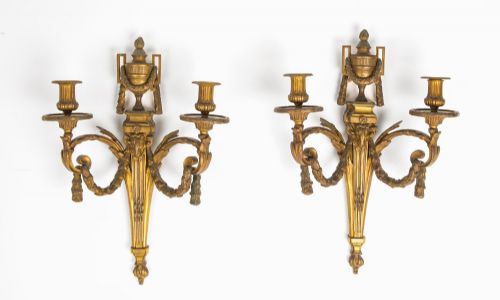
Classical ormolu wall sconces are ornate lighting fixtures designed to mount directly onto vertical surfaces, predominantly appearing in pairs or larger matching sets. When searching for classical ormolu wall sconces, you encounter French pieces spanning the nineteenth and early twentieth centuries, drawing heavily on Neoclassical and Louis XVI design vocabularies.
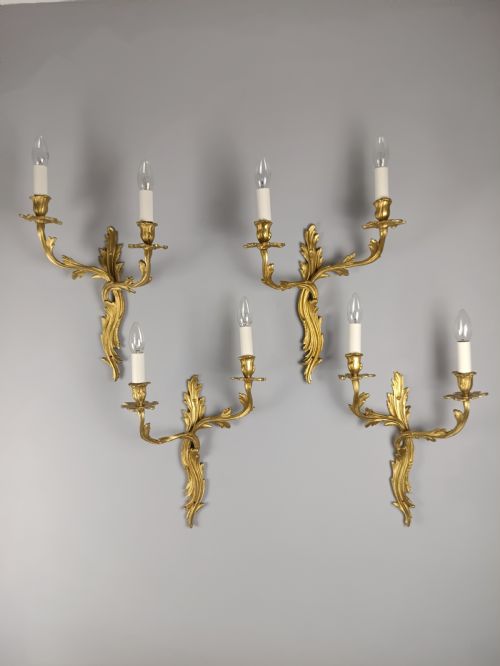
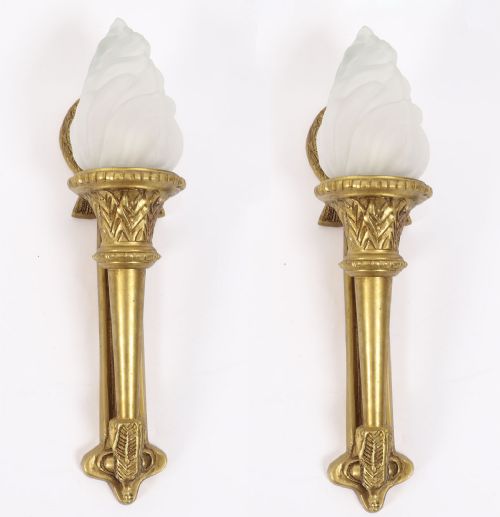
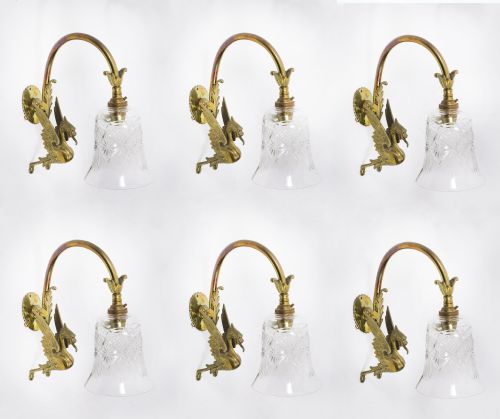
The prevalent forms on this page include twin-arm and triple-arm configurations, frequently incorporating decorative motifs such as flaming torches, ram's head masks, cherubs, and griffin figures. These fixtures emerge largely from French workshops and adopt distinct stylistic branches, including French Rococo and French Chateau aesthetics.
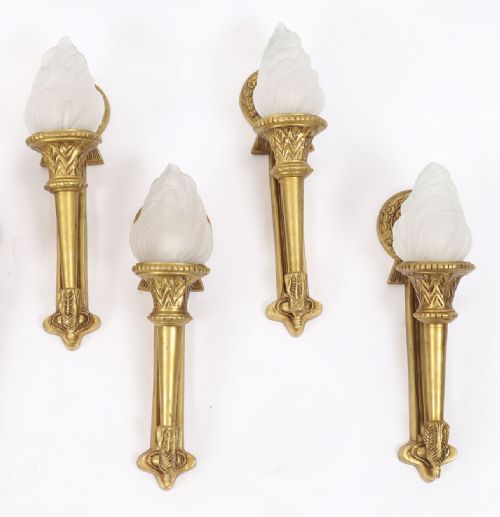
Makers and designers from the late nineteenth century onwards produced these wall lights in matched sets of four or six, as well as pairs. The core selection relies on cast metal frames that project outwards to hold candles or electric fittings.
Distinctions in quality
The substantial weight of the bronze or ormolu frame distinguishes superior castings from lighter brass alternatives. Sets that retain their original matched components and uniform gilding demonstrate greater integrity than those assembled from mismatched parts.
Ram's head masks and cherubs peer steadfastly from the walls, keeping silent watch over centuries of flickering candlelight.
Casier
The Classical Ormolu Wall Sconces Glossary
- Ormolu
- A method of applying finely ground high-carat gold to a bronze object using a mercury amalgamation technique. This historic process creates a durable, warm golden finish characteristic of antique French metalwork.
- Gilt Bronze
- Bronze metal that has been coated with a layer of gold leaf or gold paint. It provides the heavy structural foundation for many classical wall lights.
- Louis XVI Style
- A neoclassical design movement originating in eighteenth-century France characterised by straight lines, symmetry, and classical motifs like urns and swags. This aesthetic heavily influences nineteenth-century and early twentieth-century lighting fixtures.
- Wall Sconce
- A decorative light fixture fixed to a wall such that it uses the wall for support. These pieces project outwards to hold multiple candle branches or electrical equivalents.
- Neoclassical
- An artistic revival drawing inspiration from the classical art and culture of ancient Greece and Rome. It manifests in these listings through strict symmetry, architectural proportions, and classical ornamentation.
Classical Ormolu Wall Sconces: Frequently Asked Questions
How do I clean antique ormolu wall sconces?
Dust the metal gently with a soft, dry brush to remove surface particles without disturbing the delicate gilt surface. Avoid harsh chemical cleaners, abrasive cloths, or metal polishes that can strip away the historical ormolu layer.
For stubborn grime, use a slightly damp cloth with mild soap, followed immediately by thorough drying with a soft towel. Preserving the original patination maintains both the visual depth and the historical integrity of the piece.
Are these wall sconces wired for electricity?
Many surviving antique wall lights have been adapted for modern electrical wiring over the course of their long histories. Listings include both electrified brackets and pieces that retain their original configuration.
Buyers should inspect individual listing details to confirm the current wiring status before installation. A qualified electrician can readily adapt most cast metal wall fixtures to meet contemporary safety standards.
How do I date a pair of wall sconces?
Dating relies on stylistic clues, manufacturing techniques, and material composition recorded across periods from the mid-nineteenth century to the early twentieth century. Louis XVI revival pieces from the 1880s and 1900s often emulate earlier eighteenth-century forms with distinct nineteenth-century casting signatures.
Examine the backplates, screw threads, and mounting hardware for signs of age and manufacturing methods. Heavier bronze castings and hand-chiselling details typically point towards the earlier nineteenth-century examples.
Can I find matching sets of four or six?
Larger sets of four or six matching wall lights appear periodically alongside standard pairs. These larger configurations were traditionally produced for grand reception rooms and formal salons.
Securing a matched set from the same period ensures uniform gilding wear and consistent casting details across the entire room. Checking the listed branch counts, such as twin-arm or triple-arm designs, helps coordinate larger installations.