
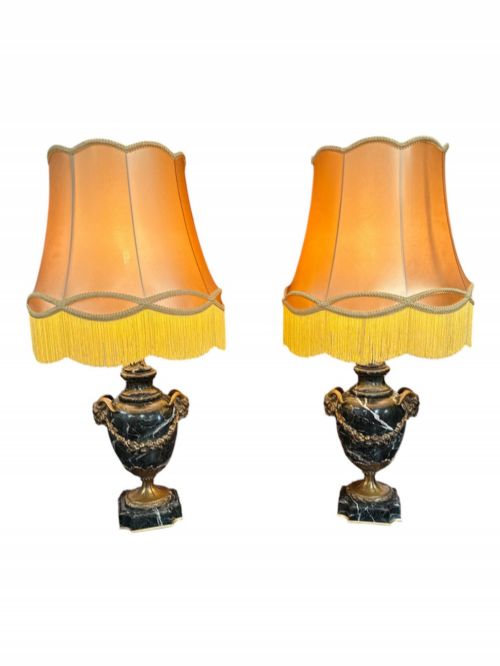
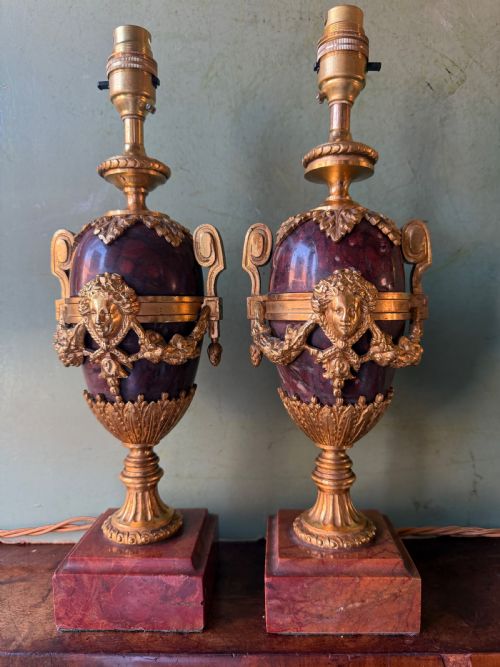
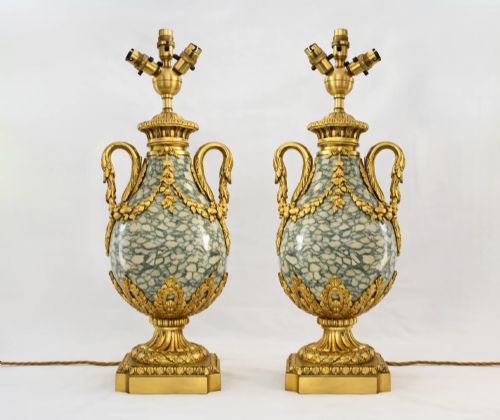


Classical Marble Table Urn
These classical marble table urn pieces bring sculptural presence and refined proportion to interiors, channelling ancient forms through nineteenth and early twentieth century craftsmanship.
Classical Marble Table Urn
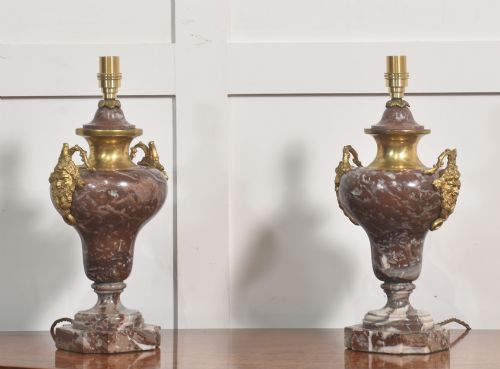
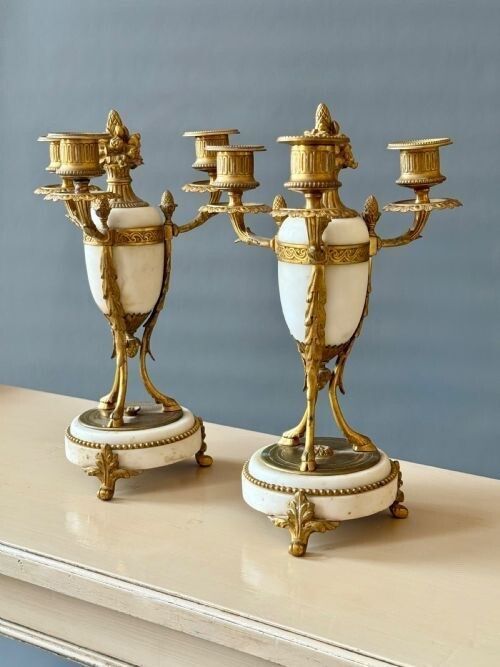
When you search for a classical marble table urn, you encounter decorative objects, table lamps, and clock garnitures adapted from antique vessels. The selection draws primarily from nineteenth century and early twentieth century interpretations of ancient designs.
Most examples originate from French and Italian workshops adhering to Neoclassical, Louis XVI, and Regency aesthetics. These pieces typically combine carved stone bodies with cast metal mounts to serve functional or decorative interior roles.
Forms range from dedicated display urns and cassolettes to functional lamp bases and clock cases. The overarching character remains grounded in classical architectural restraint and symmetry.
How they were made
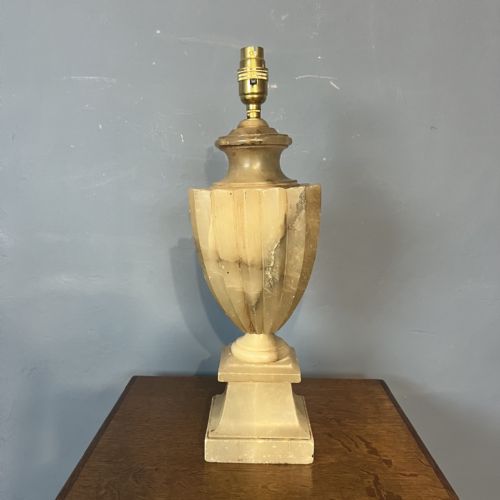
Maker's workshops turned, carved, and polished natural stones such as white marble, rouge marble, siena marble, alabaster, and onyx to shape the core vessel bodies. These stone elements provide substantial weight and distinct natural veining to each object.
Foundries cast bronze, brass, and spelter components, frequently applying mercury gilding or ormolu finishes to create high-contrast decorative mounts. Artisans then joined the stone and metal elements using threaded rods, pins, or specialised adhesives suited to mixed-media construction.
Several nineteenth-century pieces disguise modern illumination needs inside ancient urn silhouettes by running electrical cords straight through historic stone plinths.
What varies in quality
Quality depends heavily on the crispness of the metal chasing and the grade of the stone used in the body. Superior examples demonstrate deeply detailed cast bronze mounts alongside finely figured, unblemished marble.
The integration between the stone vessel and its metal mounts dictates the structural integrity and visual harmony of the piece. Master craftsmen ensured seamless alignment where the turned stone meets the cast collar or plinth.
James Ritchie And Son
The Classical Marble Table Urn Glossary
- Cassolette
- A decorative vessel featuring a reversible lid that transforms the piece from an urn into a candleholder. This dual-purpose form frequently appears in French Neoclassical metal-mounted stone designs.
- Ormolu
- Finely ground high-carat gold applied to a bronze base using a mercury amalgamation technique. The process yields a warm, lasting lustre characteristic of eighteenth and nineteenth century luxury goods.
- Neoclassical
- An artistic movement reviving the architectural and decorative motifs of ancient Greece and Rome. It emphasises symmetry, restraint, and classical proportions.
- Regency
- A British design period spanning the early nineteenth century characterised by bold classical influences and archaeological revival motifs. Pieces from this era often incorporate patinated bronze and classical stonework.
Classical Marble Table Urn: Frequently Asked Questions
What is a classical marble table urn?
A classical marble table urn is a decorative or functional object carved from stone and finished with metal mounts, reflecting ancient Greek and Roman vessel shapes.
These pieces often function as standalone decorative urns, table lamps, or parts of mantel clock garnitures originating from the nineteenth and early twentieth centuries.
How do I identify French Neoclassical pieces?
French Neoclassical and Louis XVI revival pieces typically feature balanced symmetry, crisp ormolu mounts, and architectural details such as acanthus leaves and paw feet.
Look for refined use of rouge or white marble combined with finely chased gilt bronze or brass components that echo eighteenth-century proportions.
Were these urns originally made as lamps?
Many nineteenth-century marble urns and vases were later converted into table lamps during the twentieth century to accommodate modern lighting.
Original lamp adaptations and later conversions both appear frequently, utilising the hollow interior or fitted metal stems to run internal wiring.
How should I care for marble and ormolu?
Maintain marble and alabaster surfaces by dusting with a soft, dry cloth and avoiding acidic cleaners that can etch the stone.
Preserve gilt bronze and ormolu mounts by gently removing dust without abrasive polishes that might wear away the historic surface finishes.