



Classical Inkstand
A classical inkstand brings heavyweight desk architecture into a room, combining patinated bronze and marble to hold your pens.
Classical Inkstand
A classical inkstand is a functional desk accessory designed during the nineteenth century to hold writing equipment, most frequently featuring heavy stone bases mounted with cast metal. You will most commonly encounter French and Italian examples from the eighteen-seventies and earlier decades, often reflecting French Empire, Neoclassical, or Grand Tour taste.
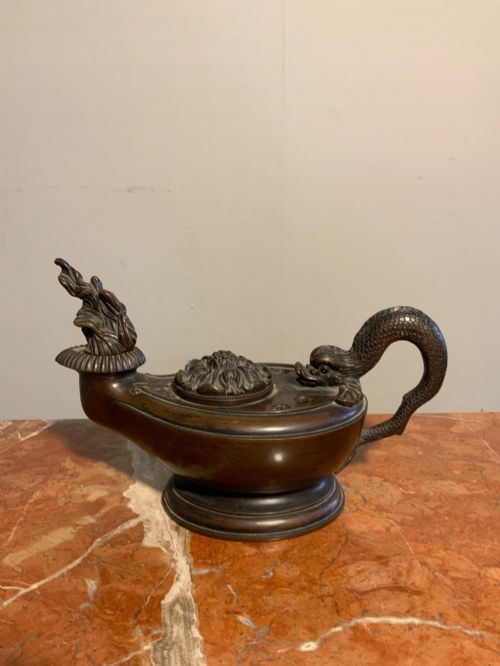
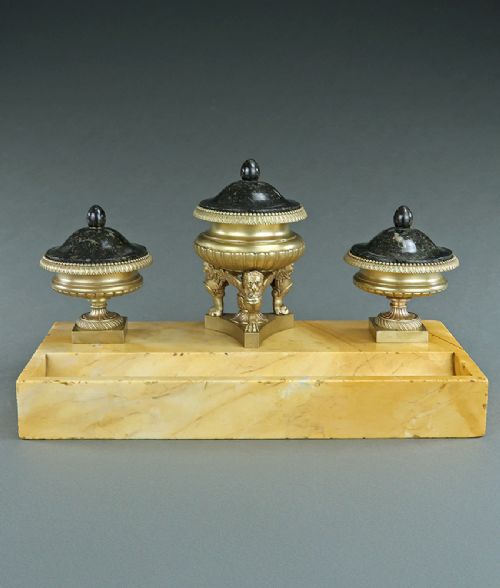
The objects take the form of inkwells, desk sets, and encriers made from various marbles including Sienna, black, vert, and onyx. These are often accessorised with portrait cameos, lava intaglios, or busts of Napoleon, bridging the gap between souvenirs and desk furniture.
How they were made
Maker workshops utilised substantial blocks of natural marble, shaped and hollowed to support heavy metal mounts and ink receptacles. These stones were frequently paired with cast bronze, patinated bronze, or fire-gilt ormolu.
Detailing often included fine casting, chasing, and stone carving, as seen in miniature portrait cameos and carved lava intaglios applied directly to the marble bases.
Classical Inkstand Retail Price Guide 2026
Typical asking prices for classical inkstand among the pieces listed under this phrase on Sellingantiques today, from the lower quarter to the upper quarter. They describe what is for sale here now, not the wider market.
What varies in quality
The distinction between ordinary and exceptional pieces rests upon the crispness of the bronze casting and the richness of the marble selection. Finer examples display deeply chased ormolu and carefully figured stones rather than plain or uniform bases.
Makers of note or pieces retaining intricate applied elements such as lava intaglios and portrait busts elevate an ordinary desk accessory into a sophisticated sculptural object.
Lefebvre of Belgium
The Classical Inkstand Glossary
- Encrier
- A French term for an inkstand or inkwell. It typically denotes a desk stand equipped with one or more ink pots.
- Ormolu
- Gilt bronze produced by applying a mercury and gold amalgam to cast bronze. It gives a bright golden finish that resists tarnishing.
- Grand Tour
- A cultural journey undertaken by nineteenth-century travellers who collected souvenirs like patinated bronze inkstands and carved stone desk sets.
- Patinated bronze
- Bronze that has developed a darkened surface coloration through age or chemical treatment. This highlights the sculptural details of the metal.
- Sienna marble
- A yellow-gold decorative marble with dark veining, quarried in Italy. It was heavily utilised for neoclassical desk accessories.
Classical Inkstand: Frequently Asked Questions
What is a classical inkstand?
A classical inkstand is a nineteenth-century desk accessory built from heavy materials like marble and bronze to hold ink and writing implements.
These pieces often draw on Neoclassical, French Empire, or Grand Tour design motifs.
How were these inkstands used?
They sat upon library or study desks to provide a stable reservoir for ink alongside pen rests and sometimes sand shakers.
Wealthy writers utilised them both as functional tools and as displays of refined taste in their studies.
How do I live with one?
Place a classical inkstand on a sturdy desk, table, or mantelpiece where its weight and metal components can be appreciated safely.
Keep glass liners clean if utilised, and avoid placing them in damp areas to protect the marble and bronze surfaces.
How can I tell periods apart?
Earlier nineteenth-century pieces often lean heavily into strict French Empire or Neoclassical bronze work, while later items incorporate varied marbles and souvenir elements.
Stylistic cues like portrait busts of Napoleon or carved lava intaglios point towards specific mid-century Italian and French manufacturing trends.