





Classical Hall Table
A classical hall table grounds an entrance with architectural symmetry, balancing utility and formal presence through polished marble and figured timber.
Classical Hall Table
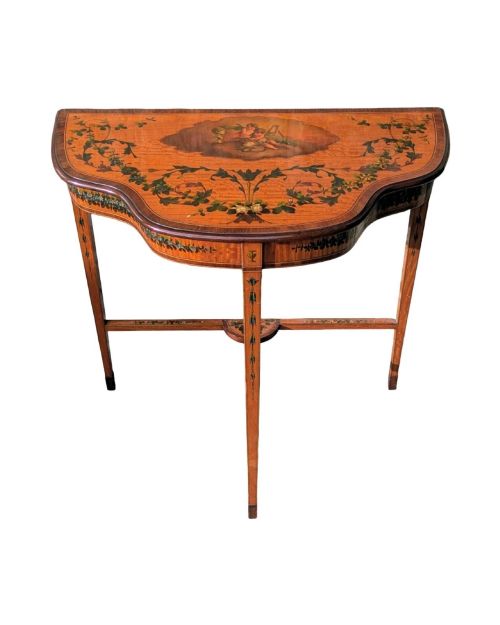
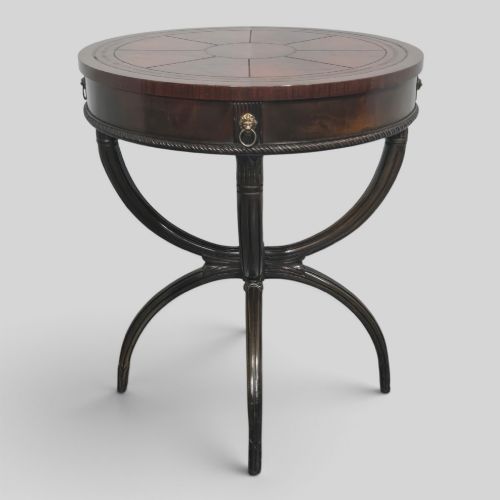
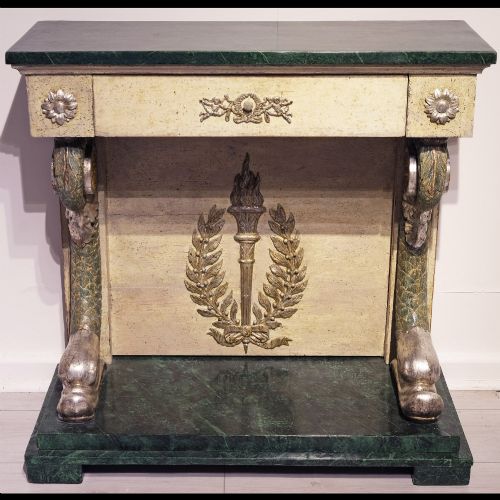
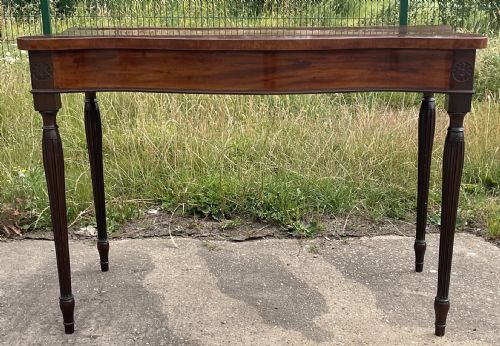
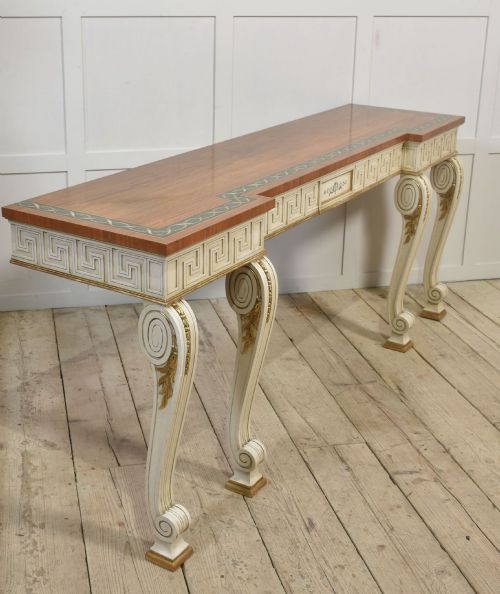
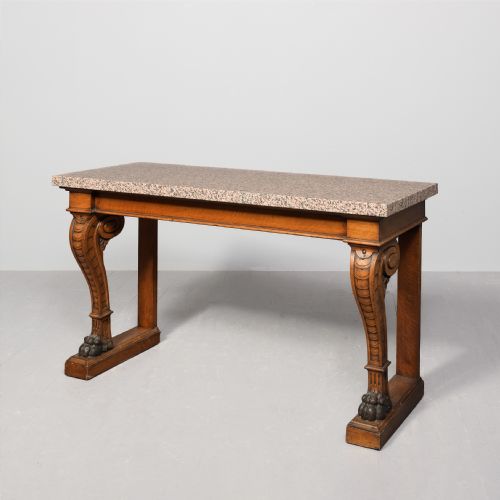
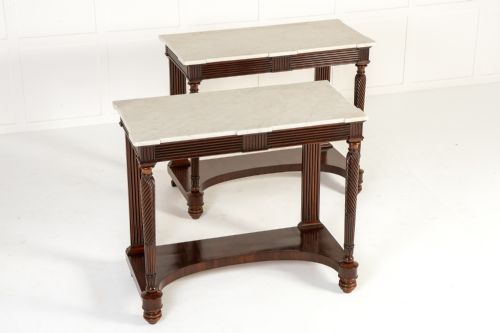
A classical hall table encompasses console tables, side tables, and centre tables originating predominantly from the nineteenth century, alongside Regency, Victorian, and Edwardian interpretations. These pieces function primarily as statement furniture for narrow corridors and reception spaces, often standing flush against a wall beneath a mirror.
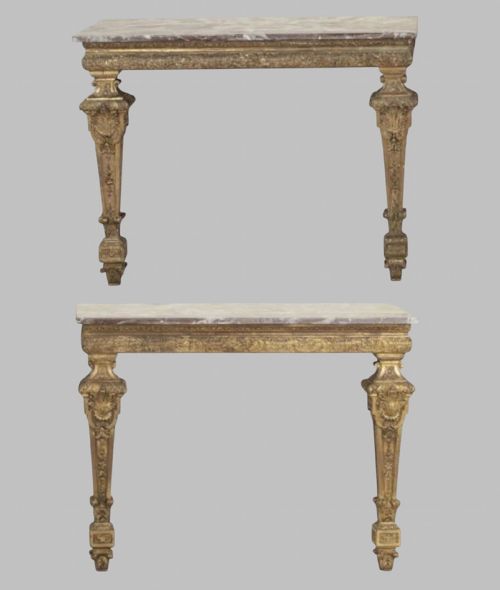
The materials recorded in these listings rely heavily on mahogany, giltwood, and satinwood, frequently finished with heavy marble tops in rouge or siena variants. Buyers encounter console and pier formats built to echo Neoclassical, French Empire, and Louis XVI design vocabularies.
While many examples date from the Victorian era and the nineteenth century, earlier Georgian pieces and later twentieth-century interpretations also appear within the selection. The primary forms remain console and side tables designed to display decorative objects or support structural symmetry in an interior.
Materials and Construction
Makers utilised dense timbers such as flame mahogany, satinwood, and oak as the foundational carcasses for these tables, frequently applying intricate marquetry inlay or polychrome paint. Giltwood surfaces demonstrate hand-carved detailing executed upon softer woods before the application of gold leaf.
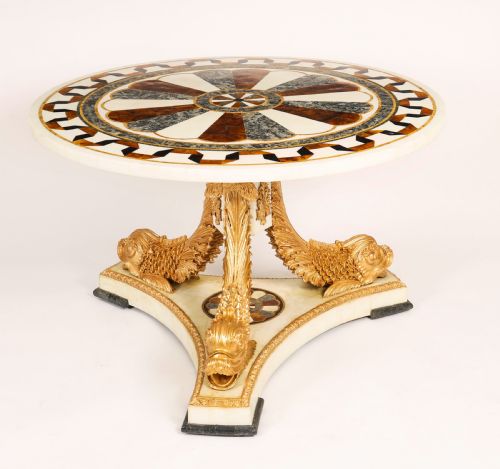
Heavy stone tops, including granite and decorative marble varieties, rest directly upon the wooden frames, requiring substantial structural support from the legs and aprons. Brass, bronze, and gilt metal ornaments appear as mounts, enhancing the classical architectural motifs derived from French Empire and Italian precedents.
Classical Hall Table Retail Price Guide 2026
Typical asking prices for classical hall table among the pieces listed under this phrase on Sellingantiques today, from the lower quarter to the upper quarter. They describe what is for sale here now, not the wider market.
Several tables incorporate carved ram and maiden heads, ensuring your hallway furniture maintains an intensely watchful gaze over the post.
Evaluating Quality
Quality rests upon the crispness of hand-carved ornamentation and the selection of figured veneers, where superior examples exhibit book-matched flame mahogany or meticulous marquetry. The integration of the stone top dictates the overall calibre; genuine thick marble or scagliola inserts fitted flush to the wooden frame demonstrate superior craftsmanship compared to later replacements.
Proportion and structural rigidity separate standard production from exceptional pieces, particularly in giltwood console tables where deep relief carving remains sharp and defined. The presence of signed elements or documented attributions to notable cabinet-makers elevates the standing of an individual table.
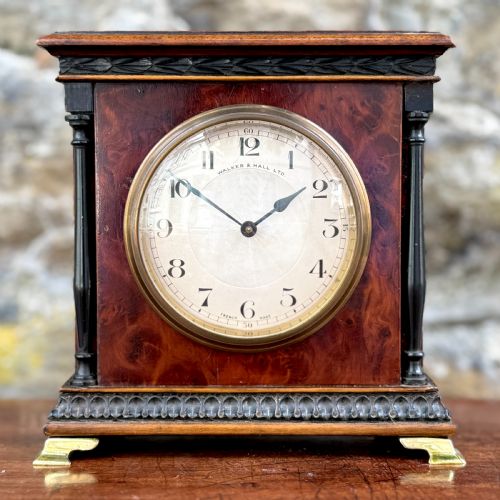
Walker and Hall·Alexander McKenzie of Glasgow·Holland and Son·Robert Adam
The Classical Hall Table Glossary
- Console table
- A table designed to be fixed against a wall, frequently supported by two front legs with the rear fastened to the architectural structure.
- Giltwood
- Timber that has been coated with a thin layer of gold leaf or powder over a prepared gesso ground.
- Marquetry
- Decorative patterns formed by the insertion of contrasting pieces of wood, veneer, or shell into a solid timber background.
- Pier table
- A decorative table specifically manufactured to stand against the wall space between two windows.
- Satinwood
- A durable, yellowish timber derived from tropical trees, prized for its lustrous grain and use in fine eighteenth and nineteenth-century furniture.
Classical Hall Table: Frequently Asked Questions
What is a classical hall table?
A classical hall table is a rigid furnishing designed for entryways and reception rooms, drawing upon historical design movements such as the Regency and French Empire periods.
These pieces combine functional surface areas with decorative woodwork, often incorporating stone tops and carved legs to create a formal aesthetic.
Where should I place a console table?
Console tables sit flat against a wall, making them suited for narrow hallways, corridors, or beneath large wall mirrors in reception spaces.
Because they generally feature unfinished backs meant for wall placement, they anchor an interior without obstructing walking paths.
How do I identify a Victorian piece?
Victorian tables often utilise dense mahogany or ebonised wood, sometimes displaying heavier proportions and bolder carving than their Georgian or Regency predecessors.
Examining the construction methods underneath, such as secondary softwoods and machine-sawn components, helps establish the nineteenth-century timeline.
Are marble tops original?
Original marble tops fit snugly into the rebated wooden frame of the table, showing matching wear patterns and consistent edge profiles.
Replacements often feature cleaner cut edges or modern stone varieties that contrast with the aged patina of the wooden base.