







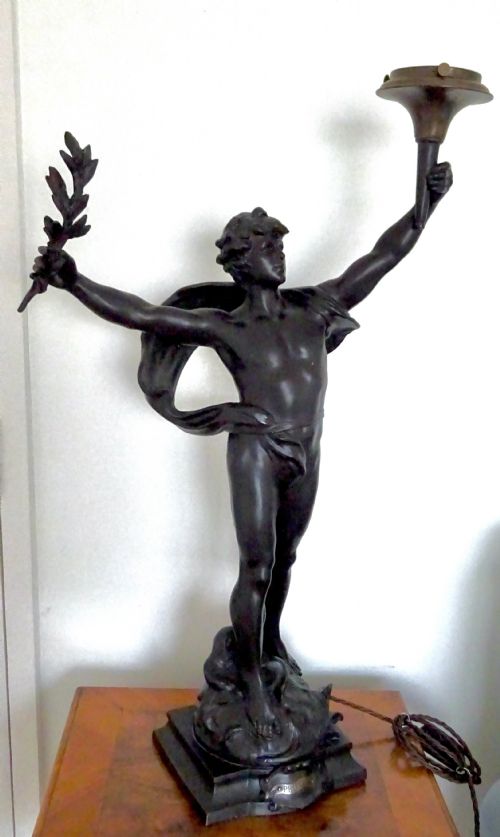
Classical Figural Art
Classical figural art captures the human form through centuries of bronze casting, marble carving and delicate works on paper.
Classical Figural Art
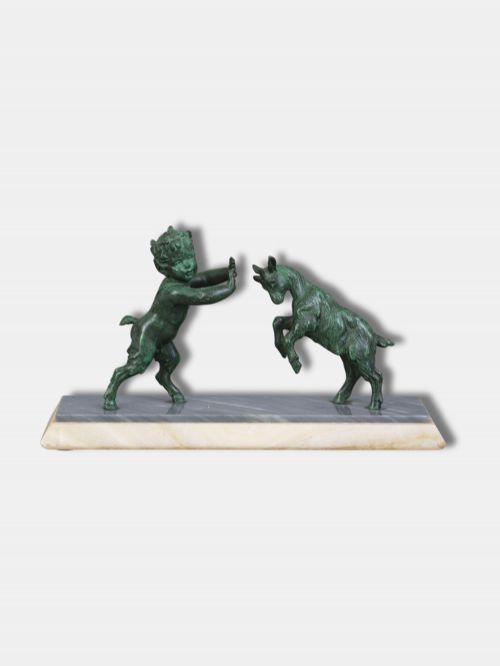
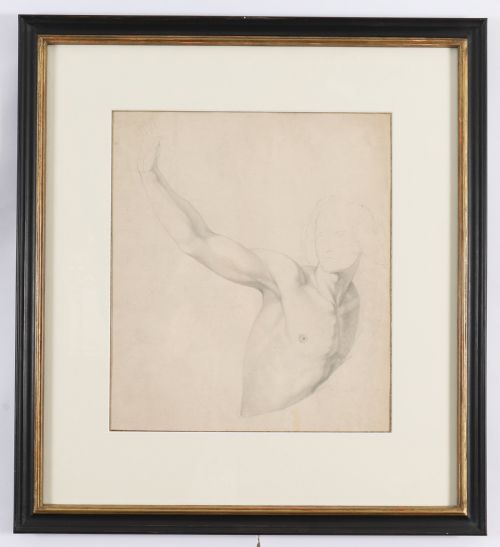
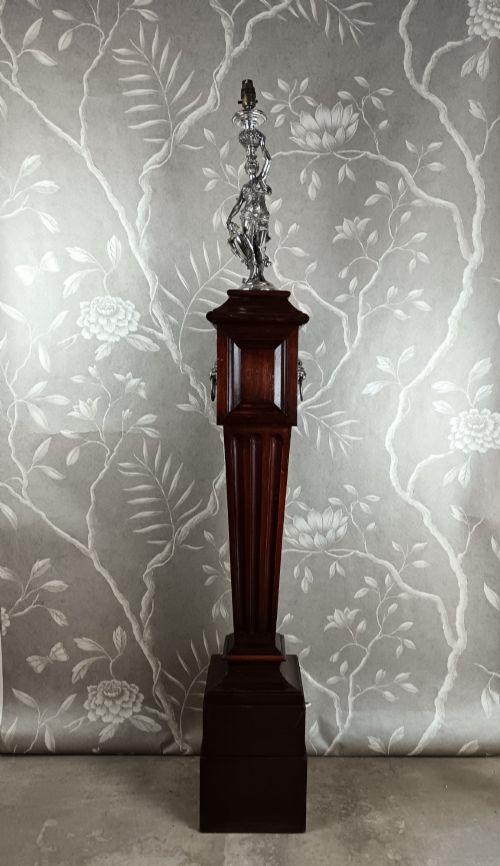
When you examine classical figural art, you encounter sculptural works, lamps and framed images depicting the human form. These pieces bridge traditional academic realism and the flowing lines of later decorative movements.
The selections on this page lean heavily towards nineteenth-century bronze and spelter figures, alongside early twentieth-century lighting and prints. Many bear the distinct influence of French ateliers and classical mythologies.
Materials and methods
Makers utilised cast bronze, patinated or silvered spelter, and carved marble to render the human body with anatomical precision. Foundries employed lost-wax casting methods for metal sculptures, while lamp bases often integrated frosted glass and alabaster.
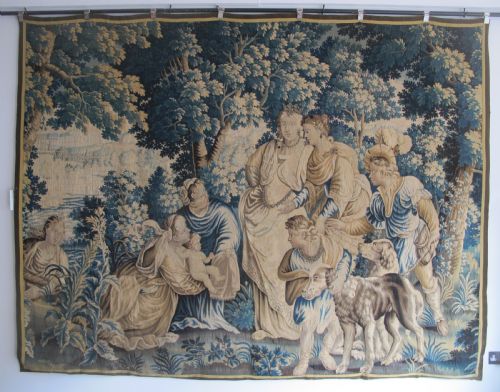
Works on paper and canvas utilise traditional drawing and oil techniques, capturing studies and finished compositions. Tapestry weaving similarly translates figurative designs into heavy textile wall art and furnishings.
Classical Figural Art Retail Price Guide 2026
Typical asking prices for classical figural art among the pieces listed under this phrase on Sellingantiques today, from the lower quarter to the upper quarter. They describe what is for sale here now, not the wider market.
Listings span from the seventeenth-century woven textiles to Art Deco bronzes and twentieth-century glass.
Judging the work
The integration of art with utility, such as functional lighting or clock mounts, also dictates distinction. Better pieces maintain artistic integrity without sacrificing the structural balance of the object.
L & F Moreau·Emile Carlier·Antonio Merente·Justo de Gandarias·Hector Lemaire·Ernst Barrias·Antoine Bofill·Carl Kauba·Auguste Moreau·Henri Honore Ple·A. Gaudez
The Classical Figural Art Glossary
- Spelter
- A zinc alloy commonly utilised as a less expensive alternative to bronze for nineteenth and twentieth-century decorative figures. It often received a bronze-coloured or silvered finish to mimic heavier metals.
- Patination
- The surface coloration achieved naturally over time or through chemical treatment on metal sculptures. It enhances depth and highlights the contours of the cast.
- Lost-wax casting
- A metalworking process where a molten metal is poured into a mould that has been created by means of a wax model. This technique allows for intricate detail and complex undercuts in bronze figures.
- Torchere
- A tall standing floor lamp or decorative stand designed to hold a light source high above the room. In classical interiors, these often incorporate figural bronze or plated statues.
- Collotype
- A photomechanical printing process that uses hardened gelatin to produce detailed continuous-tone images. It gained popularity in the early twentieth century for fine art reproductions.
Classical Figural Art: Frequently Asked Questions
How do I clean a bronze sculpture?
Dust gently with a soft, dry brush to prevent accumulation in the crevices. Avoid abrasive cloths and chemical polishes that strip the original patination.
Applying a very light coat of microcrystalline wax can protect the metal surface from atmospheric moisture. Buff the wax gently after application with a clean flannel cloth.
Are spelter figures fragile?
Spelter is a softer and more brittle alloy than bronze, meaning fine extremities like fingers or toes snap easily under pressure. Treat these pieces with care when relocating them.
Support the base rather than limbs or decorative attachments when lifting figures. Ensure they sit on stable surfaces away from high-traffic zones.
What distinguishes bronze from spelter?
Bronze feels heavier, rings with a clearer tone when struck gently, and holds a richer natural patina over time. Spelter is lighter and often shows grey metal beneath worn spots in the surface finish.
Magnification can reveal the microscopic grain and casting quality typical of bronze versus the softer, sometimes pitted texture of zinc-based alloys.
How do I light figural lamps safely?
Older wiring in antique figural lamps often requires replacement to meet modern safety standards. Consult a qualified electrician to rewire the fixture with insulated cord.
Retain the original sockets and switches where possible to preserve historical integrity. Use low-heat LED bulbs to protect delicate glass shades and painted metal surfaces.