





Classical Desk Accessories
Classical desk accessories bring order and antiquity to the workspace through heavy marble and cast bronze.
Classical Desk Accessories
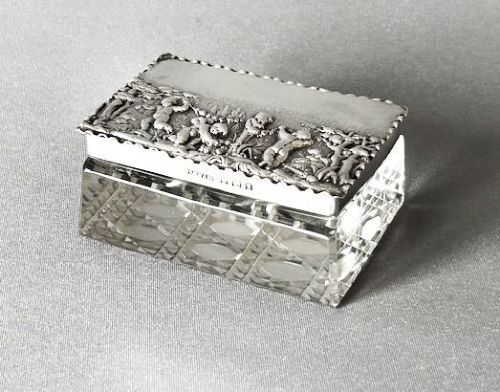
Classical desk accessories comprise inkstands, inkwells, stamp boxes, table lighters, candlesticks, and bookends drawn from nineteenth-century neoclassical and grand tour traditions. When searching for classical desk accessories, collectors encounter bronze and marble pieces shaped by the aesthetic of nineteenth-century Europe.
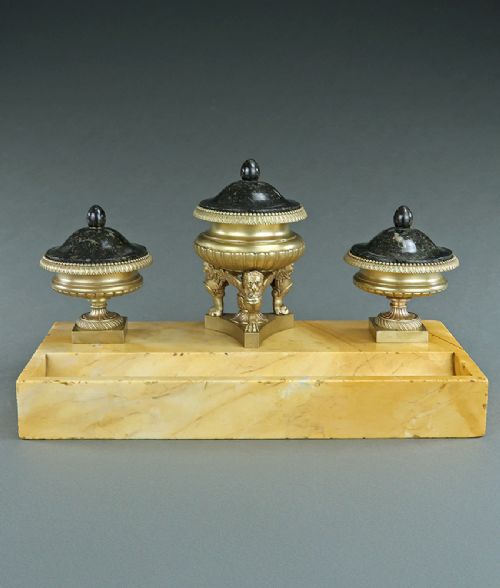
The most common examples on this page are inkwells and inkstands fashioned from marble paired with bronze, ormolu, or silver mounts. These desk pieces reflect revival styles spanning the Victorian, Edwardian, and earlier nineteenth-century periods.
How they were made
Materials combine heavy natural stones such as Sienna marble, vert marble, onyx marble, and prato verde with cast metals including bronze, ormolu, gilt bronze, brass, and sterling silver. Artisans carved stone bases and cast metal components through traditional foundry methods.
Mounts and decorative elements are securely fitted to the stone foundations, integrating cut glass inserts or carved lava cameos where appropriate. The construction relies on durable mechanical fastening and metalworking techniques typical of nineteenth-century workshops.
Classical Desk Accessories Retail Price Guide 2026
Typical asking prices for classical desk accessories among the pieces listed under this phrase on Sellingantiques today, from the lower quarter to the upper quarter. They describe what is for sale here now, not the wider market.
Listings feature items from the nineteenth century, including specific years such as 1800, 1820, 1850, 1870, 1880, 1920, 1924, and 1930.
What varies in quality
Quality rests upon the crispness of the bronze casting and the depth of the marble figuring. Pieces featuring finely chased ormolu mounts and detailed figural sculpture stand apart from simpler utilitarian items.
The choice of materials and the harmony between stone and metal define the standard of the piece. Intricate additions such as carved lava cameos or silver mounts elevate the character of the desk accessory.
Lefebvre of Belgium
The Classical Desk Accessories Glossary
- Grand Tour
- A cultural journey undertaken by wealthy young Europeans in the eighteenth and nineteenth centuries, collecting souvenirs such as bronze inkwells and carved marble items. These objects often replicated classical antiquities.
- Encrier
- A French term for an inkstand or inkwell desk set. Such pieces typically incorporate holders for ink pots and pen trays.
- Ormolu
- Gilt bronze utilised for decorative mounts on furniture and decorative objects. The technique involves applying a gold amalgam to a bronze base.
- Prato verde
- A green marble variety used in Italian stonework and souvenir production. It forms a distinct dark base for nineteenth-century desk accessories.
- Table lighter
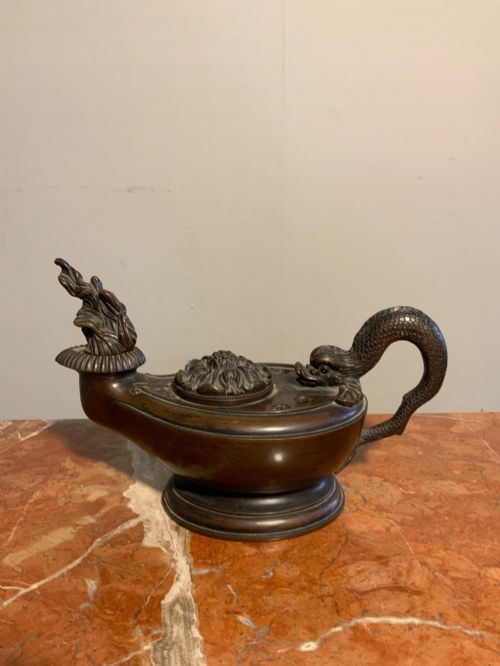
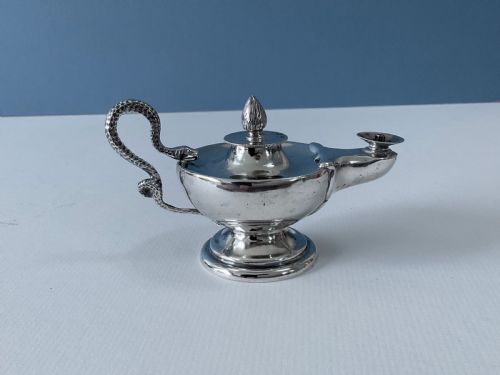
- A decorative desk item styled to resemble an antique oil lamp, often cast in silver or bronze. These pieces functioned as petrol or wick-based lighters for desks.
Classical Desk Accessories: Frequently Asked Questions
What is a grand tour inkwell?
A grand tour inkwell is a nineteenth-century souvenir purchased by travellers visiting classical sites in Italy and France. These pieces frequently utilise local marbles and patinated bronze.
They bring an archaeological aesthetic to the desk, often featuring miniature sculptures or architectural motifs inspired by ancient ruins.
How do I identify a marble inkstand?
Marble inkstands are recognised by their heavy stone bases, which may be formed from Sienna, vert, or onyx marble. They often incorporate metal inkwells and pen recesses.
The stone provides a stable, weighty foundation suited for daily writing tasks while displaying natural mineral patterns.
What distinguishes an encrier from an inkstand?
An encrier is simply the continental European term for an inkstand or inkwell set. Both serve the same primary function of holding ink reservoirs and writing implements.
French and Italian examples frequently employ ormolu mounts and decorative marble plinths.