





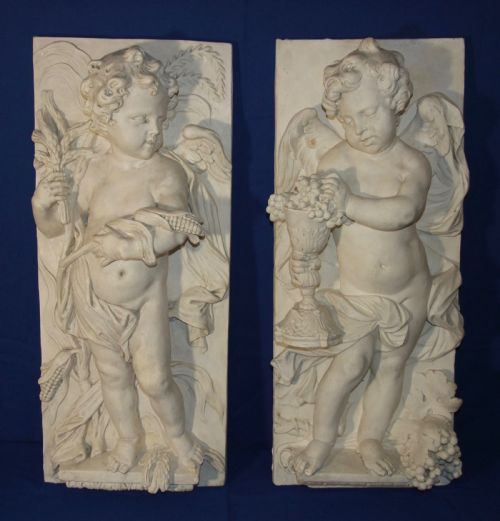
Classical Cherub Art
Classical cherub art brings winged figures, putti and cupids into your rooms through oil paintings, bronzes and carved wall friezes.
Classical Cherub Art
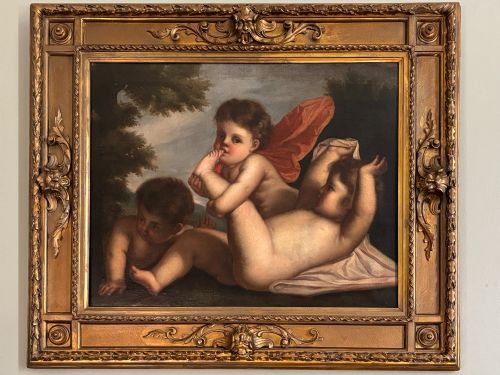
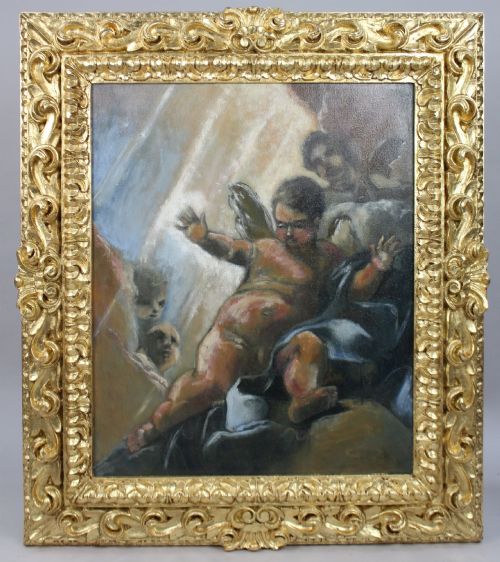
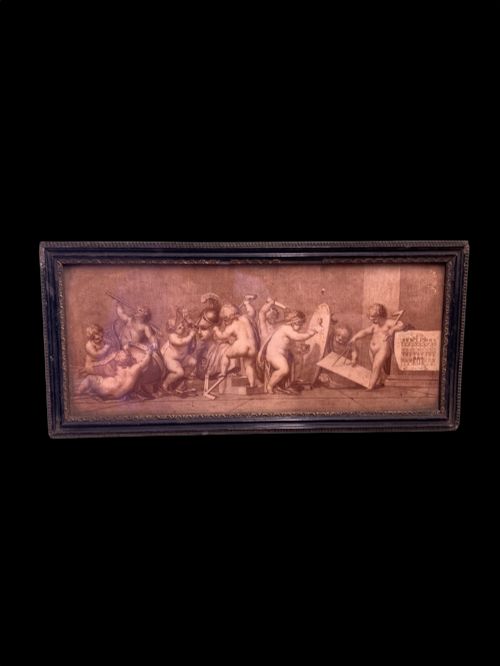
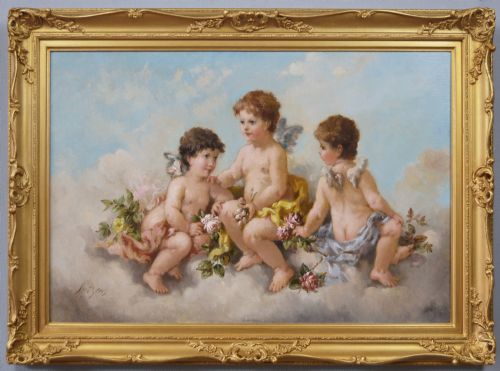
When you search for classical cherub art, you encounter oil paintings, sculptures and wall art spanning from the eighteenth century through to the twentieth century. These works depict winged putti, cupids and weeping angels in various mythological and allegorical scenes.
The selections on this page lean heavily towards oil on canvas paintings and bronze figures, alongside plaster cast wall friezes and carved giltwood frames. You will find both individual pieces and matched pairs originating from British and continental European traditions.
How they were made
Painters utilised oil on canvas and paper, applying pigment to capture figures like cupids and cherubs with fine brushwork. Frames are constructed from wood, often carved and gilded to complement the fine art within.
Sculptors worked in bronze, silvered bronze, terracotta and plaster cast to create three-dimensional figures and wall friezes. These materials allowed makers to achieve intricate detail in wings, drapery and facial expressions.
Classical Cherub Art Retail Price Guide 2026
Typical asking prices for classical cherub art among the pieces listed under this phrase on Sellingantiques today, from the lower quarter to the upper quarter. They describe what is for sale here now, not the wider market.
Cupid occasionally moonlights among flowers and dancing mothers, reminding everyone that ancient deities enjoyed a domestic afternoon just as much as anyone else.
What varies in quality
Quality in these works rests upon the precision of the modelling in bronze or the handling of paint on canvas. Finer oil paintings display confident brushwork and depth in figurative composition, whereas lesser examples lack anatomical clarity.
The execution of secondary elements, such as carved giltwood frames or plaster cast wall friezes, distinguishes higher tier pieces. Original framing and distinct casting marks elevate the overall presence of the artwork.
Richard Avrilli·Domenico Zampieri·Jean Baptiste Isabey·Auguste Moreau·Carrier·Charles Augustus Henry Lutyens
The Classical Cherub Art Glossary
- Putto
- A figure of a small winged infant, frequently found in classical and Renaissance art. They appear often in the paintings and sculptures gathered here.
- Camaieu bleu grisaille
- A monochrome painting executed entirely in shades of blue. This technique gives the artwork a sculptural, cameo-like appearance.
- Giltwood
- Wood that has been coated with gold leaf or gold paint. It is commonly seen on the decorative frames housing these oil paintings.
- Plaster cast
- A sculpture made by pouring plaster into a mould to capture fine relief details. This method produced the wall friezes listed in this category.
- Neoclassical
- A style rooted in the art and culture of classical antiquity. It influences the proportion and subject matter of many pieces from the eighteenth and nineteenth centuries.
Classical Cherub Art: Frequently Asked Questions
What is classical cherub art?
This category encompasses paintings, bronzes and plaster reliefs depicting winged putti, cupids and angels. The works span multiple centuries and stylistic periods.
They reflect European artistic traditions ranging from eighteenth-century oil paintings to Victorian sculptures and later decorative wall lights.
How do I date a cherub painting?
Dating relies on examining the canvas, framing materials, painting technique and stylistic clues like Neoclassical or Baroque influences. Eighteenth-century works often use specific canvas preparations and engraving methods.
Later nineteenth and twentieth-century pieces adopt different mounting styles and artist signatures recorded in the titles.
Where were these pieces made?
The listings point towards British and continental European origins, with strong representations of French artistic production. Workshops and individual artists across these regions created the paintings and bronzes.
Many works reference earlier Italian Renaissance and Baroque traditions while being executed in later periods.
How do I hang a heavy bronze frieze?
Wall friezes and plaster casts require secure fixings anchored directly into structural wall supports due to their weight. Consult a professional installer to assess the wall material.
Ensure the hanging wire or integrated brackets match the substantial mass of materials like bronze or plaster.
What is the difference between a putto and a cherub?
Art history traditionally distinguishes putti as secular infant spirits from cherubs, which possess higher celestial rank. In marketplace terminology, the terms are frequently used interchangeably.
Both appear widely in classical art styles representing love, innocence or divine presence.