



Classical Cameo Pendant
A classical cameo pendant brings ancient mythology and portraiture into Victorian and Edwardian settings, offering wearable miniature sculpture.
Classical Cameo Pendant
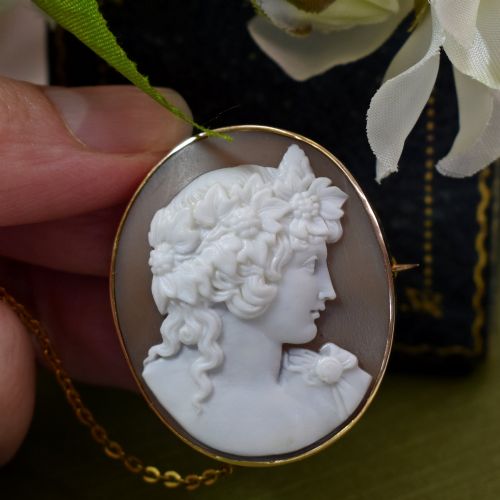
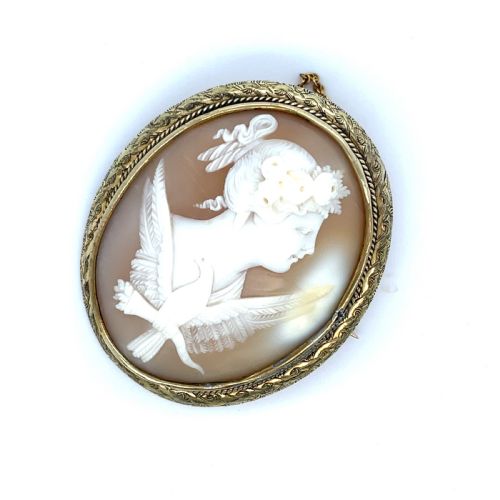
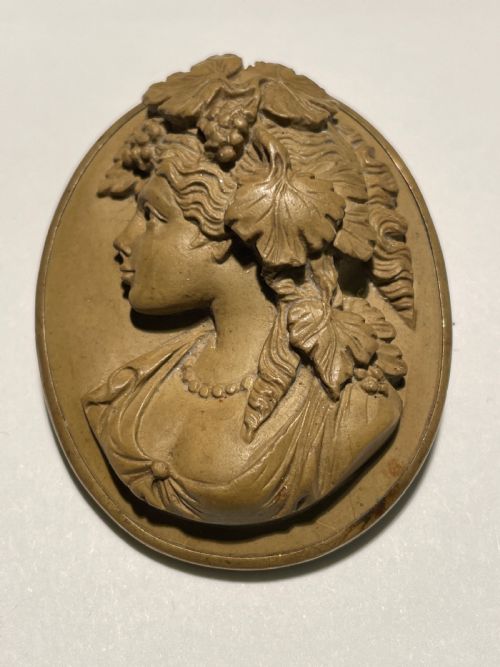
A classical cameo pendant unites carved relief imagery with precious metal mounts, drawing heavily on Victorian and Edwardian revivals of antiquity. You will encounter shell, lava, and agate carvings depicting classical figures such as Aphrodite, Antinous, and Psyche.
Many examples double as brooches, featuring integrated loops or pins that allow versatile wear across different periods from the mid-nineteenth century onwards.
The forms range from teardrop earrings and foxtail tassel drops to substantial framed pendants mounted in gold, silver, and pinchbeck.
Materials and construction
Carvers utilise layered materials like conch shell, agate, and lava, cutting through upper strata to leave opaque white figures standing in relief against darker contrasting grounds. This requires immense precision to achieve depth without puncturing the thin shell layer.
Mounts are shaped from 9ct and 18ct yellow gold, silver, and pinchbeck, often incorporating wirework, enamelling, or granulation suited to the Victorian Classical Revival and Grand Tour aesthetics.
Classical Cameo Pendant Retail Price Guide 2026
Typical asking prices for classical cameo pendant among the pieces listed under this phrase on Sellingantiques today, from the lower quarter to the upper quarter. They describe what is for sale here now, not the wider market.
Volcanic lava from Mount Vesuvius found a second life as miniature wearable art for Victorian tourists returning home with luggage full of gods.
Judging quality
The quality of the metalwork and the integration of the mount with the carved medium dictate overall execution. Heavier gold frames and secure bezel settings indicate higher workshop standards.
The Classical Cameo Pendant Glossary
- Cameo
- A method of carving an object such as an engraved gem, item of jewellery, or piece of vessel. Relief is created by cutting away a top layer of material to reveal a contrasting colour underneath.
- Grand Tour
- A cultural trip of Europe formerly undertaken by wealthy young upper-class men and women. Such journeys resulted in the acquisition of souvenirs like lava and shell cameos.
- Pinchbeck
- An alloy of copper and zinc invented in the eighteenth century to imitate gold. It provides a warm metallic appearance used frequently in period jewellery mounts.
- Foxtail
- A flexible type of chain made from curved metal links resembling a fox's tail. It is commonly utilised in Victorian tassel earrings and necklace drops.
Classical Cameo Pendant: Frequently Asked Questions
What materials are cameos carved from?
Carvers typically use conch shell, layered agate, and volcanic lava. These materials offer natural colour contrasts between the background and the raised subject.
Shell provides the most common medium, while stone and lava appear frequently in pieces associated with the Victorian Grand Tour.
How do I wear a convertible brooch pendant?
Many Victorian and Edwardian pieces feature both a pin mechanism and a hidden loop. This allows the item to function securely on clothing as a brooch or suspend from a chain as a pendant.
Ensure the pin catch is secure when worn as a brooch before attaching any safety chains.
How can I tell a shell cameo from a stone one?
Shell cameos often show a translucent quality when held to the light and may reveal natural growth lines on the reverse. Stone cameos, such as agate, feel heavier, colder to the touch, and completely opaque.
Lava cameos possess a matte, porous texture distinct from the polished surface of shell or stone.
What subjects do classical cameos depict?
The motifs draw heavily from Greek and Roman mythology, including deities, heroes, and philosophical figures. Common subjects feature Aphrodite, Psyche and Cupid, and historical portraits like Antinous.
These designs reflect nineteenth-century enthusiasm for classical antiquity and archaeological discoveries.