





Classical Boy Statue
A classical boy statue brings the refined sculpture of antiquity and the grand tour directly into a room.
Classical Boy Statue
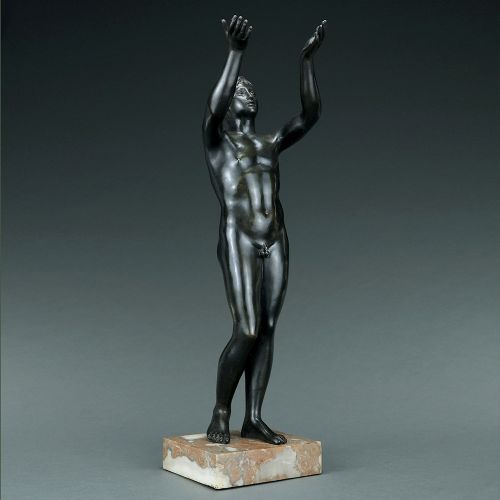
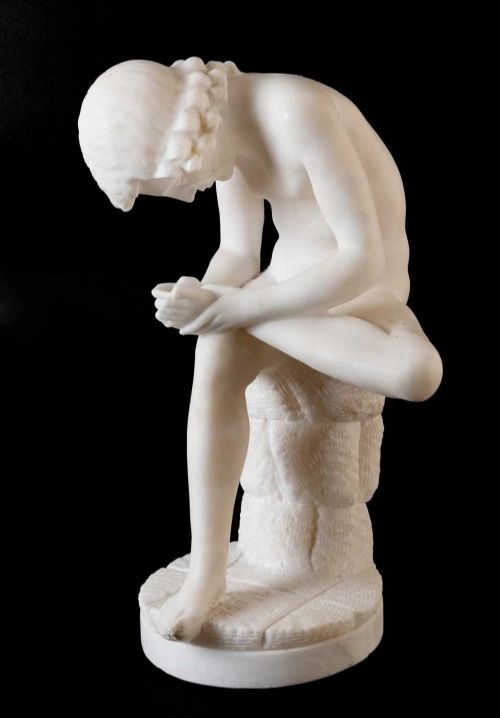
A classical boy statue represents youthful male figures drawn from ancient myth, history, and classical sculpture traditions. These pieces frequently draw upon celebrated ancient prototypes like the Spinario or the Berlin Adorante, translated into smaller scale for domestic interiors. Sculptures in this group span the late nineteenth century and the early twentieth century, reflecting a sustained European fascination with classical forms.
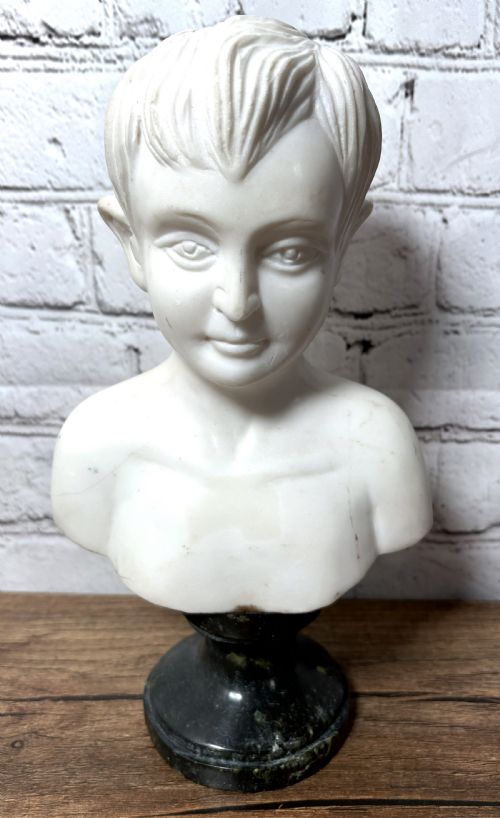
The objects take diverse physical shapes, appearing as full-length garden and cabinet statues, library busts, and detailed figural studies. Materials range from cast bronze and patinated metal to carved marble, alabaster, and terracotta. Many pieces emerge from Italian, French, and wider European workshops working within neoclassical, grand tour, and art nouveau idioms.
Buyers encounter subjects engaged in daily or mythological actions, including water carriers, musicians, and young figures extracting thorns. These portrayals bridge academic sculpture traditions with decorative arts suited for mantelpieces, libraries, and display cabinets.
Materials and construction methods
Foundry-cast bronze and spelter form the backbone of the metallic works, utilising traditional lost-wax or sand-casting methods before receiving hand-finished patination. Signatures and foundry marks frequently appear on the cast bases, indicating the workshop origin of the metalwork.
Carved pieces rely on dense fine-grained stones such as statuary marble, Carrara marble, and translucent alabaster. Artisans shaped these minerals by hand, mounting finished busts onto contrasting bases like green 'prato verde' marble socles.
Classical Boy Statue Retail Price Guide 2026
Typical asking prices for classical boy statue among the pieces listed under this phrase on Sellingantiques today, from the lower quarter to the upper quarter. They describe what is for sale here now, not the wider market.
Listings feature works in bronze, marble, alabaster, stone, and terracotta spanning several decades from the mid-nineteenth to the early twentieth century.
Distinctions in execution and finish
The refinement of the surface chasing and chisel work separates superior metal casts from routine production pieces. Master casters retain crisp anatomical details, subtle drapery folds, and nuanced patination that weaker casts lose.
Julien Lorieux·Vincenzo Gemito·Antoine Bofill·Auguste Moreau·Eugene Laurent·Pugi
The Classical Boy Statue Glossary
- Spinario
- A Hellenistic bronze sculpture depicting a boy pulling a thorn from his foot. This famous subject was frequently copied during the nineteenth century in bronze, terracotta, and alabaster.
- Grand Tour
- A traditional trip of Europe undertaken by upper-class young European men of the 18th and 19th centuries. Travellers collected small bronzes and marbles as tangible mementos of classical sites.
- Patination
- The surface colour and chemical treatment applied to metal sculptures. A controlled patina adds depth and highlights the underlying bronze or spelter cast.
- Spelter
- An alloy of zinc and lead often used as a cheaper alternative to bronze. It was widely utilised by French makers for decorative figures in the nineteenth century.
Classical Boy Statue: Frequently Asked Questions
What periods do these sculptures date from?
The pieces recorded here belong to the nineteenth and early twentieth centuries, spanning roughly from the 1860s through to 1910.
This era saw a strong revival of neoclassical and grand tour aesthetics across European studios.
How were these figures displayed originally?
Smaller bronzes and carved alabaster busts sat upon library desks, mantelpieces, and dedicated display tables in bourgeois and aristocratic homes.
Larger statues served as garden ornaments or prominent architectural focal points within reception rooms.
How do I distinguish bronze from spelter?
Bronze is heavier, resists corrosion, and takes a warm, translucent patination during casting. Spelter is a softer zinc alloy that feels lighter and often shows grey metal beneath worn paint layers.
Inspect the underside or areas of friction to check the base metal.
Are these pieces signed by the artists?
Many bronze and marble works bear the cast or engraved signature of the sculptor along the base or edge. Some pieces also carry foundry cachets indicating where the metal was poured.
Unsigned works remain common, particularly in grand tour and generic studio productions.