



Classical Stool
These classical antique stool pieces bring neoclassical elegance and architectural line into a room.
Classical Stool
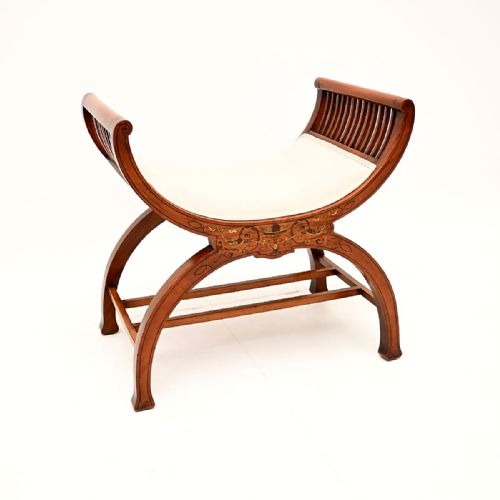
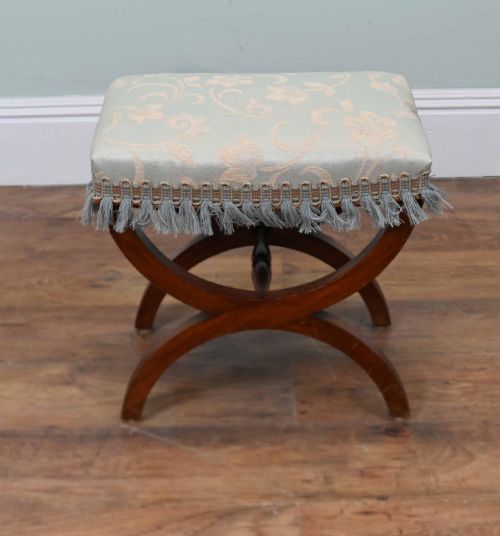
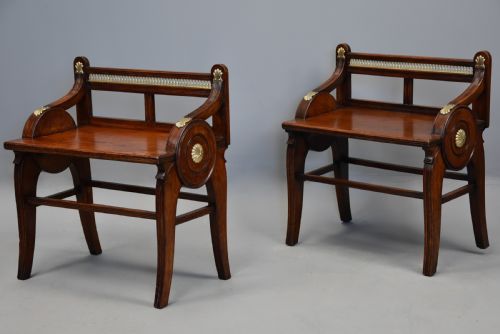
A classical antique stool draws upon neoclassical design, Regency elegance and Georgian restraint to provide firm seating with architectural presence. The forms range from low footstools to grand window seats, hall benches and X-frame curule models.
Most examples found here date from the nineteenth century, though eighteenth-century Georgian and Italian neoclassical pieces also appear alongside later Victorian interpretations. These items served formal reception rooms, hallways and piano rooms.
How they were made
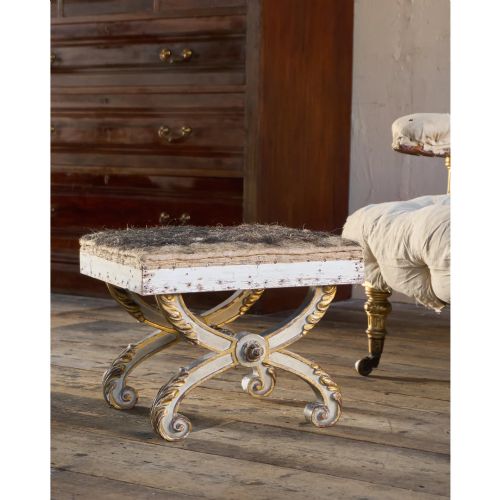
Cabinetmakers shaped dense hardwoods such as oak, mahogany and walnut, employing traditional joinery alongside turned and carved embellishments. Giltwood and gesso surfaces received meticulous layers of gold leaf or paint to achieve a refined classical finish.
Structural hardware played an essential role, seen in brass mounts and adjustable iron screw mechanisms on specialised piano stools. Upholstered elements relied on durable fabric covers like damask and needlework stretched over firm foundations.
Classical Stool Retail Price Guide 2026
Typical asking prices for classical stool among the pieces listed under this phrase on Sellingantiques today, from the lower quarter to the upper quarter. They describe what is for sale here now, not the wider market.
Adjustable piano stools let Victorian musicians settle at the exact height required for enthusiastic Chopin.
What varies in quality
Quality rests upon the crispness of the carved detail and the integrity of the timber frame, distinguishing workshop productions from standard commercial output. Finer pieces display deeply carved oak or mahogany and precise joinery that maintains stability across centuries.
The sophistication of the surface finish dictates the visual impact, from the depth of gilding on gesso to the balance of painted decorations. Maker attribution also elevates certain pieces, particularly when structural brass mounts and upholstery textiles survive in intact condition.
Miles & Edwards·James Shoolbred & Co.
The Classical Stool Glossary
- Curule stool
- An ancient Roman magistrate's seat form featuring intersecting concave legs that create an X-shape. These pieces often incorporate classical X-frame geometry.
- Giltwood
- Timber coated with gold leaf or powder over a prepared gesso ground. This technique provides a luminous metallic surface.
- Neoclassical
- A style reviving classical Greek and Roman architectural motifs. It prioritises symmetry, straight lines and restrained ornamentation.
- Window seat
- An elongated stool or bench designed to fit a window recess. These forms often feature upholstered seats and carved wooden frames.
- Damask
- A reversible figured fabric traditionally woven in silk or wool. It frequently appears as rich upholstery on period seating.
Classical Stool: Frequently Asked Questions
Where should I place a window seat?
A window seat suits hallways, bedrooms or living rooms where linear seating enhances an architectural niche. Their low profile avoids blocking natural light.
These pieces also function effectively at the foot of a bed or beneath a hallway mirror to provide both utility and structural visual balance.
How do I identify a Regency piece?
Regency items draw heavily from classical antiquity and Roman forms, frequently displaying clean architectural lines, X-frames and curule bases. Dark timbers and restrained gilt highlights often characterise the aesthetic.
Look for disciplined carving and classical proportions that reflect early nineteenth-century English and continental design influences.
Are these stools suitable for daily use?
Solid hardwood frames built from oak, mahogany and walnut provide enduring structural integrity for regular seating. Traditional joinery ensures these historical items remain robust.
Care should be taken with delicate silk upholstery or fragile gilt surfaces by placing them away from direct high-traffic friction.
What is an adjustable piano stool?
An adjustable piano stool incorporates a mechanical screw top that alters the seat height to suit the player. These functional nineteenth-century pieces often feature painted or gilt wooden frames.
The mechanism allows smooth vertical movement while retaining the classical aesthetic appropriate for a formal music room.