

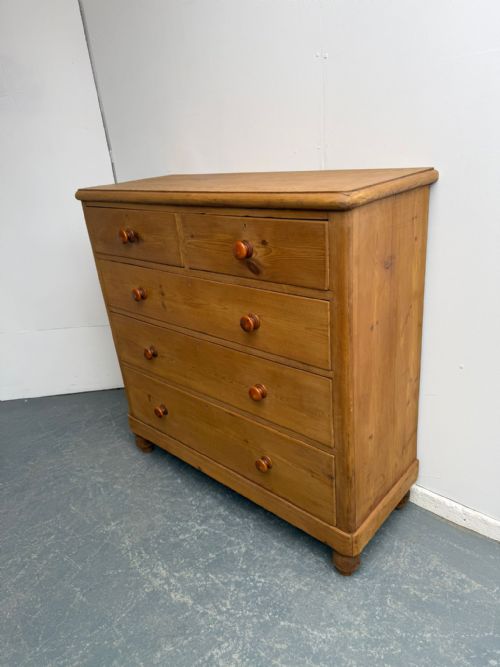


Classic Wooden Commode Chest
These classic wooden commode chest pieces offer practical storage with refined proportions, bringing understated period character to any room.
Classic Wooden Commode Chest
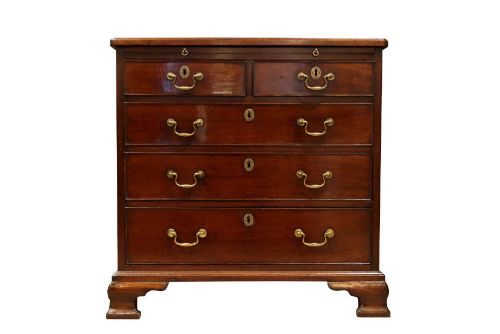
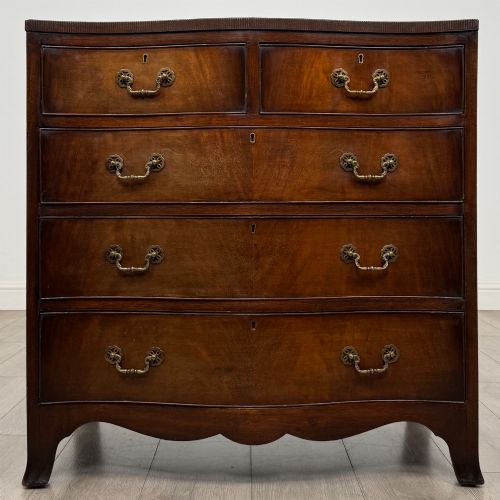
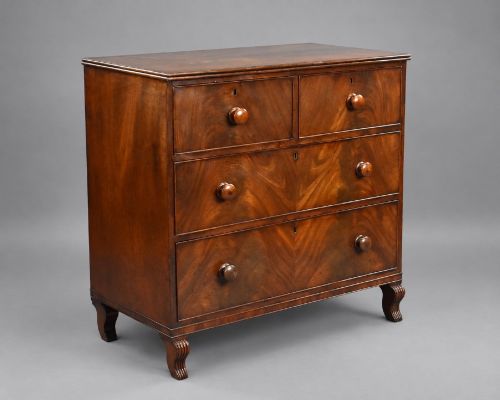
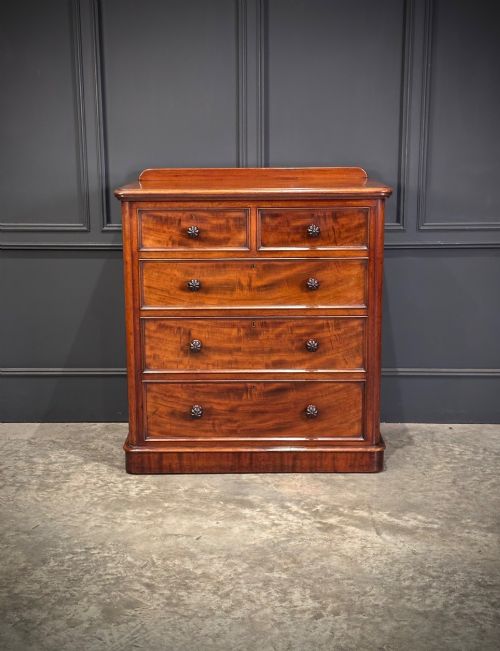
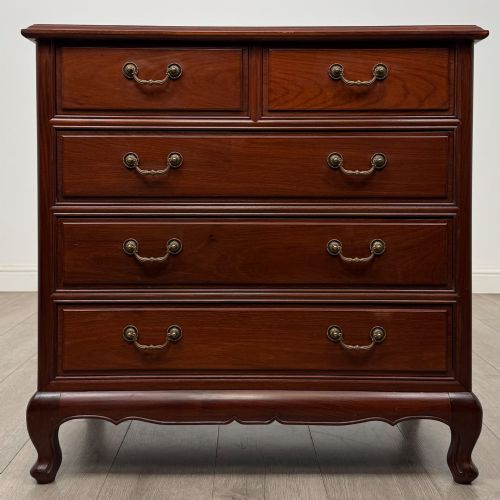
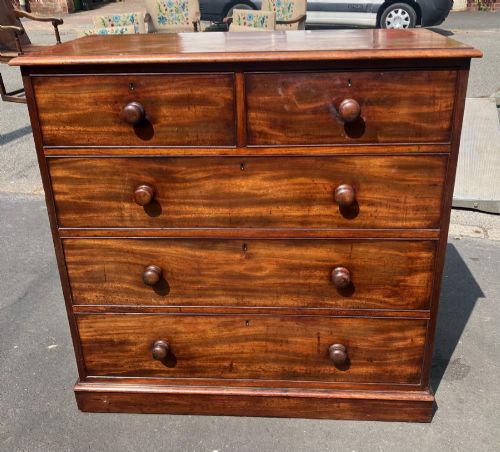
A classic wooden commode chest serves primarily as a sturdy set of drawers for household storage while providing a striking furniture focal point. The examples on this page span several distinct periods including Georgian, Regency, Victorian, and Edwardian eras.
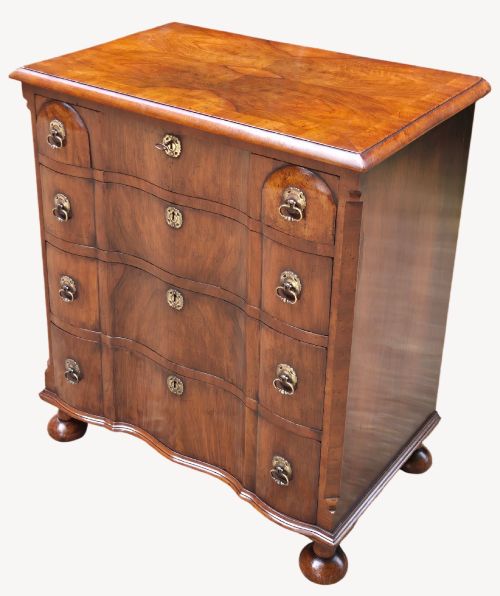
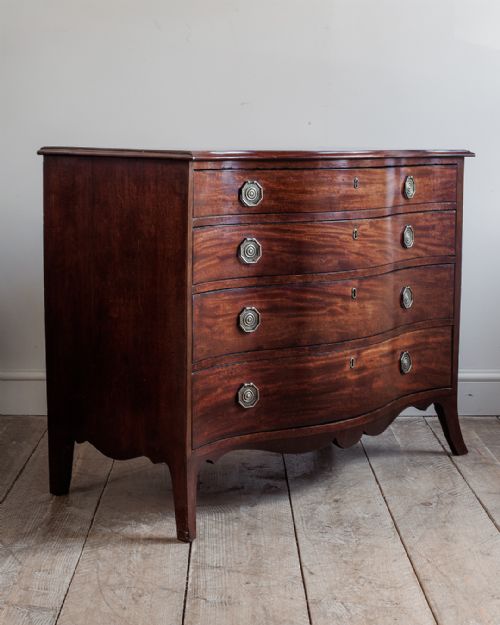
Most pieces encountered here take the form of traditional chests of drawers, featuring rectangular, serpentine, or bow-front profiles. These items originate predominantly from British cabinet-making traditions across the eighteenth and nineteenth centuries.
Makers designed these units to stand against bedroom and parlour walls, offering deep drawers for garments and linens. Walnut and mahogany woods dominate the selection, often complemented by decorative brass handles and subtle boxwood stringing.
What varies in quality
The selection of timber grain significantly alters the visual depth of a piece, particularly where figured flame mahogany veneer or matched walnut is deployed across the drawer fronts. Superior examples exhibit continuous grain patterns that flow smoothly from top to bottom.
Joinery execution dictates longevity, with tighter dovetails and intact internal dust boards marking out more accomplished workshop production. Original hardware and undisturbed surface patination also elevate the standing of an individual chest.
The listings show a strong preference for mahogany across multiple centuries, alongside walnut and pine examples.
The Classic Wooden Commode Chest Glossary
- Bow-front
- A convex, curved front profile popular on Georgian and Regency chests that softens the rectangular box shape. This design required skilled carpentry to bend or shape timber accurately.
- Serpentine
- A front contour featuring a convex centre flanked by concave curves, creating a subtle wave effect. It signals a more ambitious level of design and execution.
- Flame mahogany veneer
- A thin slice of timber cut from wood where the branch meets the trunk, producing a flickering, flame-like pattern. Cabinet-makers laid this over a stable secondary wood base for decorative effect.
- Boxwood stringing
- Narrow inlaid lines of pale boxwood set into darker drawer fronts or tabletops to create geometric borders. This technique highlights the edges of the carcase.
Classic Wooden Commode Chest: Frequently Asked Questions
How do I date a chest?
Examine the timber species, drawer construction methods, and overall hardware style against known period characteristics. Earlier eighteenth-century pieces often display fine hand-cut dovetails and oak drawer linings.
Changes in furniture fashion also help narrow down the decade. For instance, serpentine shapes and boxwood stringing point towards specific Georgian and Regency design preferences.
Where should I place one?
These chests fit naturally into bedrooms as practical storage for clothing, or into hallways where surface space holds decorative objects. Their classic proportions allow them to sit comfortably against plain or panelled walls.
Keep them away from direct heat sources and strong sunlight to protect the polished wood surfaces and delicate veneers from drying out.
How do I clean the wood?
Dust the surfaces regularly with a soft, dry cloth to prevent dirt accumulation in the grain and carved details. Avoid using silicone-based polishes or wet cloths that might damage traditional wax finishes.
Applying a quality beeswax periodically helps nourish the timber and maintain a soft, natural sheen without sealing the pores.