

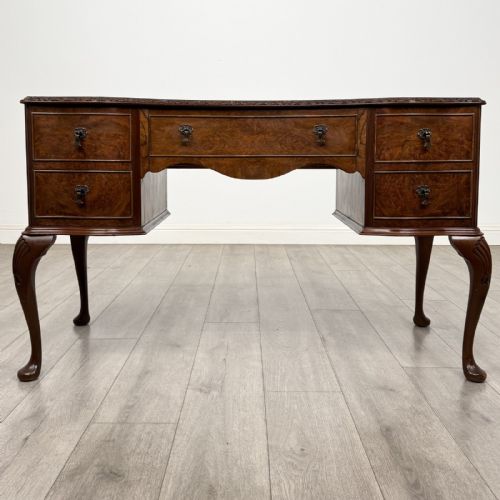
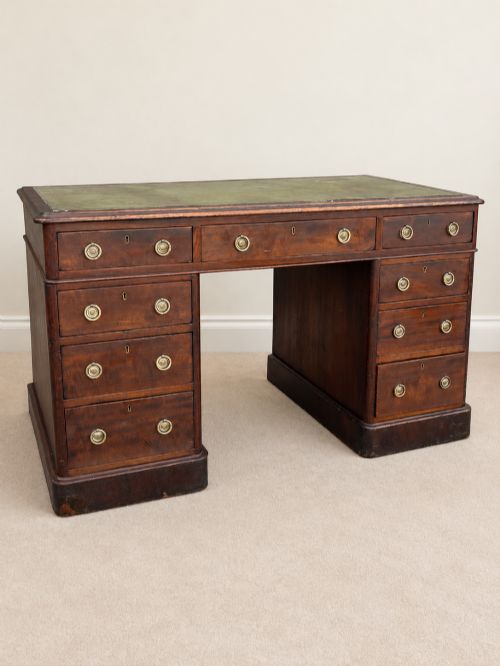
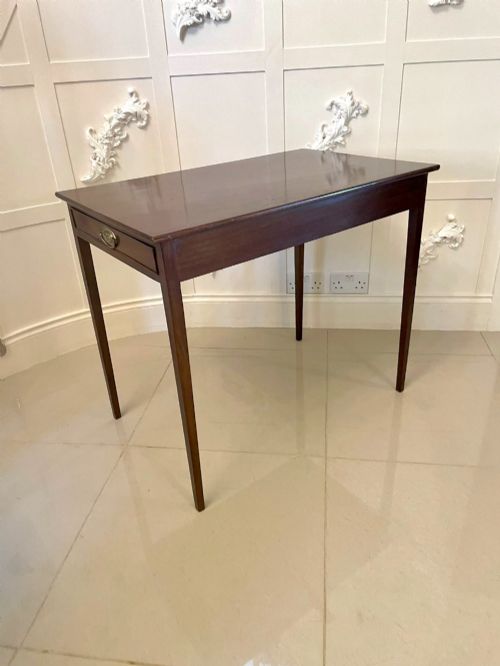


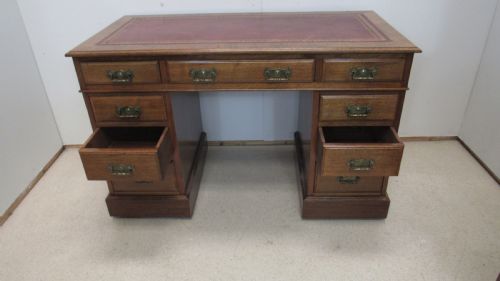
Classic Wood Writing Desk
These classic wood writing desk examples offer practical writing surfaces and period character for the home study.
Classic Wood Writing Desk
A classic wood writing desk brings traditional workspace utility and rich timber grain to a study or library. Buyers seeking a classic wood writing desk will encounter various nineteenth century forms, including pedestal desks, roll top desks, and secretaire cabinets.
The selection here draws heavily from Victorian, Edwardian, and George III periods. Most pieces utilise mahogany or walnut timber, frequently paired with fitted drawers and writing surfaces.
Pedestal desks dominate the available forms, accompanied by side tables, escritoires, and secretaire chests. These pieces range from simple nineteenth century workspace tables to large tambour top variations.
Materials and construction methods
Makers constructed these desks primarily from solid mahogany, flame mahogany veneer, walnut, and yew wood. Selected pieces incorporate secondary timbers alongside decorative veneers to create figured grain patterns across the panels.
Functional surfaces frequently feature inset leather or baize writing panels surrounded by wooden borders. Brass hardware, including drop handles and key escutcheons, provides operational detail across drawers and cabinets.
Construction techniques include framed drawers with hand-cut joints, carved pillars, and tambour mechanisms for roll top enclosures. Structural support relies on sturdy pedestals or four-legged table frames.
Classic Wood Writing Desk Retail Price Guide 2026
Typical asking prices for classic wood writing desk among the pieces listed under this phrase on Sellingantiques today, from the lower quarter to the upper quarter. They describe what is for sale here now, not the wider market.
Listings feature eighteenth and nineteenth century periods, including George III, Victorian, Edwardian, and Biedermeier styles.
Judging quality in period desks
Quality separates simple utility furniture from pieces showcasing superior cabinet work and timber selection. The choice of timber grain, particularly flame mahogany veneer or figured walnut, marks the distinction.
Fine craftsmanship shows in the crispness of carved pillars, the smooth operation of tambour shutters, and the precise fitting of multiple drawers. Original brass hardware and well-preserved leather writing inserts elevate a piece further.
The Classic Wood Writing Desk Glossary
- Pedestal desk
- A heavy writing desk consisting of two independent pedestals of drawers supporting a single wide top.
- Escritoire
- A small writing cabinet with a sloping or drop-front flap concealing small drawers and pigeonholes.
- Secretaire
- A cabinet or chest containing a pull-out drawer or hinged flap designed for writing.
- Tambour
- A flexible shutter formed of narrow strips of wood glued to canvas, used on roll top desks.
- Flame mahogany
- A veneer cut from timber fork where the branch meets the trunk, producing a distinctive flickering flame pattern.
Classic Wood Writing Desk: Frequently Asked Questions
How do I use a roll top desk?
A roll top desk uses a slatted wooden tambour door that slides vertically along tracks to conceal the writing surface. Pulling down the shutter secures paperwork out of sight.
The interior compartments organise letters, stationery, and small books within reach of the work surface.
What is a secretaire cabinet?
A secretaire cabinet combines general storage with a dedicated writing surface disguised behind a drop-front door or drawer. Opening the panel reveals fitted pigeonholes and small drawers.
This form allowed makers to conceal working areas within formal living or bedroom furniture.
Which woods appear on these desks?
Mahogany, walnut, and yew wood form the primary structure of these pieces. Veneers appear frequently to display decorative grain patterns.
Secondary materials include brass fittings and leather or baize writing inserts.
How do I date a Victorian desk?
Dating relies on architectural styles, construction methods, and characteristic hardware from the nineteenth century. Victorian pieces often employ solid mahogany or rich veneers with substantial pedestal proportions.
Comparing drawer construction and decorative carving helps place a piece within the era.