

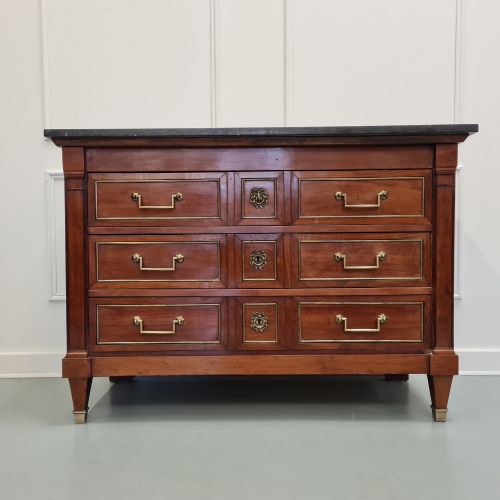


Classic Wood Drawer Chest
A classic wood drawer chest brings practical storage and architectural presence into a room, combining fine timber with time-tested cabinetmaking.
Classic Wood Drawer Chest
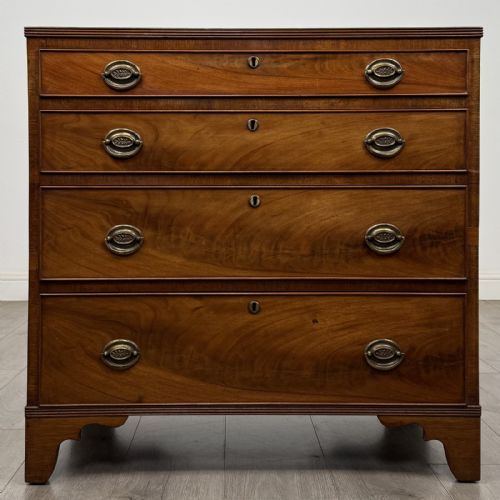
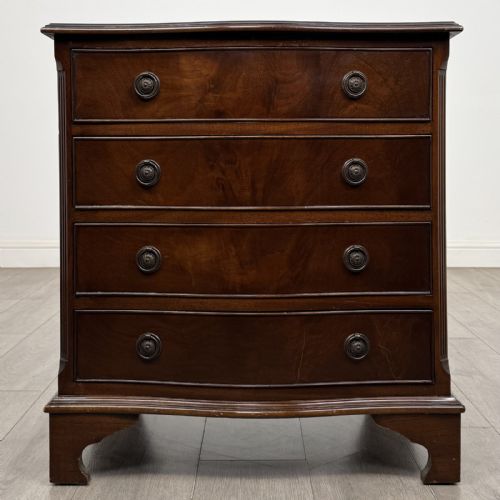
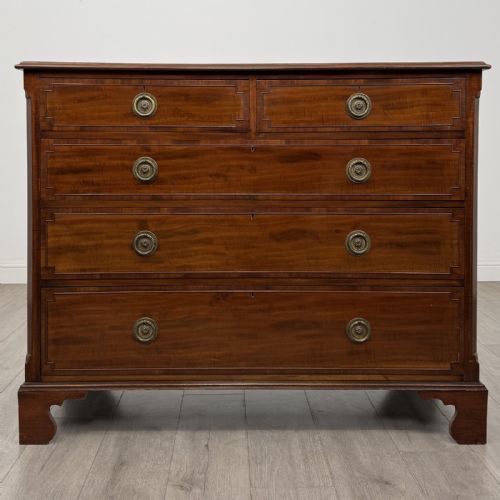
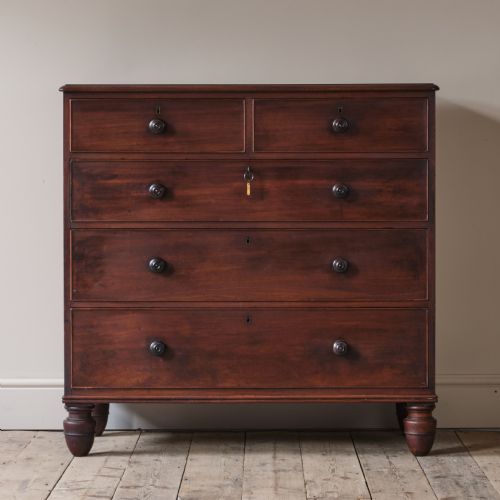
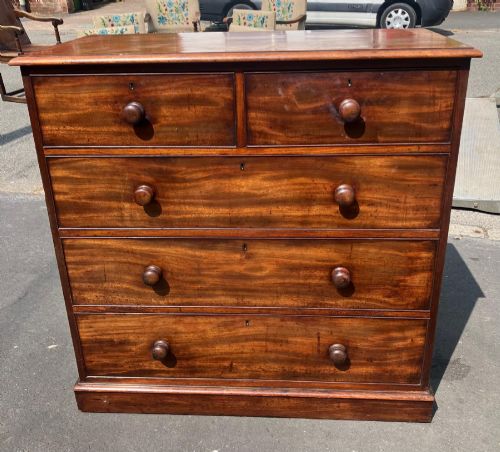
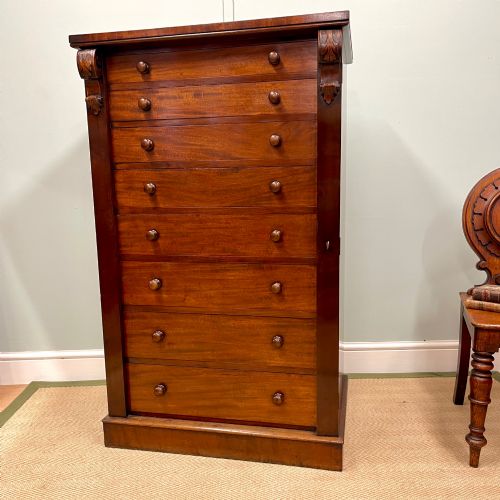
A classic wood drawer chest is a functional storage item designed with stacked drawers, appearing in forms such as the standard chest of drawers, bow-fronted designs, and tall Wellington cabinets. On this page, the buyer meets pieces spanning the Georgian, Regency, Victorian, and Edwardian eras, alongside continental Biedermeier and French Empire examples.
The materials and construction reflect centuries of British and European cabinetmaking traditions, utilising dense hardwoods like mahogany and walnut alongside pine carcases and oak drawer linings. Many examples feature specialised storage mechanisms, including top drawers fitted as secretaire desks with internal pigeonholes and small compartments.
Materials and construction methods
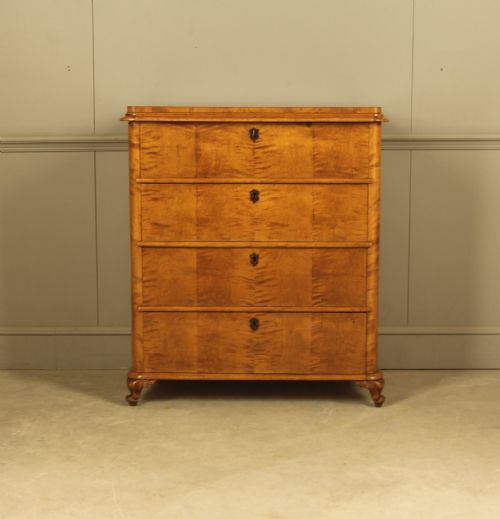
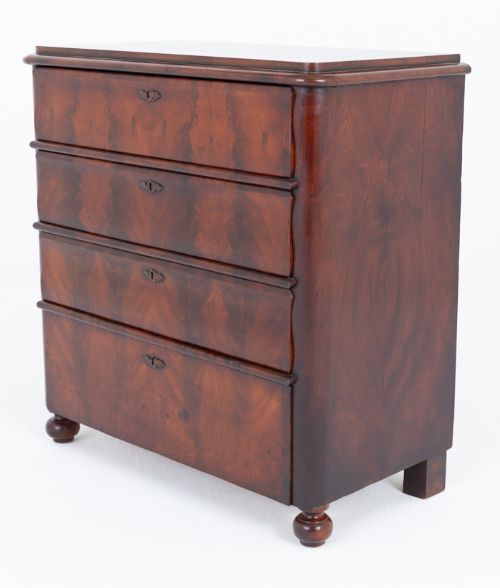
Makers built these pieces using solid timbers such as mahogany, oak, and walnut, often applying figured veneers like flame mahogany or flame birch to primary display surfaces. Drawer construction typically relied on hand-cut dovetail joints to ensure durability under daily use.
Hardware played an essential structural and decorative role, with brass handles and escutcheons secured to the drawer fronts. Carcases rested upon bracket feet, plinth bases, or turned supports, depending on the stylistic period.
Classic Wood Drawer Chest Retail Price Guide 2026
Typical asking prices for classic wood drawer chest among the pieces listed under this phrase on Sellingantiques today, from the lower quarter to the upper quarter. They describe what is for sale here now, not the wider market.
Listings feature mahogany, walnut, oak, and pine alongside decorative flame veneers.
Distinctions in craftsmanship
Quality rests in the selection of timber figures, where book-matched flame veneers demonstrate superior material choice over plain boards. The precision of the joinery, particularly the tightness of the dovetails and the smooth running of the drawers within their carcases, separates workshop standards.
The integrity of secondary woods and original brass hardware further distinguishes higher-grade items. Pieces retaining their structural elements without extensive timber replacement command greater appreciation from collectors.
T & G Seddon·C. Hindley
The Classic Wood Drawer Chest Glossary
- Bow-front
- A convex curved front profile popular in Georgian and Regency cabinetmaking. This shape softens the angular lines of a standard case piece.
- Secretaire
- A chest or cabinet featuring a pull-out drawer with a hinged front that drops down to reveal a writing surface and small compartments. It combines a writing desk with standard drawer storage.
- Dovetail
- A joint formed by interlocking wedge-shaped fingers, used extensively in drawer construction. Hand-cut dovetails indicate traditional period craftsmanship.
- Wellington chest
- A tall, narrow chest of drawers secured by a hinged locking side flap that fastens over the drawer edges. This specific form originated in the nineteenth century.
Classic Wood Drawer Chest: Frequently Asked Questions
How do I date a chest?
Dating relies on examining timber choices, construction methods like dovetailing, and the overall design style. Secondary woods inside the carcase often provide clues to the region of origin.
Hardware styles and the presence of makers' marks or labels further help narrow down the decade of manufacture.
What is a secretaire chest?
A secretaire chest contains a specialised top drawer designed to pull out and fold down, revealing a fitted writing surface and pigeonholes. It serves a dual purpose as both a chest of drawers and a compact desk.
This form was particularly favored in the Georgian and nineteenth-century periods for domestic study spaces.
Are bow front chests Georgian?
Bow-fronted chests appeared prominently during the Georgian and Regency periods, characterised by their curved front profiles. Cabinetmakers used this shape to catch the light and display figured mahogany veneers.
Later revival styles also replicated this curved form during the Edwardian era and the early twentieth century.
How should I care for wood furniture?
Maintain these pieces by keeping them away from direct heat sources and strong sunlight, which can dry out and fade the timber. Regular dusting with a dry, soft cloth preserves the polish without chemical buildup.
Applying occasional appropriate wax feeds the wood and protects historic finishes.