


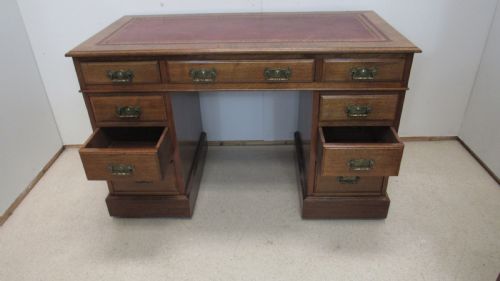


Classic Wood Bureau
These classic wood bureau selections bring together practical writing surfaces and concealed storage in rich timber forms.
Classic Wood Bureau
When you search for a classic wood bureau, you are looking at items designed for writing and storing papers that often combine a fall-front desk with multiple drawers. The pieces gathered here span several distinct eras, notably the Georgian, Edwardian, and Victorian periods.
You will encounter various interpretations of the form, ranging from large pedestal desks and tambour top designs to smaller escritoires and secretaire chests. Many of these examples hail from the nineteenth century, alongside earlier eighteenth-century walnut pieces and Edwardian interpretations.
The objects serve primarily as functional furniture for the home office or study while retaining significant decorative presence through their timber construction. Each variation demonstrates how cabinet makers adapted the writing desk to suit changing domestic requirements across the centuries.
How they were made
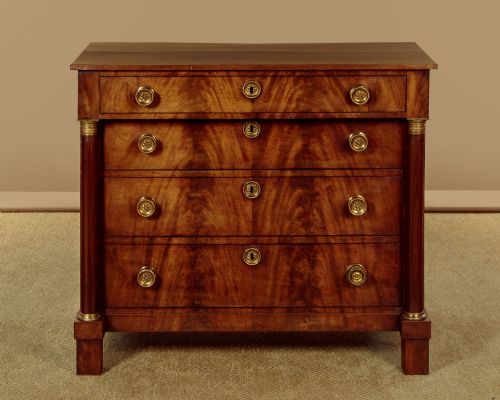
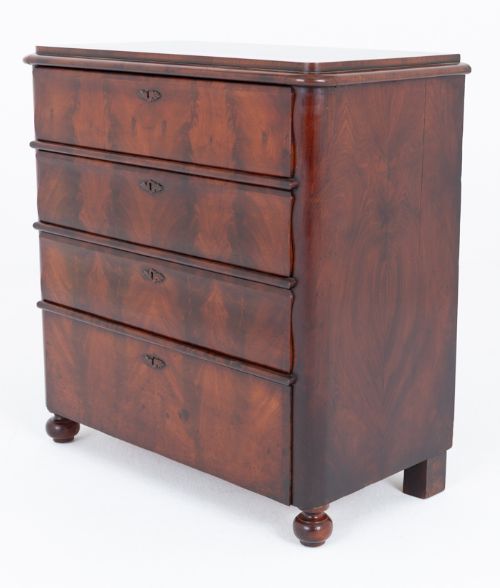
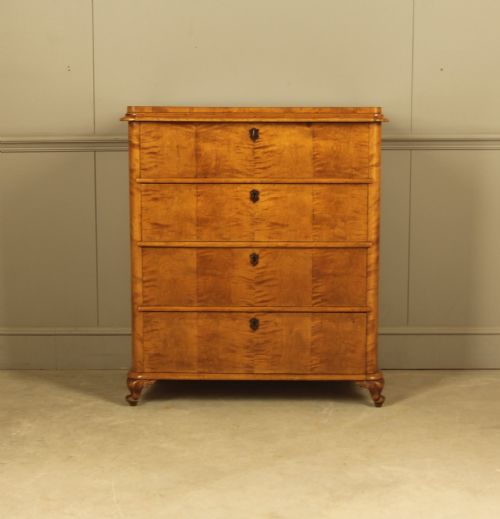
The construction of these pieces relies heavily on solid woods and decorative veneers, with mahogany, walnut, and oak appearing frequently across the inventory. Cabinet makers frequently utilised flame mahogany veneer and flame birch to create striking visual patterns on drawer fronts and fall-front panels.
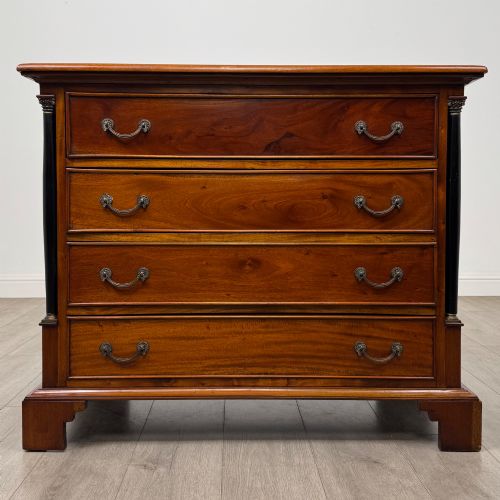
Structural integrity was enhanced through the use of secondary timbers such as pine for internal drawer construction and carcase linings. Details like brass handles, escutcheons, and bracket feet were integrated to complete the joinery and provide functional hardware.
Listings feature items from the eighteenth, nineteenth, and early twentieth centuries, constructed in mahogany, walnut, oak, and pine.
What varies in quality
The distinction between tiers of quality rests largely on the choice of timber and the precision of the cabinet work. Pieces featuring carefully selected flame veneers or dense red walnut display a higher degree of visual ambition than simpler constructions.
Construction methods also set examples apart, particularly in the handling of internal compartments, pigeonholes, and secret drawers within the writing section. The refinement of decorative elements, from bracket feet to inlaid details, indicates the level of craftsmanship invested in the piece.
The Classic Wood Bureau Glossary
- Escritoire
- A writing cabinet, typically featuring a fall-front desk enclosing small drawers and pigeonholes.
- Secretaire
- A piece of furniture containing a drawer or compartment that pulls down to serve as a writing desk.
- Tambour
- A sliding door or shutter made of narrow vertical strips of wood glued to canvas or leather.
- Biedermeier
- A style of Central European furniture from the nineteenth century characterised by utilitarianism and clean lines.
- Bracket foot
- A furniture foot shaped like a bracket, often used on the corners of case pieces like chests and desks.
Classic Wood Bureau: Frequently Asked Questions
What is a classic wood bureau?
A classic wood bureau is a traditional item of furniture featuring a sloping flap or fall-front that opens to reveal a writing surface and small compartments. They are typically constructed from timbers such as mahogany, walnut, or oak.
These pieces combine workspace functionality with drawer storage, making them suitable for studies and home offices.
How were these desks used?
These desks served as private writing stations for correspondence, record-keeping, and the storage of important documents. The enclosed compartments kept papers out of sight when the writing flap was closed.
Larger pedestal versions and secretaire cabinets also functioned as primary workspaces for households and businesses.
How do I live with a wood bureau?
Living with a wood bureau involves placing it away from direct sunlight and heat sources to protect the polished timber surfaces and veneers. Regular dusting with a soft cloth helps maintain the finish.
The fold-down writing surface provides a dedicated desk area that can be closed up to conceal paperwork when not in use.
How do I tell periods apart?
Distinguishing between periods involves examining the timber selection, hardware, and overall architectural style of the piece. Georgian examples often feature bracket feet and rich mahogany, while Biedermeier pieces display cleaner lines and lighter birch veneers.
Edwardian items frequently reinterpret earlier Georgian styles with softer proportions and varied inlay work.