
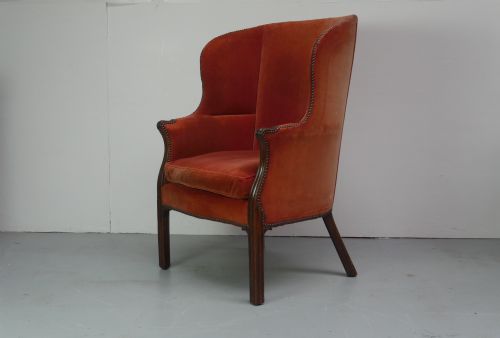


Classic Wingback
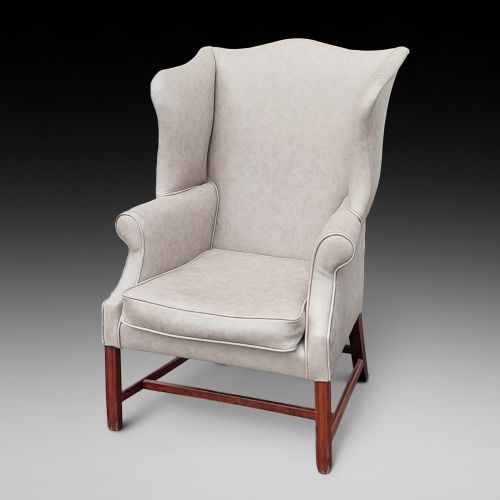
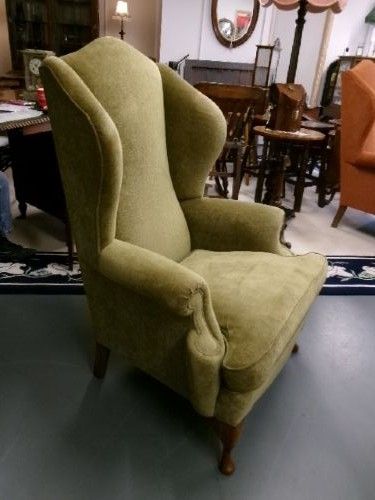
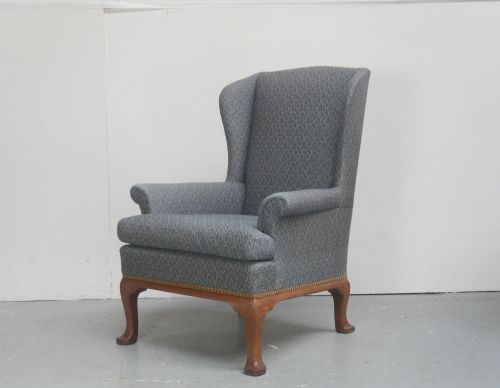
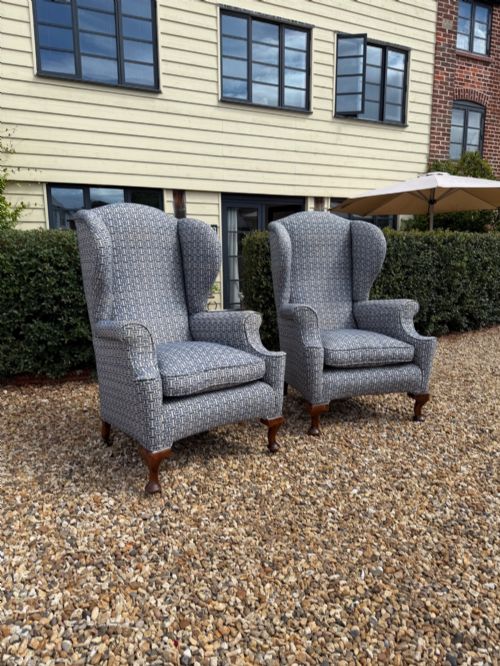
These classic wingback chairs offer deep-seated comfort and draught-excluding sides, making them a staple for fireside placement.
Classic Wingback
A classic wingback takes the form of an upholstered armchair characterised by its protective side panels flanking the backrest, designed originally to shield the sitter from cold draughts. These seating pieces span periods from the eighteenth century to the early twentieth century, taking in Victorian, Edwardian, and revival interpretations.
The inventory on this page shows pieces ranging from genuine eighteenth-century George III examples to later Georgian revival iterations, alongside Victorian and Edwardian leather Chesterfields, porters' chairs, and French walnut bergeres. Buyers will encounter both upholstered fabric finishes and deep-toned leather versions.
Forms vary from standard high-backed armchairs to barrel back shapes and larger scaled seating pairs, sometimes accompanied by footstools or offered in need of re-upholstery. The underlying framework draws on traditional cabinet-making styles including Queen Anne Revival and George III aesthetics.
How they were made
Construction relies on sturdy timber frames built from hardwood, mahogany, and walnut, often shaped with carved details on the exposed legs or framework.
Upholstery techniques utilise traditional padding and springs finished in leather, velvet, or woven fabric, secured with brass detailing where appropriate.
Listings feature mahogany, walnut, brass, leather, and fabric across Victorian, Edwardian, and eighteenth-century periods.
What varies in quality
Quality rests upon the integrity of the original timber frame and the authenticity of the period construction, distinguishing early pieces from later revivals.
The execution of the upholstery, whether supple leather or patterned fabric, along with the retention of original structural components, dictates the standing of each piece.
HOWARD AND SONS·GILLOWS
The Classic Wingback Glossary
- Wingback
- An upholstered armchair featuring projecting side panels attached to the backrest. This design historically deflected draughts around the head and shoulders.
- Barrel back
- A seating form where the back and arms form a single curved semi-circular enclosure. This style wraps closely around the sitter for added warmth.
- Porters chair
- A high-backed enclosed armchair originally used in draughty hallways to shelter attendants. They frequently feature a hooded top and fully upholstered sides.
- Bergere
- A French-style upholstered armchair with enclosed wooden sides. The frame is commonly carved from walnut or other hardwoods.
- George III
- A British design period spanning the late eighteenth century. Furniture from this era displays classical proportions and refined craftsmanship.
Classic Wingback: Frequently Asked Questions
What is a classic wingback chair?
A classic wingback is an upholstered armchair distinguished by protective side panels on the backrest, created to block draughts near firesides.
Such chairs evolved through various periods, encompassing Georgian originals, Victorian iterations, and later twentieth-century revivals.
How do I identify a Georgian wingback?
Georgian pieces typically display proportions, timber use, and leg styles characteristic of the eighteenth century, such as straight or cabriole mahogany supports.
Revival versions from later periods imitate these historical design markers while employing construction methods of their own era.
Where should I place a wingback chair?
These armchairs suit living spaces, studies, or libraries where their high backs and enclosed sides create a private seating enclave.
They pair well with low tables or footstools, functioning as focal points in traditional rooms.