

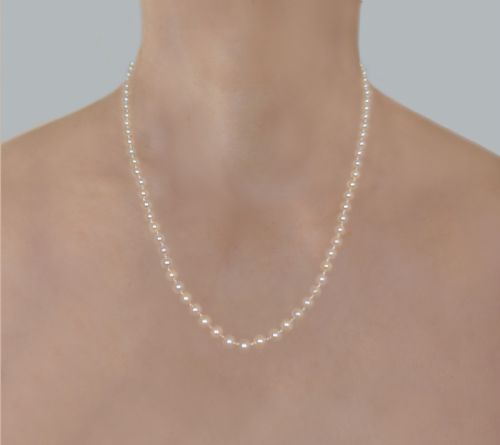


Classic White Pearls
Classic white pearls bring an enduring elegance, offering timeless necklaces and earrings shaped by mid-century and Edwardian hands.
Classic White Pearls
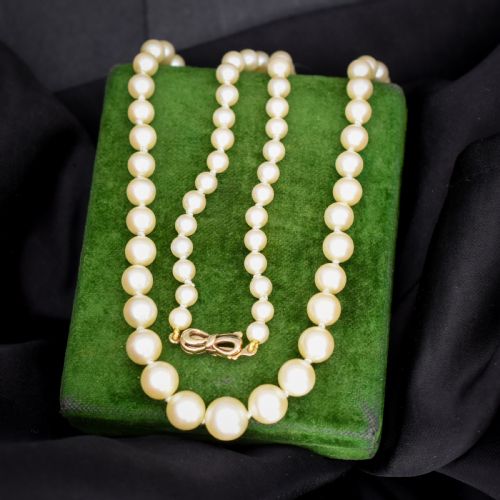
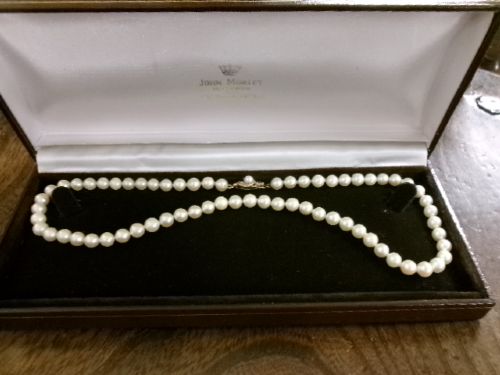
Classic white pearls encompass necklaces and earrings originating from periods such as the Edwardian era through to the 1960s, alongside vintage and mid-century modern designs. A buyer searching for classic white pearls will encounter various strands and clasps, frequently featuring cultured or natural saltwater pearls.
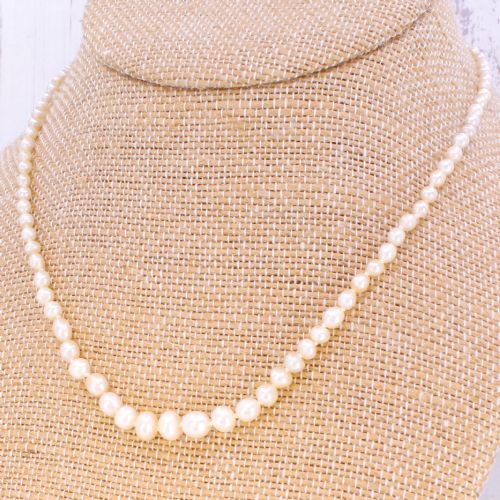
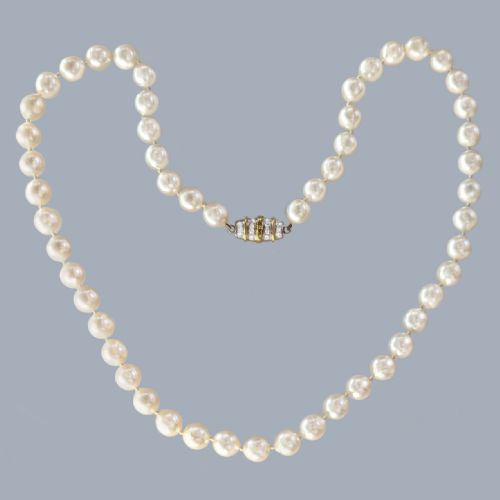
The most common form on this page is the necklace, appearing in single, double, and long rope strands, often paired with gold, diamond, or sapphire clasps. These pieces reflect traditional jewellery styling, ranging from shorter graduated lengths to opera-length designs.
Pieces span decades of craftsmanship, incorporating materials like 9ct gold, 18ct white gold, and silver alongside the central pearls. Each item carries the distinct aesthetic of its decade, from Edwardian delicacy to robust mid-century constructions.
Materials and Construction
Makers constructed these pieces using cultured and natural saltwater pearls, often hand-knotted on silk threads to secure each pearl individually. Clasps utilise precious metals including 9ct gold, 14ct gold, 18ct white gold, and silver.
Jewellers enhanced many clasps with accent gemstones such as diamonds, sapphires, turquoise, and rose quartz. Metalwork techniques of the periods include secure box clasps and integrated settings for the accompanying stones.
Classic White Pearls Retail Price Guide 2026
Typical asking prices for classic white pearls among the pieces listed under this phrase on Sellingantiques today, from the lower quarter to the upper quarter. They describe what is for sale here now, not the wider market.
Some fifty-inch strands are long enough to make you feel like an early Hollywood star heading out for a midnight jazz gala.
Judging Quality
Quality rests in the uniformity, size, and lustre of the pearls themselves, as well as the sophistication of the accompanying clasp. Pearls measuring larger diameters, such as approaching nine millimetres, or those formed by natural saltwater processes, represent a higher tier.
The complexity and material of the clasp elevate a piece, particularly when set with diamonds or sapphires in 18ct white gold or bearing maker marks from firms like Cropp & Farr. Additionally, recent professional restringing ensures the structural integrity of longer strands.
Cropp & Farr
The Classic White Pearls Glossary
- Cultured Pearl
- Pearls formed with human assistance by inserting a nucleus into an oyster or mollusc. These form the majority of the strand necklaces listed across mid-century periods.
- Graduated
- A strand design where pearls increase in size progressively towards the centre. This traditional arrangement ensures a balanced appearance around the neck.
- Box Clasp
- A secure jewellery fastening mechanism where a tongue clicks into a rectangular box housing. Many gold and diamond clasps in these listings utilise this method.
- Rope Necklace
- An extra-long necklace length, often fifty inches or more, designed to be worn in multiple strands or knotted. These provide versatile styling options.
- Akoya Pearls
- Saltwater cultured pearls known for their high lustre and bright white body colour. They frequently appear alongside white gold settings.
Classic White Pearls: Frequently Asked Questions
What lengths do these pearl necklaces come in?
Strands vary from shorter graduated pieces resting high on the collarbone to long rope lengths reaching fifty inches. Opera-length variations also appear among the Edwardian and mid-century selections.
Longer versions allow for double looping or casual knotting, while standard lengths suit traditional evening wear.
How are the pearls secured on the strands?
Traditional construction involves hand-knotting the thread between individual pearls to prevent loss if the strand breaks. Many vintage examples also note recent professional restringing to maintain this security.
The knots keep the pearls from rubbing against one another and damaging their surface lustre.
What metal is used in the clasps?
Clasps utilise yellow gold in nine and fourteen carat weights, alongside eighteen carat white gold and silver. Many incorporate decorative box designs.
These metal components frequently feature flush or prong-set diamonds, sapphires, or turquoise to add a decorative focal point at the nape of the neck.
How do I date a pearl necklace?
Dating relies on the clasp style, metal hallmarks, and the manufacturing characteristics of the era, ranging from Edwardian work to nineteen-sixties modernism. Hallmarks often indicate specific assay offices and years.
Clasps set with platinum, white gold, or specific gemstone arrangements reflect the fashionable design conventions of their respective decades.
Are earrings available alongside the necklaces?
Stud earrings featuring cultured pearls paired with white gold and diamonds occasionally accompany the strand selections. These offer a matching aesthetic for coordinated wear.
Such earrings utilise similar materials to the necklace clasps from the same mid-century periods.